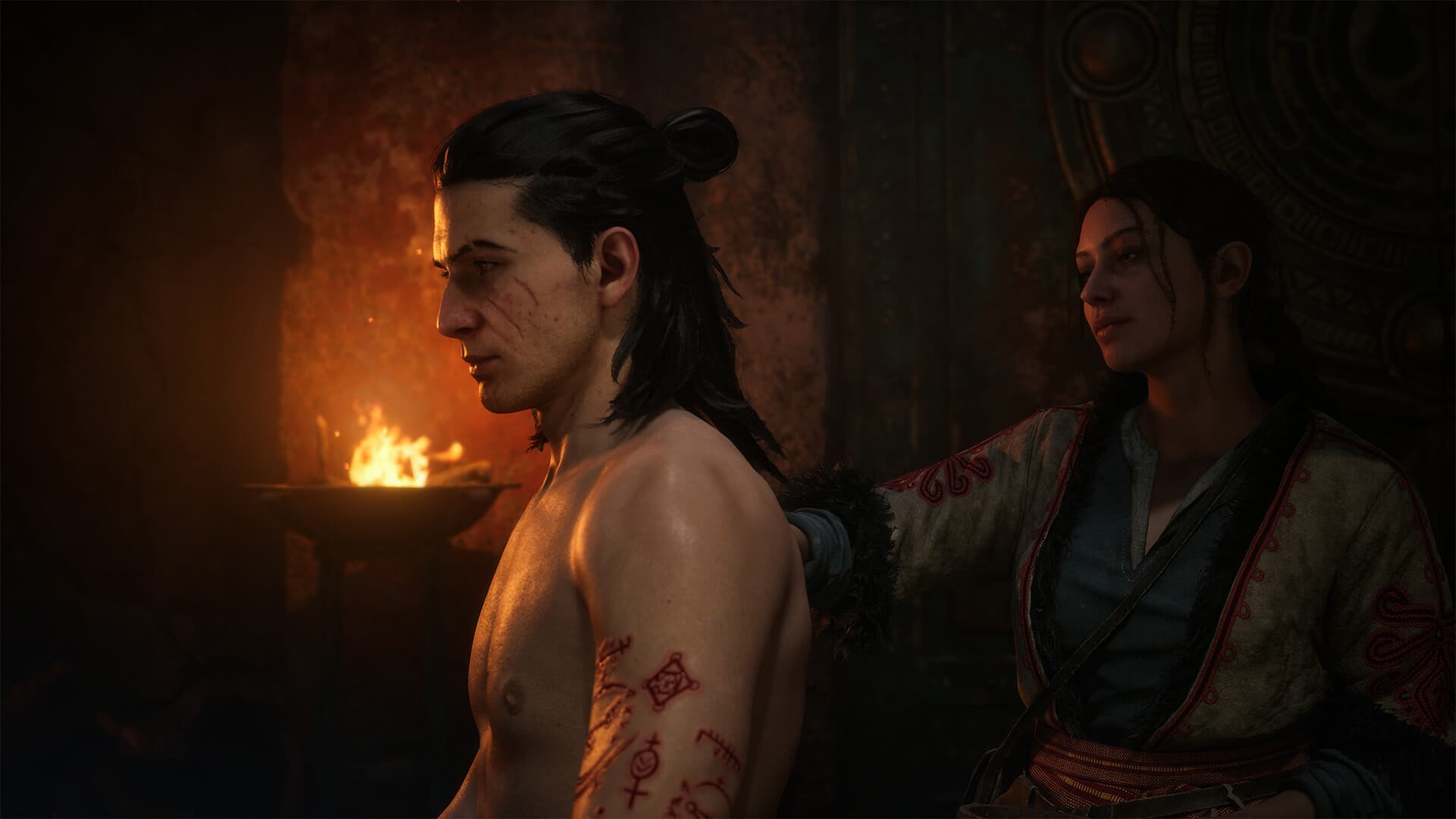
If you have just started The Blood of Dawnwalker, you have probably noticed the marks spreading across Coen's skin. As a human by day, he channels Witchcraft through runes carved into his body, casting hexes that fester in the daylight and seal shut once he turns vampire at night. It is one of the most striking ideas in Rebel Wolves' debut. It also raises an honest question for anyone drawn to the real thing: are these actual runes, and do they mean anything?
The short answer: the runes in The Blood of Dawnwalker are invented hex-sigils, not the real Norse Elder Futhark. They borrow the look and the mystique of runic power, but they are original designs built for a video game, rooted in Eastern European folklore rather than Viking-Age Scandinavia. That does not make them meaningless, though. The game is drawing on a long, real tradition of rune magic, and knowing where fiction ends and history begins makes both more interesting.
This guide breaks down what Coen's runes actually are in the game, what real runes were, and exactly where the two meet and part ways.
What the runes in The Blood of Dawnwalker actually are
In the game, runes are the engine of the Witchcraft skill tree, one of three paths alongside Swordmastery and Vampirism. Each rune carved into Coen's skin holds a hex he has learned. The clever twist is tied to the day-night cycle at the heart of the game: because Coen is a Dawnwalker, human by day and vampire by night, his witchcraft only works while the sun is up. By day he lacks the vampiric healing that would close his wounds, so the open rune-scars stay active and castable. At night he turns, the carvings heal over, and the hexes seal until sunrise.
The hexes themselves are offensive and controlling rather than mystical fortune-telling. Reported witchcraft abilities include summoning a murder of crows, setting an enemy's blood alight, and reflecting a single instance of damage back at an attacker. Casting one costs an Activation Charge and chips away at Coen's own health, so witchcraft is a deliberate, high-cost style of play. You unlock and expand it through ability manuals bought from witchcraft vendors scattered across the world.
So in mechanical terms, a rune in Dawnwalker is a slot for a spell. That is already a meaningful departure from how real runes work, and it is worth seeing why.
What real runes actually are
A real rune is first and foremost a letter. The Elder Futhark is the oldest runic alphabet, 24 characters used by Germanic and Norse peoples from roughly 150 to 800 CE, carved into wood, bone, stone, and metal long before anyone read them as an oracle. Each rune is a sound, a name, and a word bundled together: Fehu means cattle and wealth, Ansuz a god or divine breath, Uruz the wild ox and raw strength.
The magic came layered on top of the writing. In Norse tradition, Odin wins the runes through sacrifice, hanging nine nights on the world-tree Yggdrasil, pierced by his own spear, until the runes reveal themselves. From there the runes served as charms, protections, and messages. People combined them into bindrunes and sigils to carry a focused intent, and read them for guidance in a form of divination that continues today.
Crucially, the direction is the opposite of the game's. Real runes start as language and become magical. Dawnwalker's runes start as magic and never carry the language layer at all.
Game fiction vs. real history, side by side
| Feature | The Blood of Dawnwalker | Real runes |
|---|---|---|
| What a rune is | A slot holding a combat hex | A letter with a sound, name, and word |
| Where it is carved | Into living skin, as open wounds | Into wood, bone, stone, and metal |
| Cultural roots | Fictional Carpathian, Slavic, and Balkan folklore | Germanic and Norse, Viking-Age Scandinavia |
| Typical use | Curses, control, damage over time | Writing, protection, blessing, divination |
| Power source | Wounds that open by day, heal by night | Sound, meaning, and intent, in myth won by Odin |
| Fortune-telling | Not a feature | A central modern practice |
The table makes the pattern clear. The game keeps the aesthetic of runes, marks of hidden power cut into flesh, and drops almost everything else. That is a legitimate creative choice, and a common one in fantasy. It just means the symbols on Coen's body are not a code you can look up in a runic dictionary.
Norse runes vs. Slavic magic: the setting matters
Here is the detail most players miss. The Blood of Dawnwalker is not a Viking story. It takes place in Vale Sangora, a fictional valley in the Carpathian Mountains, ruled by a centuries-old vampire and ravaged by plague. Rebel Wolves drew chiefly on Romanian, Slavic, and Balkan folklore, populating the world with creatures like the Likhos and Psoglavs rather than Norse gods.
That creates a quiet historical irony. Runes are a Germanic and Norse invention. The Slavic peoples of the real Carpathians had no proven native runic alphabet of their own. The so-called Slavic runes that circulate online are largely a modern fabrication, not a documented medieval script. Historical Slavic magic worked through spoken charms, herbs, knot-tying, and folk ritual, not a carved futhark. So when the game gives a Carpathian witch-tradition a set of runes, it is layering a Norse-flavoured symbol onto a Slavic-flavoured world. Great fantasy shorthand for "old magic," but not something a 14th-century Carpathian practitioner would have actually used.
None of this is a criticism. It is exactly how historical fantasy works: grounded in real belief, then reshaped without being bound by it. Knowing the seam only sharpens the appreciation.
Did anyone really carve runes into their skin?
This is the game's most vivid image, and the one with the least historical support. There is little solid evidence that Norse or Slavic practitioners cut runes into living skin as a magic system. Real runes went onto durable materials: rune-sticks for messages, amulets and brooches for protection, weapons for power, and great memorial stones for the dead.
The closest real parallel is the rune-inscribed amulet worn against the body, a small carved object carried for protection, which is a world away from a self-inflicted spell-wound. Norse sources do treat runes as capable of harm, though. In Egil's Saga, the hero finds badly carved runes making a young woman ill, scrapes them away, and cuts the right ones to heal her, warning that "no man should carve runes unless he can read them well." That line captures the real attitude far better than the game does: runes were powerful, precise, and as able to sicken as to save, but they lived on wood and stone, not skin.
Want to know what the runes really say?
Coen's runes will not decode, but the real ones will. The 24 Elder Futhark runes each carry a clear, learnable meaning, and reading them is far more approachable than the game's blood-soaked version suggests. No wounds, no vampirism, no vendors: just a question and the runes.
The most enjoyable way in is simply to draw. You can cast a free rune reading in your browser right now, using the genuine Elder Futhark and their traditional meanings, with a quick single draw for a fast question or a fuller spread for something weightier. If you would rather build a habit, pull a rune of the day each morning and learn the futhark one sign at a time, or explore how online rune readings work before you start.
If The Blood of Dawnwalker sent you looking for the real thing, that instinct is a good one. The runes have been a tool for insight for nearly two thousand years, and unlike Coen's, they are ready to answer the moment you ask. , free on iOS, Android, and the web, in English and Russian.
Frequently asked questions
Are the runes in The Blood of Dawnwalker real runes?
No. The runes carved into Coen's skin are invented hex-sigils created for the game, not a real historical alphabet. Their look and logic draw on Eastern European folk magic and the wider idea of runic power, but they are not the Norse Elder Futhark or any documented writing system. The game is historical fantasy: inspired by real belief, then freely reshaped for its story.
Are Dawnwalker's runes based on the Norse Elder Futhark?
Not directly. The Blood of Dawnwalker is set in a fictional 14th-century Carpathian valley and leans on Romanian, Slavic, and Balkan folklore, not Norse Viking culture. The Elder Futhark is a real 24-character Germanic alphabet used from roughly 150 to 800 CE. The game borrows the popular feel of runes as carved marks of power, but its symbols are original designs rather than futhark letters.
What are the runes carved into Coen's skin in Dawnwalker?
They are the channel for the Witchcraft skill, one of the game's three power trees alongside Swordmastery and Vampirism. Each rune-scar stores a learned hex. By day, Coen's body cannot heal fully, so the open rune-scars let him cast. The witchcraft covers curses, control, and damage-over-time effects rather than a fortune-telling or writing system.
Why do Coen's runes stop working at night?
The runes power Witchcraft only while they stay open wounds. At night Coen turns and gains vampiric healing, which closes the carvings over and seals the hexes until sunrise. It is a clean piece of game design tied to the day-night cycle: human and vulnerable by day with access to witchcraft, vampiric and healed by night with access to Vampirism instead.
What do the runes in The Blood of Dawnwalker mean?
In the game, each rune maps to a specific hex or witchcraft ability rather than a letter or a divinatory meaning. Casting one can summon a murder of crows, set an enemy's blood alight, or reflect a single hit of damage. This is unlike real runes, where each Elder Futhark sign is first a sound and a word, and only secondarily a symbol used for magic or divination.
Is the witchcraft in Dawnwalker historically accurate?
It is inspired by history, not a reconstruction of it. Medieval Europe genuinely feared curses, the evil eye, and blood magic, and cunning-folk did use charms and inscribed objects. But casting hexes through wounds that open by day and close by night is invented for the game. Rebel Wolves describe the world as historical fantasy: grounded in real folklore, then dramatised.
Did real witches or Norse practitioners carve runes into their skin?
There is little solid evidence that historical practitioners cut runes into living skin. Real runes were carved into wood, bone, stone, and metal: rune-sticks, amulets, weapons, and memorial stones. People did wear rune-inscribed amulets against their body for protection, which is the closest real parallel. Skin-carving as a magic system is dramatic license, not a documented Norse or Slavic practice.
Is The Blood of Dawnwalker based on Norse or Slavic mythology?
Mostly Slavic and Eastern European. The game unfolds in Vale Sangora, a fictional valley in the Carpathian Mountains, and draws on Romanian, Slavic, and Balkan legend, including creatures such as the Likhos and Psoglavs. Vampires, not Viking gods, sit at its centre. That makes its use of the word rune a broad fantasy label rather than a strictly Norse reference.
What is the Elder Futhark?
The Elder Futhark is the oldest form of the runic alphabet, made of 24 characters used by Germanic and Norse peoples from around 150 to 800 CE. Each rune is a letter with a sound, a name, and an associated word, such as Fehu for cattle or wealth and Ansuz for a god or divine breath. It is the system most modern rune readers learn today.
Were runes ever used for curses or hexes in real history?
Yes, to a degree. Norse sources describe using runes for harm as well as help. A famous passage in Egil's Saga has Egil carve runes to break a curse and warns that badly cut runes can sicken a person. Real rune magic leaned more toward protection, healing, and blessing than the offensive combat hexes the game builds its Witchcraft tree around.
What is the difference between Norse runes and Slavic magic?
Norse runes are a documented Germanic alphabet later used for divination and charms. Slavic peoples had no proven native runic script of their own: the so-called Slavic runes are largely a modern invention. Historical Slavic magic worked through spoken charms, herbs, knot-tying, and folk ritual rather than a carved alphabet. Dawnwalker's Slavic-flavoured setting borrows runic imagery that its real-world region did not actually use.
Can I learn to read real runes like the ones in the game?
Yes, and the real system is more approachable than the game suggests. The 24 Elder Futhark runes each carry a clear meaning you can learn one at a time, then combine into a reading for a real question. You can start with a free online rune reading, draw a single rune of the day, or study each sign in turn. No carving or blood required.
Where can I try a real rune reading online?
You can cast a free rune reading in your browser with the Way of the Runes rune-reading tool, which uses the genuine 24 Elder Futhark runes and their traditional meanings. It offers quick single draws for a fast question and fuller spreads for something weightier, with a full description for every rune. It works on any device, in English and Russian.
Which rune are you?
Seven questions, about a minute, and you get one of the 24 Elder Futhark runes. The scoring is shown as you answer. Free, no signup.