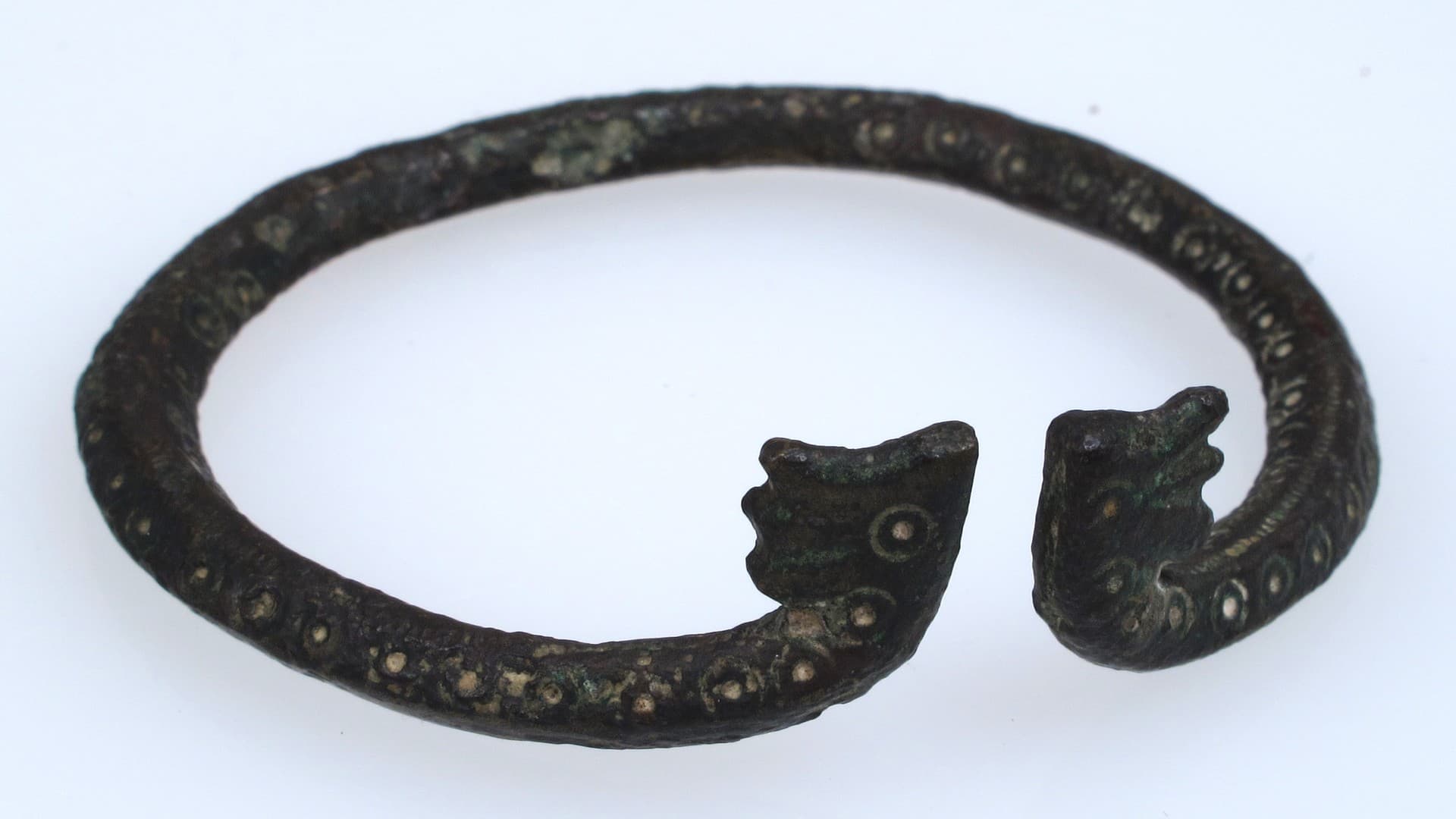
A berserker symbol turns up on pendants, gym shirts and forearms: a bear paw, a snarling bear head circled by runes, sometimes a Helm of Awe with claws. It is sold as the ancient emblem of Odin's warriors, the men who fought in a trance and bit their shields. Anyone who wants one sooner or later asks what the original looked like.
No. There is no historical berserker symbol: no runestone, amulet, saga or poem gives the berserkers an emblem. Every design sold under that name is modern.
The berserkers themselves are real. They are in a poem composed within living memory of the battles it describes, in laws that punished them and in a set of 12th century chessmen. What those sources give them is not a sign but a costume: a bear or wolf skin, a bloody shield, a roar. The berserker's only emblem was the animal he wore.
What is the berserker symbol?
The berserker symbol is a modern name for designs sold as the emblem of the berserkers, the frenzied Norse warriors of the sagas. The common versions use a bear paw, a bear or wolf head, a ring of runes, or a borrowed Icelandic stave such as the Helm of Awe. None of them has a historical source behind it.
There is no single design, which is the first clue. Look up the Vegvisir and you find one stave from one manuscript. Look up the berserker symbol and every seller shows a different picture, because there is no original to copy. The meanings attached to them, fury, courage and strength, come from the saga stories about the men, not from any sign they used.
Some searches for the phrase are after something else again: the Brand of Sacrifice from the Japanese manga Berserk, covered below.
Were berserkers real?
Yes. The berserkers are among the best attested warrior types of the Norse world. The oldest source is Haraldskvaedi, also called Hrafnsmal, a skaldic poem attributed to Thorbjorn Hornklofi, a poet at the court of the Norwegian king Harald Fairhair in the late 9th century.
Its verse on the battle of Hafrsfjord, fought between 872 and 900, is the first known use of the word:
- Verse 8: the berserkers bellowed, battle was under way for them; the wolf-skins howled and shook their iron spears.
- Verse 21: they are called wolf-skins who carry bloody shields in battle.
Later texts fill in the picture. In Ynglinga saga, written by Snorri Sturluson around 1230, Odin's men go into battle without mail, mad as dogs or wolves, biting their shields and strong as bears. Egil's Saga gives Egil a grandfather called Kveldulf, Evening-Wolf, said to change shape at night. Then the law steps in: according to Grettis saga, Earl Eirik Hakonarson outlawed berserkers in Norway, and the Icelandic Christian law of 1123 punished going berserk with lesser outlawry, three years of exile, for the man and for any bystanders who failed to bind him.
Read end to end, these sources describe the berserkers in detail: their dress, their noise, their shields, their god and their punishment. Not one of them mentions a sign.
Is there a real berserker symbol?
No. Across four centuries of sources, from the 9th century poem to the 13th century sagas and the law codes, no emblem, badge, rune or drawn sign is ever tied to the berserkers. What the record does hold is a small set of pictures of berserker-like warriors, and each one shows the man, not a symbol.
| Find or text | Date | What it shows |
|---|---|---|
| Torslunda die, Oland, Sweden | 6th to 7th century | A warrior with a wolf's head beside a one-eyed dancing figure |
| Gutenstein scabbard, Germany | 7th century | A wolf-headed warrior with a sword and a spear |
| Haraldskvaedi, verses 8 and 21 | Late 9th century | Berserkers roaring, wolf-skins with bloody shields |
| Ynglinga saga | About 1230 | Odin's men biting their shields, without armour |
| Lewis chessmen, Scotland | 1150 to 1200 | Four rooks biting the rims of their shields |
| Icelandic Christian law | 1123 | Going berserk punished with three years of exile |
The Torslunda dies are four bronze moulds found in a cairn on the island of Oland in 1870, now in the Swedish History Museum in Stockholm. Craftsmen hammered thin foil over them to decorate helmets like those from Vendel and Sutton Hoo. The Gutenstein scabbard, from a 7th century Alemannic grave found in 1887 near Sigmaringen, was lost in 1945 and later resurfaced in Russia. The Lewis chessmen, walrus ivory pieces found on the Isle of Lewis in 1831, are split between the British Museum and the National Museum of Scotland.
If anything on that list deserves to be called a berserker symbol, it is the animal skin itself, and the bitten shield.
Where do the modern berserker designs come from?
The modern designs come from three places: the meaning of the name, other Norse symbols borrowed for the job, and popular culture. The word itself only entered English in 1822, through Walter Scott's novel The Pirate, and the adjective berserk followed in the 1840s. The emblems are far younger.
- The bear. Most scholars read berserkr as bear-shirt, a warrior in a bearskin, and the Saga of Hrolf Kraki has its hero Bodvar Bjarki fight in the shape of a bear. Bear paws and bear heads turn that etymology into a logo.
- Borrowed symbols. Many designs put a berserker label on a sign with its own, unrelated history: the Helm of Awe, drawn in Iceland around 1550 to 1650; the Vegvisir, first recorded in 1860; or the Valknut, a genuine early shape with a modern name. None of them is linked to berserkers in any source.
- Pop culture. The largest single source of berserker imagery today is fiction: films, video games and above all Berserk, the manga by Kentaro Miura serialised from 1989, whose curse mark, the Brand of Sacrifice, is one of the most tattooed fictional signs in the world. Miura invented it, and he did not take the series' title or signs from Norse sources.
Runes get added to all three for flavour. Runes are letters, though, so a ring of them always spells something, or nothing at all.
Berserker, bear and wolf: what the sources actually give
The sources give two animals, and they are the closest thing to a real berserker image. The bear comes from the name and from Bodvar Bjarki. The wolf comes from the ulfhednar, the wolf-skins, named beside the berserkers in the very first poem and shown on the Torslunda die and the Gutenstein scabbard.
The two overlap. Haraldskvaedi puts berserkers and wolf-skins in the same battle line, and later sagas often use the words for the same men. Snorri compares Odin's warriors to both animals in one sentence: mad as dogs or wolves, strong as bears or wild oxen.
That is a meaning with a real source behind it. A bear or wolf warrior based on the Torslunda figure is historically sound. A bear paw inside a Helm of Awe is a modern collage of the animal and an unrelated Icelandic stave.
Berserker symbol tattoo: what to know first
A berserker tattoo is a good choice if you want what the sagas describe: courage, fury in a fight and a warrior bound to Odin. The history just needs to be honest. Since no berserker symbol existed, the strongest designs are the ones that copy real evidence.
Three options go straight back to the sources:
- The Torslunda wolf warrior, the oldest known picture of a man in a wolf skin, from the 6th or 7th century.
- A shield-biting Lewis chessman, the only medieval image of berserker fury, carved between 1150 and 1200.
- A line of Haraldskvaedi in runes, such as the berserkers bellowed. If you choose this, check the spelling rune by rune; our guide to runic sigils shows how real runic writing and bindrunes work.
Modern designs are fine as modern art. The Brand of Sacrifice belongs to Berserk, not to the Vikings, and a bear paw is jewellery, not an emblem. The Norse symbols hub lists which popular signs do have Viking Age finds behind them, such as Thor's hammer and the triple horn.
Why the berserkers had no need of a symbol
The berserkers had no symbol because their whole identity was visible on the body. A man in a wolf pelt, howling behind a bloody shield, needed no badge to say what he was. The poems describe them by sound and dress, and the Christian law that ended them punished a behaviour, going berserk, not the carrying of a sign.
That fits the Norse world as a whole. The signs its people did leave are few: Thor's hammer, a handful of carved shapes and, above all, runes, letters cut into stone, wood and metal. The god of the berserkers, Odin, is the same god who in the myths won the runes by hanging nine nights on Yggdrasil. If you want the older layer of Norse religion behind the frenzy, that is where it lies: not in an emblem, but in a script.
Want signs you can actually read?
The berserkers left a roar in a poem and no symbol at all. The 24 runes of the Elder Futhark each carry a sound, a name and a meaning, and you can learn to read them.
The easiest way in is to draw one. You can cast a free rune reading in your browser right now, using the genuine Elder Futhark and their traditional meanings. If you would rather go slowly, pull a rune of the day each morning, or read how online rune readings work first. And if you met your berserkers in a game, the runes in games series checks which game runes are real.
Keep the bear and the wolf; they are the berserkers' own. For signs that talk back, , free on iOS, Android, and the web, in English and Russian.
Frequently asked questions
Is there a real berserker symbol?
No. No runestone, amulet, saga, poem or law code gives the berserkers an emblem. The oldest source, a skaldic poem from the late 9th century, describes them by what they wore and how they sounded: wolf skins, bloody shields and a battle roar. Every design sold today as the berserker symbol was drawn in modern times, most of them in the last few decades.
What does the berserker symbol mean?
Today it stands for battle fury, courage and inner strength, the qualities people read into the berserkers of the sagas. Those meanings come from the stories, not from any historical sign, because no historical berserker sign exists. If a design uses a bear or a wolf, it points back to the bear and wolf skins that the Norse poems and sagas describe.
What is the oldest source for the berserkers?
Haraldskvaedi, also called Hrafnsmal, a skaldic poem attributed to Thorbjorn Hornklofi, a poet at the court of Harald Fairhair in the late 9th century. Its verse on the battle of Hafrsfjord, fought between 872 and 900, says the berserkers bellowed and the wolf-skins howled and shook their iron spears. It is the first known use of the word berserkir.
What does the word berserker mean?
Most scholars read Old Norse berserkr as bear-shirt, from ber, bear, and serkr, shirt: a warrior who went into battle in a bearskin. An older reading, bare-shirt, meaning a man who fought without armour, goes back to Snorri Sturluson in the 13th century and has little support today. The word reached English through Walter Scott's novel The Pirate in 1822.
Is the bear paw a Viking berserker symbol?
No. The bear paw pendant is a modern jewellery design. The link to the berserkers is real but indirect: the name berserkr most likely means bear-shirt, and the Saga of Hrolf Kraki has the hero Bodvar Bjarki fight in the shape of a bear. No bear paw emblem is known from any Viking Age find or text, and no source calls it a berserker sign.
Did berserkers carry a symbol on their shields?
No source says so. The shield is the one object the texts do tie to berserkers, but through behaviour: Haraldskvaedi says the wolf-skins carry bloody shields, Snorri's Ynglinga saga says Odin's men bit their shields, and four of the Lewis chessmen, carved between 1150 and 1200, bite the rims of theirs. None of these shields carries a described emblem.
What is the difference between berserkers and ulfhednar?
Berserkers are the bear-shirts and ulfhednar the wolf-skins. The poem Haraldskvaedi names both side by side among Harald Fairhair's warriors, and later sagas often treat them as the same kind of fighter. A 7th century bronze die from Torslunda on Oland shows a wolf-headed warrior next to a dancing figure, the oldest known picture of a man in a wolf skin.
Is the Brand of Sacrifice from Berserk a Norse symbol?
No. The Brand of Sacrifice comes from Berserk, the manga by the Japanese artist Kentaro Miura, serialised from 1989. It is a curse mark burned into the hero Guts in the story's Eclipse chapters. Miura invented it, and the series does not take its title or its symbols from Norse sources. Many searches for a berserker symbol are really looking for this sign.
Is the Helm of Awe a berserker symbol?
No. The Helm of Awe, Aegishjalmur, is an Icelandic magical stave whose drawing first appears in the Galdrabok of about 1550 to 1650, centuries after the last berserkers. It was meant to make its bearer frightening to enemies, which is why modern designs pair it with berserker themes. No source connects the stave to berserkers, and the berserkers vanish from Icelandic law long before it.
What happened to the berserkers?
They were outlawed. According to Grettis saga, Earl Eirik Hakonarson banned berserkers in Norway, and the Icelandic Christian law of 1123 punished anyone who went berserk with lesser outlawry, three years of exile. It also exiled the bystanders if they did not bind him. By the 12th century the organised berserker bands of the sagas had disappeared from the record.
What should I use for a berserker tattoo?
Use something with a real source behind it. A bear or wolf warrior based on the Torslunda die, a shield-biting Lewis chessman, or a line from Haraldskvaedi in runes all go back to genuine evidence. If you like a modern berserker design, wear it as modern art. Just do not present it as an ancient Viking emblem, because no such emblem is known.
Were berserkers connected to Odin?
In the written sources, yes. Snorri Sturluson's Ynglinga saga, written around 1230, calls the frenzied, armourless fighters Odin's men. The Torslunda die of the 6th or 7th century shows a wolf warrior beside a one-eyed dancing figure that many scholars read as Odin. Neither source gives the god or his warriors a special berserker sign.
Where can I try a real rune reading online?
You can cast a free rune reading in your browser with the Way of the Runes rune-reading tool. It uses the genuine 24 Elder Futhark runes and their traditional meanings, with quick single draws for a fast question and fuller spreads for something weightier, and a full description for every rune. It works on any device, in English and Russian.
Which rune are you?
Seven questions, about a minute, and you get one of the 24 Elder Futhark runes. The scoring is shown as you answer. Free, no signup.