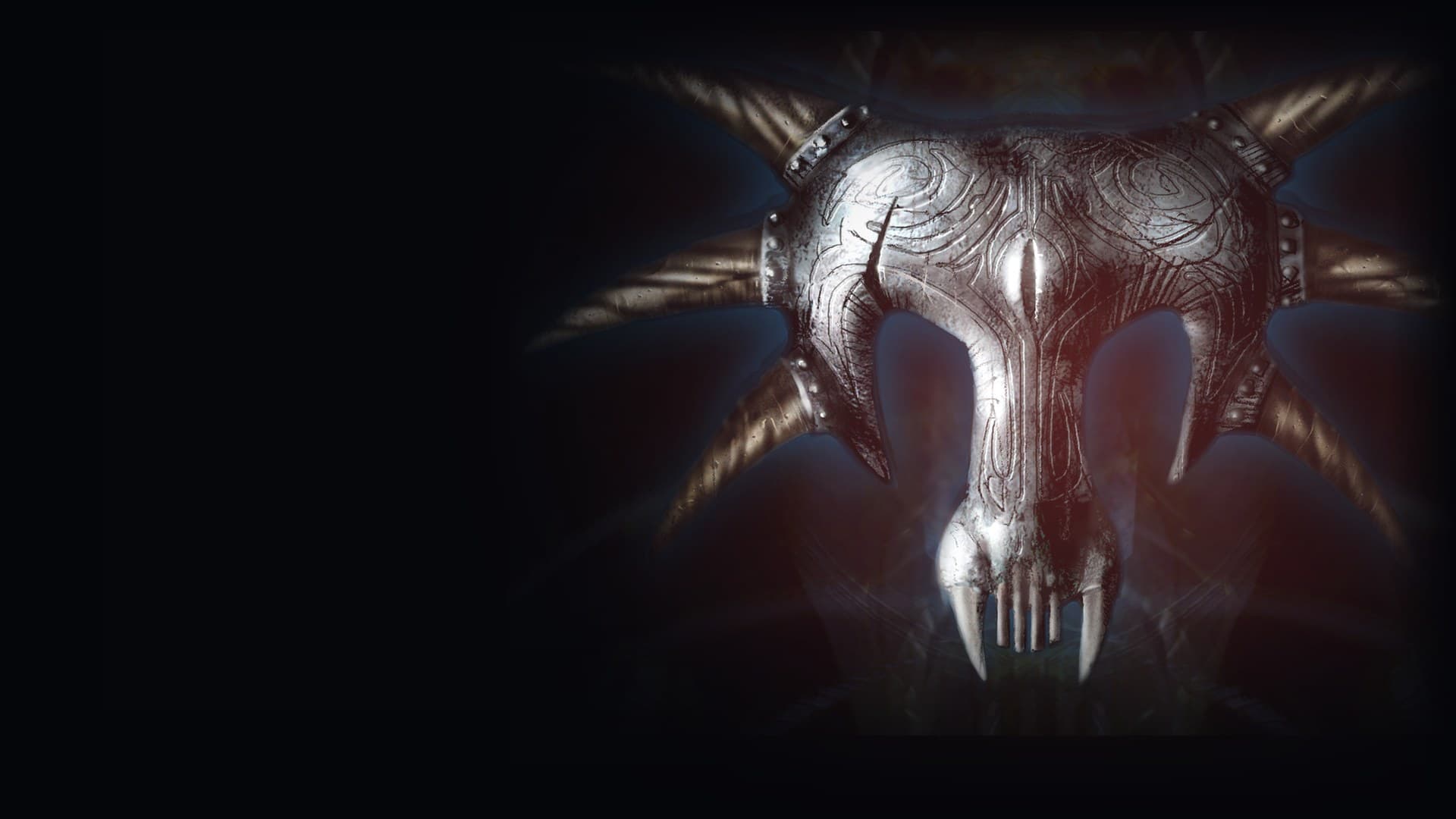
If you have played Gothic, you have stood at a rune table, spent hard-won magic ore, and watched a stone tablet light up with a symbol that lets you throw fire. The symbols look old. They look carved. And the game is literally called Gothic. So it is a fair question: are these real runes, and does anyone know what they say?
The short answer has two halves. The runes in Gothic are not real runes. They are invented spell-sigils, designed from scratch, with no alphabet behind them and nothing to decode. But real Gothic runes do exist. The Goths, the actual East Germanic people, carved genuine Elder Futhark, and a few of their inscriptions survive to this day. The game borrowed the name of a people who were real rune-carvers, and then drew its own symbols.
This guide covers what Gothic's runes actually are, why they cannot be read, and what the historical Goths really wrote.
What the runes in Gothic actually are
In Gothic, released on 15 March 2001 by the German studio Piranha Bytes, a rune is not writing. It is a reusable spell, bound into a stone tablet that you equip and cast from at the cost of mana. Scrolls do the same job once and vanish; a rune serves you for the rest of the game. That permanence is exactly why runes matter so much in the Colony.
Making one is deliberately hard. A rune is inscribed into magic ore, the most precious substance in the penal colony and the reason the colony exists at all, at a rune table, and only by someone who has joined a mage guild and been taught to read the runic script. Which runes you may use is gated by the six Circles of Magic: Fire Bolt, Ice Bolt and Light at the first circle, and by the sixth, Breath of Death and Uriziel's Wave of Death.
So the fiction is coherent and rather good. It is simply not linguistic. Nothing in the game claims these marks spell anything, and nothing in the game lets you read them.
Why you cannot read them
Look closely at a Gothic rune and the giveaway is the geometry. Each sigil is a construction inside a frame: a circle with spokes radiating from the centre, a triangle with a shape enclosed inside it, a square with hooked lines turning inward. The developers' own concept sheet for the spell signs, drawn by artist Ralf Marczinczik and titled GOTHIC Zauberspruch-Zeichen, lays fourteen of them out in a grid with their German spell names underneath: Licht, Feuerball, Blitz, Heilen, Teleportation.
That sheet settles the question. These are icons for spells, designed one per effect, the way an interface designer draws an icon set. They are not letters, they are not phonetic, and they do not combine into words.
Compare that with the real thing. Every Elder Futhark rune is built from straight strokes cut for carving into wood and stone, and every one of the 24 carries a sound, a name and a meaning together. Set a futhark chart beside Gothic's spell signs and nothing lines up. This also makes Gothic the opposite of Valheim, whose runestones use the genuine Elder Futhark as a cipher you can actually decode.
The real Gothic runes, which are a different thing entirely
Here is where the name pays off. The Goths were an East Germanic people, and before Christianity reached them they wrote using the Elder Futhark. Only a handful of their inscriptions survive, almost all cut into metal, and they are among the rarest direct evidence of the Gothic language:
- The Ring of Pietroassa, found in Romania in 1837 and dated to about AD 400. Fifteen Elder Futhark runes reading gutani wi hailag, generally read as "sacred to the Goths" or "sacred inheritance of the Goths". A collector clipped the ring with pliers in 1875 and destroyed its seventh rune.
- The Spearhead of Kovel, Ukraine, early 3rd century, reading tilarids, roughly "target-rider", most likely the weapon's name.
- The Spearhead of Dahmsdorf-Muncheberg, Brandenburg, reading ranja, "router".
- The spindle whorl of Letcani, Romania, 4th century.
- The buckle of Szabadbattyan, Hungary, early 5th century, reading mariŋs.
Then the runes stopped. Around the middle of the 4th century the Gothic bishop Wulfila built a new alphabet, adapted mostly from Greek, to translate the Bible into Gothic, and that script displaced runic writing almost completely. The scarcity of Gothic runic finds is a direct consequence of how early the Goths were Christianised.
So "Gothic runes" is a real category with real objects behind it. It just does not describe anything in the game.
Game fiction vs. real history, side by side
| Feature | Gothic (2001) | Real Gothic runes |
|---|---|---|
| What a rune is | A reusable spell object | A letter with a sound and a name |
| The symbols | Invented sigils in circles and triangles | Elder Futhark, 24 characters |
| Written language | None | Gothic, an East Germanic language |
| Can you read it? | No, nothing is encoded | Yes, once you learn the runes |
| Made from | Magic ore, cut at a rune table | Cut into gold, silver and iron |
| Who could use them | Guild mages only | Anyone who learned the script |
| Survives as | Game assets from 2001 | A handful of objects, c. AD 200 to 400 |
The pattern is the reverse of what you would expect. The game with the runic name has the least runic runes in the series we have covered, while the historical people behind that name were genuine carvers of the Elder Futhark.
Why the setting has no room for real runes
Gothic is not set in a Norse world, and it never pretends to be. The story takes place in Myrtana, an invented kingdom, and specifically inside a penal colony near Khorinis that has been sealed off by a magical barrier the prisoners cannot escape. The religion is original too, centred on gods named Innos, Adanos and Beliar, served by Fire Mages and Water Mages rather than by anything from Norse tradition.
Given that, invented sigils are the honest choice. Dropping real Elder Futhark into Myrtana would have imported a whole mythology the game did not want. Piranha Bytes drew their own symbols instead, and the result is consistent: an original world with an original magical script.
What the game leaves out is everything the real runes carry beyond their shapes. In Norse tradition Odin wins the runes through sacrifice, hanging nine nights on Yggdrasil pierced by his own spear. From there they served as charms and protections, combined into bindrunes and sigils to hold a focused intent, and read for guidance in a practice that continues today.
Want runes that actually mean something?
Gothic gives you symbols that do things. The real Elder Futhark gives you symbols that say things, and that is the part worth having. Each of the 24 runes carries a clear, learnable meaning, and reading them takes no ore, no rune table and no guild membership.
The easiest way in is to draw. You can cast a free rune reading in your browser right now, using the genuine Elder Futhark and their traditional meanings, with a quick single draw for a fast question or a fuller spread for something weightier. If you would rather build the habit slowly, pull a rune of the day each morning and learn the futhark one sign at a time, or read how online rune readings work before you start. You can also compare the rest of the series on the runes in games hub.
If you came here from the 2026 remake, the answer holds there too, though Alkimia redrew every sigil and shifted the spell list: see Are the runes in Gothic 1 Remake real? for what actually changed.
The sequel makes the same point with arithmetic. Gothic 2 carries 57 runes, lets you craft them from reagents chosen to match the spell, and puts a drawing of a wolf on Summon Wolf. Its add-on goes further still: Night of the Raven is the one game in the series with a script you genuinely have to learn to read.
If the name Gothic sent you looking for real runes, you were closer than you knew. The game's glyphs are invented, but the people the word names carved the Elder Futhark into gold and iron, and we can still read what they wrote. , free on iOS, Android, and the web, in English and Russian.
Frequently asked questions
Are the runes in Gothic 1 real runes?
No. The rune tablets in Gothic are invented magical objects, not writing. Each one carries a single designed sigil built from circles, triangles and squares, and none of them is an Elder Futhark character. They are spell-stones rather than letters. The irony is that the game's own name points at a people, the Goths, who really did carve runes.
What do the runes in Gothic 1 actually do?
They cast spells, permanently and repeatedly. A rune is a reusable spell object: equip it, spend mana, and it fires Fire Bolt, Healing, Teleportation or whatever spell was bound into it. Scrolls do the same thing once and are consumed. Runes are the mage's lasting armoury, which is why they are treasured in the Colony.
Can you read or translate the runes in Gothic 1?
No, and there is nothing to translate. Gothic's rune glyphs are not a cipher and not an alphabet, so they do not spell words in any language. Each sigil identifies one spell, the way an icon identifies an app. Unlike Valheim, whose runestones use the real Elder Futhark as a cipher for English, a Gothic rune decodes to nothing at all.
Are Gothic's runes Elder Futhark?
No. The Elder Futhark is a 24-character alphabet of angular letters cut mostly from straight strokes. Gothic's spell signs are geometric constructions, drawn inside circles, triangles and squares, with radiating spokes and enclosed shapes. Set the two side by side and no Gothic glyph matches any futhark rune. The resemblance is atmosphere, not ancestry.
Did the real Goths use runes?
Yes, and this is the genuine surprise. The Goths were an East Germanic people who wrote in Elder Futhark before their conversion to Christianity. A handful of Gothic runic inscriptions survive on metal objects, including the Ring of Pietroassa and the Spearhead of Kovel. So real Gothic runes exist. They simply have nothing to do with the video game.
What is the Ring of Pietroassa?
A gold ring found at Pietroassa in Romania in 1837, dated to roughly AD 400, carrying fifteen Elder Futhark runes. The inscription reads gutani wi hailag, usually interpreted as 'sacred to the Goths' or 'sacred inheritance of the Goths'. It is the most famous surviving Gothic runic object. The ring was damaged in 1875, destroying its seventh rune.
What other Gothic runic inscriptions survive?
Only a small handful. The Spearhead of Kovel from Ukraine, early 3rd century, reads tilarids, meaning roughly 'target-rider'. The Spearhead of Dahmsdorf-Muncheberg in Germany reads ranja, 'router'. A 4th-century spindle whorl from Letcani and an early 5th-century buckle from Szabadbattyan round out the set. All use Elder Futhark.
Why did Gothic runes stop being used?
Christianity arrived early among the Goths. In the mid-4th century the bishop Wulfila devised the Gothic alphabet, adapted largely from Greek, to translate the Bible into Gothic. That alphabet replaced runic writing quickly, which is why so few Gothic runic inscriptions survive. The runes were displaced by a script built for scripture.
How do you make a rune in Gothic 1?
You cannot, until you become a mage. Runes are inscribed into magic ore at a rune table, and only by someone who has joined a mage guild and been taught to read the runic script. Magic ore is the Colony's most precious substance, which makes every rune expensive. The gate is social as much as magical.
What are the Circles of Magic in Gothic 1?
Six ranks of magical training that gate which runes you can use. The first circle covers Fire Bolt, Ice Bolt and Light. Higher circles unlock Healing, Fireball, Telekinesis, Chain Lightning, Rain of Fire and, at the sixth, Breath of Death and Uriziel's Wave of Death. You rise through the circles by progressing within a mage guild.
Is Gothic 1 based on Norse mythology?
No. Gothic is set in Myrtana, an invented kingdom, and specifically in the penal colony around Khorinis, sealed under a magical barrier. Its religion centres on invented gods, chiefly Innos, Adanos and Beliar, served by Fire Mages and Water Mages. There are no Norse gods, no Eddas and no Yggdrasil. The setting is original dark fantasy.
What is the Elder Futhark?
The oldest runic alphabet, 24 characters used by Germanic peoples from roughly 150 to 800 CE. Every rune is three things at once: a sound, a name and a concept. Fehu means cattle and wealth, Uruz the wild ox and raw strength, Ansuz a god and divine breath. It is the system modern rune readers still learn.
How do Gothic's runes compare to other games' runes?
Gothic sits at the invented end of the scale. Valheim is the outlier that uses the real Elder Futhark as a cipher for English. The Witcher 3's runestones and The Blood of Dawnwalker's sigils are original designs, like Gothic's. What sets Gothic apart is only its name, which happens to belong to a people who genuinely carved runes.
Where can I try a real rune reading online?
You can cast a free rune reading in your browser with the Way of the Runes rune-reading tool. It uses the genuine 24 Elder Futhark runes and their traditional meanings, with quick single draws for a fast question and fuller spreads for something weightier, and a full description for every rune. It works on any device, in English and Russian.
Which rune are you?
Seven questions, about a minute, and you get one of the 24 Elder Futhark runes. The scoring is shown as you answer. Free, no signup.