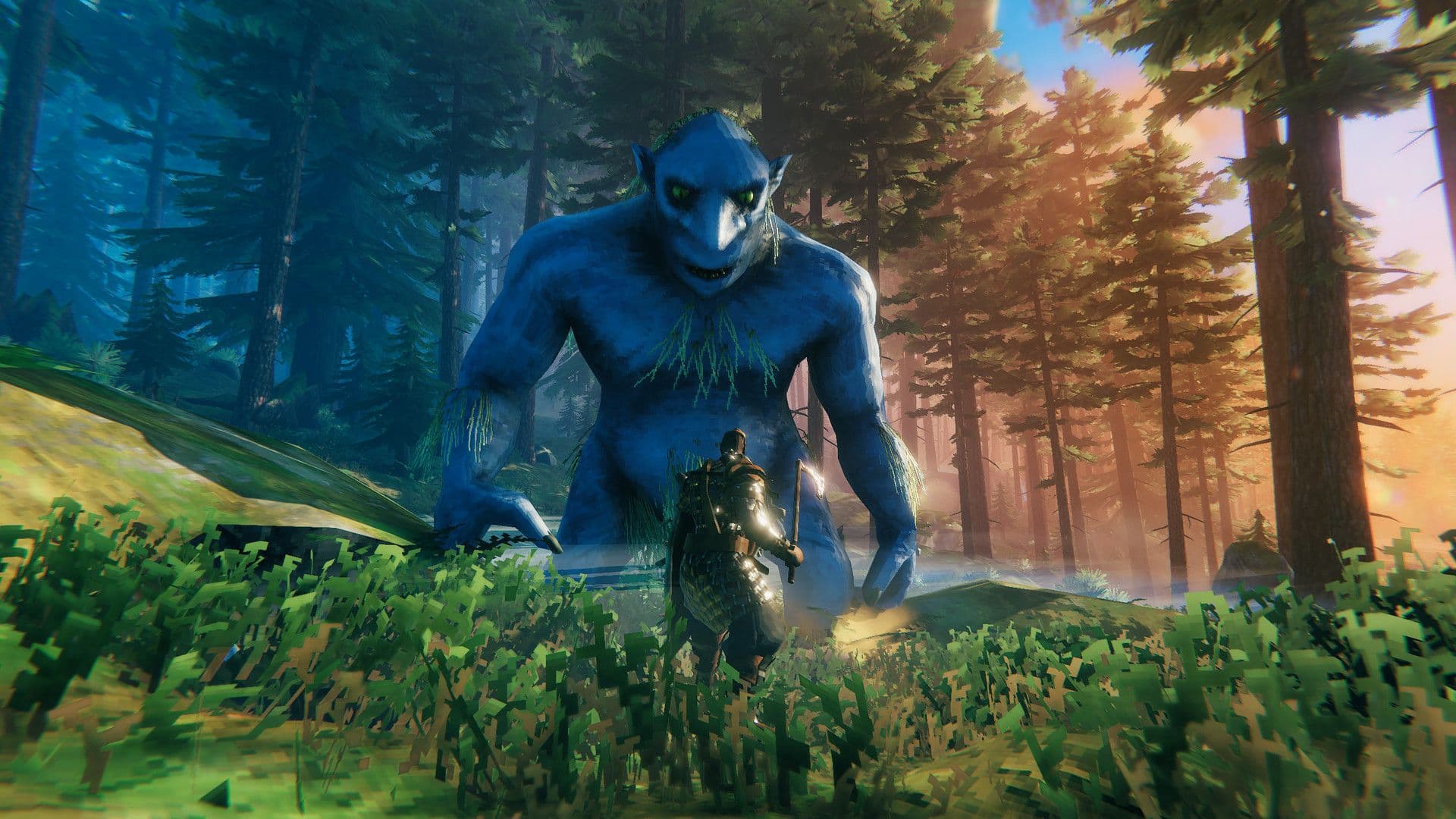
If you have played Valheim, you have walked up to a runestone, watched red runes flicker across it, and seen the text resolve into a message. Unlike most games, Valheim leans on runes that look genuinely old. It raises an honest question for anyone drawn to the real thing: are these actual runes, and can you read them?
The short answer is the most interesting in this whole series: the runes in Valheim are real. They are the genuine Elder Futhark, the true 24-character Germanic alphabet. But Valheim uses those real runes as a cipher for English, so a runestone spells English words in runic shapes rather than the Old Norse the Vikings actually carved. The alphabet is authentic; the language behind it is modern. That makes Valheim the closest of any game we have covered to the real thing, with one clever twist.
This guide breaks down what Valheim's runes actually are, how you can read them, how the Vikings really used the same alphabet, and where the game stays faithful and where it modernises.
What the runes in Valheim actually are
In the game, runes are writing. Released in early access in 2021 by Iron Gate Studio, Valheim scatters runestones across its world: large rocks carved with red runes that carry fragments of lore, warnings about creatures, and hints toward the bosses. Walk up to one and the runic text fades into readable English, so you always get the message even if you never learn the alphabet.
The script itself is the real Elder Futhark. Valheim does not invent a fantasy alphabet; it uses the genuine 24 runes. The catch is the mapping. Rather than using the runes phonetically for Old Norse, the way they were originally used, the game treats them as a straight substitution cipher: each rune stands for one English letter. So the runestones are authentic runes spelling out English. It is a common, sensible choice for a game, and it has a real payoff for anyone curious, because it means the runes genuinely say something.
Yes, you can actually read them
Here is what sets Valheim apart. In every other game in this series, the runes are invented and decode into nothing. In Valheim they decode into English, because the game uses real runes as a cipher. Take an Elder Futhark chart, match each rune on a runestone to its English letter, and the message appears. The game even does it for you, fading the runes into plain text, but the point stands: these are readable runes, not decoration.
That is the doorway. If Valheim taught you to recognise a few rune shapes, you have already started learning the real alphabet. The difference is that the game stops at the letters, and the real system goes further.
How the Vikings really used the same alphabet
The Elder Futhark that Valheim borrows was a real writing system, and the way it was used is richer than a letter cipher. Each rune is a sound, a name, and a word bundled together: Fehu means cattle and wealth, Ansuz a god or divine breath, Uruz the wild ox and raw strength. People carved it into wood, bone, stone, and metal to write Old Norse and Proto-Germanic, phonetically, long before anyone spelled English with it.
The magic came layered on top. In Norse tradition, Odin wins the runes through sacrifice, hanging nine nights on the world-tree Yggdrasil, pierced by his own spear, until the runes reveal themselves. From there the runes served as charms, protections, and messages, combined into bindrunes and sigils to carry a focused intent, and read for guidance in a form of divination that continues today. Valheim keeps the shapes of this system and, quite reasonably for a game, leaves the sounds and meanings out.
Game fiction vs. real history, side by side
| Feature | Valheim | Real runes |
|---|---|---|
| The alphabet | The genuine Elder Futhark | The genuine Elder Futhark |
| What each rune is | A stand-in for an English letter | A sound, a name, and a word |
| Language written | Modern English, in runic shapes | Old Norse and Proto-Germanic |
| Can you read it? | Yes, with a futhark chart | Yes, once you learn the sounds |
| Rune meanings | Not used; letters only | Central, and used for divination |
| Norse authenticity | High: lore from the Eddas | The real historical source |
The table makes the pattern clear. Valheim is not faking the runes, which is why it stands out. It uses the real alphabet and real Norse lore, then modernises one layer: the language and the meanings. Where other games keep the look of runes and drop everything else, Valheim keeps the letters and drops only the sounds and the symbolism.
The most faithful Norse world in the series
Valheim earns its runes with its setting. The game is framed as the tenth realm of the Norse cosmos, a wild purgatory where Odin the Allfather cast his enemies, the Vanir, the giants, and creatures older than any others, into exile as the Forsaken. You are a fallen warrior sent to defeat them and earn your place in Valhalla.
The runestones fit that lore exactly. Many were placed by Odin as signposts toward the Forsaken's ritual grounds. Others were left by those who came before, a few of them named, like the writer Ulf and the shieldmaiden Astrid, whose stone reads "I was Astrid, a shieldmaiden of the forest." The bosses, the guiding ravens, and the cosmology all come from genuine Norse sources, chiefly the Poetic Edda and the Prose Edda. It is one of the most faithful uses of Norse mythology in any game, which is exactly why using the real Elder Futhark feels right rather than decorative.
Want to know what the runes really say?
Valheim gives you the letters. The real runes add the meanings the game leaves out. The 24 Elder Futhark runes each carry a clear, learnable sense, and reading them is a natural next step from decoding a runestone. No cipher chart required, just a question and the runes.
The most enjoyable way in is simply to draw. You can cast a free rune reading in your browser right now, using the genuine Elder Futhark and their traditional meanings, with a quick single draw for a fast question or a fuller spread for something weightier. If you would rather build a habit, pull a rune of the day each morning and learn the futhark one sign at a time, or explore how online rune readings work before you start.
If you came here from Fable, it plays the same trick with invented shapes instead of real ones: its map runes are an English cipher and its four Oracle glyphs spell Y, M, C and A. See Are the runes in Fable real? for how to tell a cipher from an alphabet.
If you came here from Minecraft, its enchanting table is the opposite case: an invented alphabet from a 1990 shareware game, used as an English cipher to spell random words. Valheim uses real runes for real sentences. See Are the runes in Minecraft real?.
If you came here from Skyrim, its Word Walls are the reverse of Valheim's runestones: an invented alphabet, drawn as dragon claw marks, writing an invented language. Valheim puts real letters to an English message. See Are the runes in Skyrim real?.
If you came here from Tunic, its Trunic script is Valheim turned inside out: invented glyphs instead of real runes, but they write English sounds, not English spelling, which is how the futhark itself worked. See Are the runes in Tunic real?.
If you came here from Hogwarts Legacy, the real futhark is there too, but only in the books: the two runes Hermione mixes up in her Ancient Runes exam, ehwaz and eihwaz, are Elder Futhark letters, while the game's puzzle doors count beasts instead. See Are the runes in Hogwarts Legacy real?.
If you came here from God of War, it is the other game that carves the real Elder Futhark, and its SteelBook runes spell English too. The catch is the date: the Vikings it portrays had already switched to the 16-letter Younger Futhark. See Are the runes in God of War real?.
If you came here from Ultima, it played the same trick 40 years earlier: Britannia has written English in Germanic runes since 1981, and its magic runes are letters too, the eight Runes of Virtue spelling INFINITY. See Are the runes in Ultima real?.
If you came here from Hellblade, its Lorestones use the same trick: real Elder Futhark letters as a cipher for English, hidden in rings around 44 stones and spelling one ten-word sentence. Its spelling gives the game away, with TRUTH cut in five runes. See Are the runes in Hellblade real?.
If you came here from Crusader Kings III, its runestones are the opposite of these: real Viking reasons to raise a stone, a death, a conquest or a new rank, and no letters on it at all. Valheim gives you the letters without the reason. See Are the runes in Crusader Kings III real?.
If Valheim sent you looking for the real thing, you are already halfway there, because the runes on those stones are real. Learn the sounds and the meanings behind them, and every runestone becomes twice as readable. , free on iOS, Android, and the web, in English and Russian.
Frequently asked questions
Are the runes in Valheim real runes?
Yes, more than in almost any other game. Valheim's runestones are written in the genuine Elder Futhark, the real 24-character Germanic runic alphabet. The catch is how the game uses it: the runes stand in for English letters, so a runestone spells out English words in runic characters rather than the Old Norse the Vikings actually wrote. The alphabet is real; the language behind it is modern English.
What alphabet does Valheim use?
The Elder Futhark, the oldest surviving Germanic runic alphabet of 24 characters, used from roughly the 2nd to the 8th century CE across Scandinavia and beyond. Valheim uses these real runes as a substitution cipher: each rune maps to one English letter. So the script is authentic, but it is deployed as a font for English rather than as the phonetic system for Old Norse it originally was.
Can you read or translate the runestones in Valheim?
Yes, and this is what sets Valheim apart. Because the runes are a straight cipher for English, you can decode a Valheim runestone with a real Elder Futhark chart, matching each rune to its English letter. In-game the text also fades from runes into readable English as you approach. Unlike the invented glyphs in most fantasy games, these runes genuinely spell something.
Do the Valheim runes spell Old Norse or English?
English. Historically the Elder Futhark was used to write Old Norse and Proto-Germanic, with each rune carrying a sound. Valheim keeps the rune shapes but assigns them to English letters, so the runestones read as English once decoded. It is a common, player-friendly choice: authentic-looking runes carrying a language everyone in the audience can read.
What do the runestones in Valheim say?
They carry lore and hints. Runestones are large rocks inscribed with red runes that share fragments of the world's story, warnings about creatures, and clues toward the bosses. Some are signed, including one by a shieldmaiden named Astrid that reads 'I was Astrid, a shieldmaiden of the forest,' and others by a writer called Ulf. Together they sketch the history of Valheim and the Forsaken.
Who wrote the runestones in Valheim?
In the lore, many were placed by Odin himself as signposts pointing toward the ritual grounds of the Forsaken, the exiled foes you are sent to defeat. Others were left by earlier arrivals to Valheim, a few named, like Ulf and the shieldmaiden Astrid, and many anonymous. They function as the messages of those who came before you into the tenth realm.
Is Valheim based on real Norse mythology?
Deeply. Valheim is framed as the tenth realm of the Norse cosmos, a purgatory where Odin the Allfather cast his enemies, the Vanir, the giants, and creatures older than any others, into exile. The bosses, the ravens that guide you, the runestones, and the cosmology are all drawn from genuine Norse sources, chiefly the Poetic Edda and the Prose Edda. It is one of the most faithful uses of Norse myth in games.
What is the Elder Futhark?
The Elder Futhark is the oldest form of the runic alphabet, 24 characters used by Germanic and Norse peoples from around 150 to 800 CE. Each rune is a letter with a sound, a name, and an associated word, such as Fehu for cattle and wealth or Ansuz for a god and divine breath. It was carved into wood, bone, stone, and metal, and it is the system most modern rune readers learn today.
Do the Valheim runes have magical meanings?
Not in the game. Valheim uses the runes only as an alphabet, so a rune on a Valheim runestone is just a letter in an English word. The real Elder Futhark is richer: each rune also carries a name and a concept, like Fehu for wealth or Uruz for strength, which is what people read for guidance and use in charms. The game borrows the letters but leaves the meanings behind.
Is Valheim's use of runes historically accurate?
The alphabet is accurate and the Norse lore is faithful, but the writing is a modern convenience. Real runestones carried Old Norse, carved by people who used the runes phonetically. Valheim's stones carry English spelled in runes, and the runes are used as a plain alphabet rather than the name-and-sound system of the originals. So it is authentic in look and spirit, and deliberately modernised in language.
How are Valheim's runes different from other games' runes?
Most fantasy games invent their runes. The glyphs in Crimson Desert, the hex-sigils in The Blood of Dawnwalker, and the runestones in The Witcher 3 are all original designs that do not decode into anything. Valheim is the exception: it uses the real Elder Futhark, so its runestones can actually be read. That makes it the closest of them all to the genuine article.
What is Valheim about?
Valheim is a Viking survival and exploration game set in the tenth Norse realm, a wild afterlife where a fallen warrior must survive, build, and defeat the Forsaken to earn a place in Valhalla. You explore biomes named for Norse concepts, raise longhouses, sail longships, and fight mythic bosses, with runestones scattered across the world telling the story as you go.
Can I learn to read real runes like the ones in Valheim?
Yes, and Valheim is a good doorway. The 24 Elder Futhark runes each carry a clear meaning you can learn one at a time, then combine into a reading for a real question. You can start with a free online rune reading, draw a single rune of the day, or study each sign in turn. The game shows you the letters; the real system adds the meanings behind them.
Where can I try a real rune reading online?
You can cast a free rune reading in your browser with the Way of the Runes rune-reading tool, which uses the genuine 24 Elder Futhark runes and their traditional meanings. It offers quick single draws for a fast question and fuller spreads for something weightier, with a full description for every rune. It works on any device, in English and Russian.
Which rune are you?
Seven questions, about a minute, and you get one of the 24 Elder Futhark runes. The scoring is shown as you answer. Free, no signup.