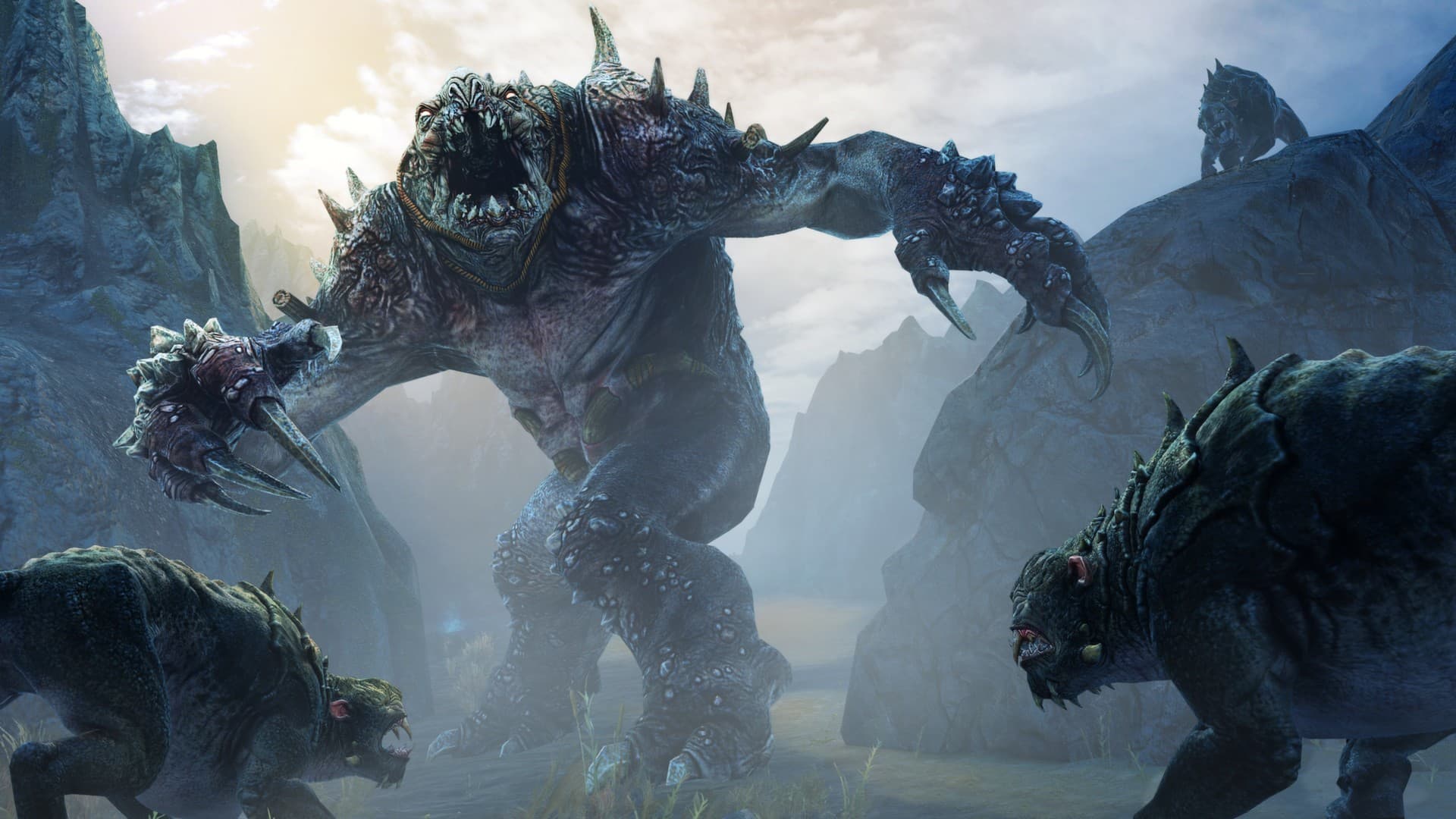
The Lord of the Rings Online opened pre-purchase for its next expansion, The Wolves of Mordor, on 30 September 2026, the same day Middle-earth: Shadow of War was dated for Nintendo Switch 2. Middle-earth is back on screens this autumn, and both games hand you something called a rune: a stone the Rune-keeper etches with a chisel, and a mark Talion inscribes on a ring of power. Someone is going to ask whether those runes are real.
No. The runes in Middle-earth games are spells and stat bonuses, and the carved script around them is Tolkien's invention. Not one of them writes the Elder Futhark.
What makes Middle-earth worth its own answer is the man behind it. J.R.R. Tolkien held Oxford's chair of Anglo-Saxon from 1925 to 1945, and in 1937 he put genuine Anglo-Saxon runes on the map at the front of The Hobbit. Only later did he invent runes of his own for The Lord of the Rings. The games inherited the invention. Middle-earth's games learned their runes from the wrong Tolkien book.
What is a rune in the Middle-earth games?
In the Middle-earth games a rune is a power, not a letter. In The Lord of the Rings Online it is a spell a Rune-keeper etches on a stone. In Shadow of Mordor it is a bonus dropped by an orc captain and slotted into a weapon. In Return to Moria it is an upgrade made at a Rune Table.
Here are the four games side by side.
| Game | Year | What a "rune" is |
|---|---|---|
| The Lord of the Rings Online | 2007 (Rune-keeper 2008) | A spell etched on a stone by a caster class |
| Middle-earth: Shadow of Mordor | 2014 | A bonus dropped by Uruk captains, slotted into a weapon |
| Middle-earth: Shadow of War | 2017 | A passive ability inscribed on the ring of power |
| The Lord of the Rings: Return to Moria | 2023 | A weapon upgrade made at a Rune Table |
Four studios, four meanings, one shared rule: the rune does something. None of them says something.
Are LOTRO's Rune-keeper runes real?
No, but the Rune-keeper comes closer to the idea of writing than any class in this series. It arrived with the Mines of Moria expansion in November 2008, open to Elves and Dwarves, and to Men since Update 33.2 in September 2022. Its runes are etched on stones with a chisel, and every one is a spell.
Look at what the spells are called. Writ of Fire. Ceaseless Argument. Scribe's Spark. Words of Grace. Prelude to Hope. A writ is a legal document, an argument is a speech, a scribe is a copyist, a prelude is the opening of a piece. Turbine named a whole class of magic after the act of writing and speaking, and then built it on a bar instead of an alphabet.
That bar is attunement. Battle skills, Dagor, push you one way; healing skills, Nestad, push you the other, across nine steps of healing attunement in the 2008 design. Steady skills, Thalas, work anywhere on the bar. The names are Elvish, and dagor is the Sindarin word for battle, which is a nice touch. But the Rune-keeper's choice in a fight is how far to lean, not which letter to cut.
A real rune carver had the opposite problem. Every sign in the futhark was a sound, and the carver's skill was spelling. The Rune-keeper has the vocabulary of writing and none of its letters.
Are the runes in Shadow of Mordor and Return to Moria real?
No. In Shadow of Mordor runes are loot. Kill an Uruk captain or warchief and a rune drops; a warchief adds two levels to it. Talion fits them into Urfael the sword, Acharn the dagger and Azkar the bow, one to five per weapon depending on upgrades. Epic runes are finite and carry the strongest effects.
Shadow of War, released on 10 October 2017, moved most of that work to gems in three kinds, Potency, Vitality and Wealth, each with five tiers, with a gem slot costing 1,000 Mirian to open. The runes did not vanish. They moved onto Talion's ring of power as passive abilities. A rune went from something you pull off a dead orc to something you inscribe on a magic ring, and at no point did it become a letter.
Return to Moria, a dwarven survival game released on 24 October 2023 and on Steam since 27 August 2024, has a Rune Table. Dwarves apply runes to weapons there, and player guides list elemental runes such as flame, ice and thunder. This is the same gear sense of the word that we traced in why so many games call their gear runes: a stone that adds damage.
Did Tolkien use real runes?
Yes, and that is the twist. The Hobbit (1937) prints runes on Thror's Map, and they are real: a form of English runes, the Anglo-Saxon futhorc adapted to modern English. Tolkien's note in the book says Dwarves kept runes for private or secret records, and that on the map all the normal runes are found except X.
His note opens with a definition any runologist would sign: "Runes were old letters originally used for cutting or scratching on wood, stone, or metal, and so were thin and angular." He then admits the swap. The Dwarves' runes, he writes, "are in this book represented by English runes."
The Anglo-Saxon futhorc was his professional territory. It is the English branch of the rune family, and it grew from 26 runes to a 28-letter Anglo-Frisian row and finally to 33. A reader in 1937 could take the map, find a chart of the futhorc, and read it in English. The runes on Thror's Map are the real thing.
What are the Cirth, Tolkien's own runes?
The Cirth are the runes Tolkien invented for The Lord of the Rings. The word is Sindarin for "runes". Wikipedia calls them a semi-artificial script based on real runic alphabets. They are set out in Appendix E of The Return of the King, in a table that runs to about 60 signs.
In the story the Grey Elves of Beleriand made them, and the rune-rows are called the Angerthas, "long rune-rows". The Elvish version is the Angerthas Daeron. The Dwarves of Moria revised it into the Angerthas Moria, with unsystematic changes in value. That drift is true to life: real rune-rows changed the same untidy way as they passed from one people to another.
The famous example is Balin's tomb. Its upper line is Khuzdul in the Angerthas Moria, Balin Fundinul Uzbad Khazaddumu. Its lower line is English in the Angerthas Erebor: "Balin son of Fundin, Lord of Moria." The shapes look like futhark. The values are Tolkien's.
And the Doors of Durin, the gate Gimli leads his dwarves to in the opening of Return to Moria, are not runic at all. They carry Tengwar, Tolkien's Elvish letters, writing Sindarin: Ennyn Durin Aran Moria, pedo mellon a minno, "Speak, friend, and enter."
Middle-earth game runes vs. the Elder Futhark
| Feature | Middle-earth games (2007) | Elder Futhark |
|---|---|---|
| What one sign is | A spell, a stat bonus or a weapon upgrade | A letter with a sound, a name and a meaning |
| How many | Depends on the game and patch | 24 |
| Carved script behind it | Tolkien's Cirth and Tengwar | Itself |
| Can it be read? | The game runes, no; Cirth, only once learned as a new alphabet | Yes, once you learn the letters |
| Who designed it | Turbine, Monolith, Free Range Games, after Tolkien | Early Germanic peoples |
| In use | Since 24 April 2007 | Roughly 150 to 800 CE |
The real runes, briefly
The Elder Futhark is the oldest runic alphabet: 24 letters used by Germanic peoples from roughly 150 to 800 CE, cut into wood, bone, stone and metal. Each rune is a sound, a name and a word. In the Viking Age Scandinavians cut it to the 16-letter Younger Futhark; in England it grew into the futhorc Tolkien drew on.
So there are three layers in Middle-earth, and only the oldest is real. The futhorc on Thror's Map is genuine. The Cirth on Balin's tomb are Tolkien's careful imitation. The runes in the games are a third step away again, borrowing the word from Tolkien's imitation and turning it into a stat. God of War and Valheim are the games in this series that put real futhark letters on screen. The books behind Hogwarts Legacy at least name two real runes.
Beyond the letters, real runes carry belief. In Norse tradition Odin wins the runes by hanging nine nights on Yggdrasil. They served as charms and protections, were combined into bindrunes and sigils to hold a focused intent, and are still read for guidance.
Why do Middle-earth games skip the real runes?
Because the licence points at The Lord of the Rings, not The Hobbit's map. Middle-earth's own writing is the Cirth and the Tengwar, and a game set in Moria has to look like Tolkien's Moria. Putting the English futhorc on Balin's tomb would be wrong inside the fiction, even though it is the one real alphabet Tolkien used.
The result is a strange inheritance. Tolkien started with a real Old English alphabet, replaced it with his own for the sequel, and the games picked up the replacement and dropped the writing altogether. Compare Skyrim, whose Word Walls run on an invented dragon alphabet, or the rest of the runes in games series.
Want runes you can actually read?
Start where Tolkien started: with the letters. The rune of the day teaches the futhark one sign at a time, and how online rune readings work explains the method first. Or draw now: a free rune reading in your browser uses the genuine Elder Futhark and their traditional meanings.
The Rune-keeper argues with orcs and Talion fits runes into a sword. Thror's Map is still the better clue. , free on iOS, Android, and the web, in English and Russian.
Frequently asked questions
Are the runes in Middle-earth games real runes?
No. In The Lord of the Rings Online a rune is a spell etched on a stone, in Shadow of Mordor it is a stat bonus dropped by an orc captain, and in Return to Moria it is a weapon upgrade made at a Rune Table. None of them writes the Elder Futhark. The carved script around them comes from Tolkien's invented Cirth and Tengwar.
What is a Rune-keeper in LOTRO?
A caster class added to The Lord of the Rings Online with the Mines of Moria expansion in November 2008. Rune-keepers etch runes on stones with a chisel and switch between damage and healing along an attunement bar. Elves and Dwarves could play the class from the start, and Update 33.2 opened it to Men in September 2022.
How does attunement work for the LOTRO Rune-keeper?
Attunement is a spectrum between Battle and Healing. Battle skills, called Dagor, push you one way; Healing skills, called Nestad, push you the other, with nine steps of healing attunement in the 2008 design. Steady skills, called Thalas, work at any point. A fight usually starts in the neutral middle and you choose which side to lean towards.
Are the Rune-keeper's spells written in a real alphabet?
No. The Rune-keeper's skills carry names taken from writing, such as Writ of Fire, Ceaseless Argument, Scribe's Spark, Words of Grace and Prelude to Hope, but each is a spell effect, not a letter. Nothing etched on a Rune-keeper's stone spells a word. The class borrows the idea of written power and leaves the alphabet out.
What do runes do in Shadow of Mordor?
They add bonuses to Talion's three weapons: Urfael the sword, Acharn the dagger and Azkar the bow. Runes drop when you kill an Uruk captain or warchief, and a warchief adds two levels to the rune. Each weapon holds one to five runes, depending on upgrades bought. Epic runes are finite and give the strongest effects.
Does Shadow of War have runes?
Yes, but they changed job. Shadow of War, released in October 2017, moved most weapon upgrades to gems in three kinds, Potency, Vitality and Wealth, each with five tiers. Runes survive as passive abilities inscribed on Talion's ring of power. In both games a rune is a bonus you equip, never a letter you could read.
Are there runes in Return to Moria?
Yes, as weapon upgrades. Return to Moria, a survival crafting game released on 24 October 2023, has a Rune Table where dwarves apply runes to their weapons. Player guides on Steam list elemental runes such as flame, ice and thunder, plus runes that add damage against orcs and other foes. They are enchantments, not writing.
Did Tolkien use real runes in The Hobbit?
Yes. The Hobbit, published in 1937, puts runes on Thror's Map, and they are a form of English runes: the Anglo-Saxon futhorc adapted to modern English. Tolkien's author's note says the Dwarves used runes for private or secret records and that their runes are represented by English runes. On the map, he wrote, all the normal runes appear except X.
What are the Cirth?
The Cirth are the runes Tolkien invented for The Lord of the Rings. The name is Sindarin for runes. In the story the Grey Elves made them, and the Dwarves later revised them into the Angerthas Moria. Tolkien set the script out in Appendix E of The Return of the King, and its table runs to about 60 signs.
Are the Cirth based on real runes?
Yes, in look and method. Wikipedia describes the Cirth as a semi-artificial script based on real runic alphabets. The shapes are straight strokes meant for cutting, like the Elder Futhark, but the values are Tolkien's own and laid out by sound class. Someone who reads the real futhark cannot read Cirth without learning it as a new alphabet.
What script is on the Doors of Durin?
Not runes. The West-gate of Moria carries Tengwar, Tolkien's Elvish letters, writing Sindarin. Gandalf reads it as: the Doors of Durin, Lord of Moria. Speak, friend, and enter. I, Narvi, made them. Celebrimbor of Hollin drew these signs. The lines are drawn in ithildin, made from mithril, and show only in moonlight.
What does Balin's tomb say?
Balin's tomb carries two lines in Tolkien's Cirth. The upper line is Khuzdul, the Dwarvish language, in the Angerthas Moria: Balin Fundinul Uzbad Khazaddumu. The lower line gives the same words in English in the Angerthas Erebor: Balin son of Fundin, Lord of Moria. It is the most famous runic inscription in Middle-earth, and it is invented.
Which runes did Tolkien know as a scholar?
The real ones. Tolkien was Rawlinson and Bosworth Professor of Anglo-Saxon at Oxford from 1925 to 1945, and the Anglo-Saxon futhorc was part of his field. That row grew from 26 runes to a 28-letter Anglo-Frisian set and finally to 33. He used it in The Hobbit before building the Cirth for his later books.
Where can I try a real rune reading online?
You can cast a free rune reading in your browser with the Way of the Runes rune-reading tool. It uses the genuine 24 Elder Futhark runes and their traditional meanings, with quick single draws for a fast question and fuller spreads for something weightier, and a full description for every rune. It works on any device, in English and Russian.
Which rune are you?
Seven questions, about a minute, and you get one of the 24 Elder Futhark runes. The scoring is shown as you answer. Free, no signup.