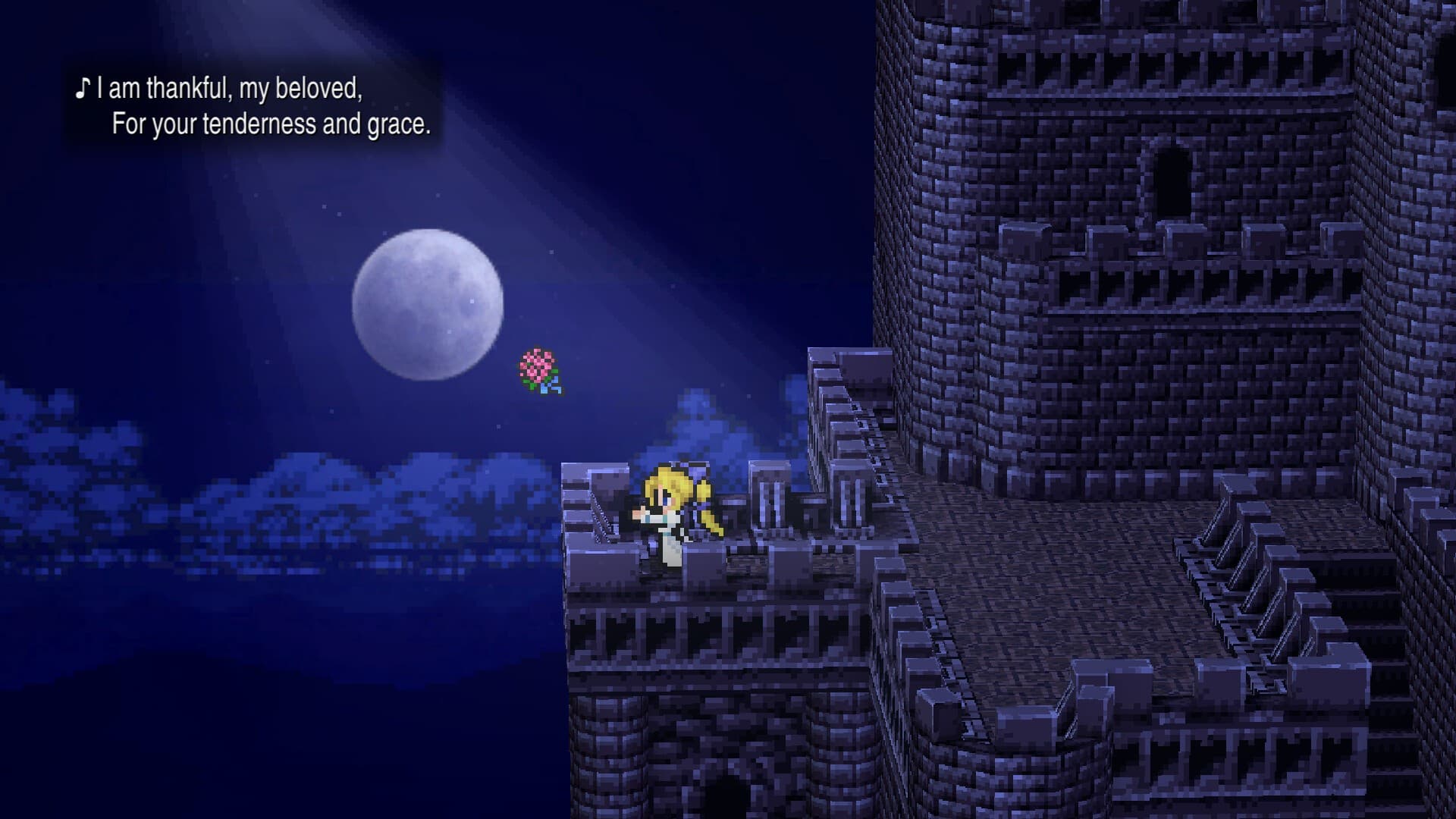
Final Fantasy XI turned 24 on 16 May 2026, and it is busier than it has been in years. Since July 2025 Square Enix has closed four of its servers, Asura, Bahamut, Odin and Phoenix, to new characters, because so many players came back. Many of them pick the Rune Fencer, cast three glowing runes, and ask the question this site exists to answer.
No. The runes in Final Fantasy are elemental charges with Latin names, not letters. Ignis is fire, Lux is light, and none of the eight spells a sound.
What makes Final Fantasy worth its own answer is a contradiction in a single job. The Rune Fencer's best armour is called Futhark, after the real runic alphabet. Its sword is the Beorc Sword, after the Old English name of a real rune. Then its runes are named in Latin, the language whose alphabet replaced the runes. The game dresses its runes in the futhark and makes them speak Latin. Real medieval carvers did the reverse: they wrote Latin in runes.
What is a rune in Final Fantasy XI?
A rune in Final Fantasy XI is an elemental charge that a Rune Fencer casts on itself. It adds damage of one element to normal attacks and raises resistance to another. The job arrived with the Seekers of Adoulin expansion on 27 March 2013, and its official description says the runes are "inscribed upon their flesh".
The job is a tank built around those charges:
- How many: one rune from level 5, two from level 35, three from level 65.
- Wards use the runes without spending them. Vallation cuts elemental damage of the matching types, Valiance does it for the party, and Liement absorbs it.
- Effusions spend them. Swipe spends one rune for a hit, Lunge spends all of them for one hit each, and Gambit spends them to lower the enemy's elemental defence.
So a Rune Fencer reads its runes the way a mage reads its mana bar. The question is never what a rune says. It is how many you hold and which element they are.
Why do Final Fantasy runes have Latin names?
Square never explained it, but all eight names are Latin words for the element they carry. That is the clearest sign they are not runes in the historical sense. A real rune is named after something its sound begins: fehu, cattle, for F. A Rune Fencer rune is named after what it does.
| Rune | Latin meaning | Adds damage | Raises resistance to |
|---|---|---|---|
| Ignis | Fire | Fire | Ice |
| Gelus | Frost | Ice | Wind |
| Flabra | Blowing wind | Wind | Earth |
| Tellus | Earth | Earth | Lightning |
| Sulpor | Sulphur (game spelling) | Lightning | Water |
| Unda | Wave | Water | Fire |
| Lux | Light | Light | Darkness |
| Tenebrae | Darkness | Darkness | Light |
Read the right-hand column and the system shows itself. Each rune guards against the element its own element beats in Vana'diel's cycle, and light and darkness guard against each other. It is a tidy wheel of eight forces. It is also a wheel of effects, and effects are not sounds. You cannot spell a name with fire, ice and wind.
Compare Last Epoch, whose Runemaster also holds three elemental runes. There the order of the runes changes the spell, which is a small step towards writing. In Final Fantasy XI only the count and the element matter, so the runes behave like a resource. That puts them closer to the six runes of a World of Warcraft Death Knight, another tank that spends runes for power.
The Futhark armour and the Beorc Sword
The odd thing is that Final Fantasy XI clearly knows the real alphabet. The Rune Fencer's Relic armour is the Futhark set: Futhark Bandeau, Coat, Mitons, Trousers and Boots. Its Artifact armour is the Runeist set, and its Artifact sword is the Beorc Sword.
Both names are real. Futhark is what scholars call the runic alphabet, from the sounds of its first six letters, f, u, th, a, r, k. Beorc is the Old English name of the B rune, the birch, known in the Elder Futhark as berkano. Someone at Square read about runes.
So the job wears the alphabet and carries one of its letters, and then its runes leave the alphabet behind. The armour is named after 24 letters. The runes in its inventory are named after 8 elements, in a different language. If the designers had named Ignis after fehu and Tenebrae after a dark rune, it would still not be writing, but at least the names would come from the same place.
Did real runes ever write Latin?
Yes, and often. When Christianity reached Scandinavia, the Latin alphabet slowly replaced the runes, but for centuries the two lived side by side. Some carvers used runes to write Latin itself, letter by letter, so that a Latin prayer and a Norse shopping note could come from the same knife.
The best evidence is in Bergen, Norway. Since 1955 excavations at Bryggen, the old harbour, have found some 670 runic inscriptions on wood and bone. Most are in Norse: names, trade labels, letters and jokes. Several are in Latin:
- an Ave Maria;
- a small wooden cross reading Rex Judaeorum, King of the Jews;
- a line of Virgil, omnia vincit amor, love conquers all, cut around 1248.
That is the mirror image of the Rune Fencer. In Bergen the letters were runes and the words were Latin, and anyone who knew the runes could read them. In Vana'diel the names are Latin and there are no letters at all. Medieval Norway wrote Latin in runes. Final Fantasy gives runes Latin names and writes nothing.
What is Celes's Runic in Final Fantasy VI?
Runic is a battle command in Final Fantasy VI, released in 1994. Celes Chere raises her sword, and the next spell cast by anyone, enemy or ally, is drawn into the blade. She recovers MP equal to the spell's base cost. The Japanese name, Mafuken, means magic-sealing sword. There is no rune in it at all.
Celes's class title was Rune Knight, cut from the North American SNES release and restored on the Game Boy Advance. Her command needs a compatible weapon such as the Rune Blade, which spends 10 MP for an automatic critical hit and can be equipped only by Edgar, Terra and Celes. Later games renamed the technique Sealing Blade or Attune Blade, which tells you what the English word was doing: rune meant "magic", nothing more.
The rest of the series uses the word the same way: the Rune Axe, the Rune Staff, the Rune Bracelet and Rune Armlet that guard against magic, and the Rune Knights of Final Fantasy Tactics, whose armour is "inscribed with magick runes". For more than 30 years, a Final Fantasy rune has stood for magic, never for a letter.
Final Fantasy runes vs. the Elder Futhark
| Feature | Final Fantasy XI (2013) | Elder Futhark |
|---|---|---|
| What one sign is | An elemental charge on the Rune Fencer | A letter with a sound, a name and a meaning |
| How many | 8, at most 3 held at once | 24 |
| How signs are named | Latin words for their element | Words that begin with their sound |
| What order does | Nothing, only count and element matter | Order spells the word |
| Can it be read? | No, nothing is written | Yes, once you learn the letters |
| In use | Since 27 March 2013 | Roughly 150 to 800 CE |
The real runes, briefly
The Elder Futhark is a 24-letter alphabet used by Germanic peoples from roughly 150 to 800 CE, cut into wood, bone, metal and stone. Each letter is a sound and a name: fehu is cattle and wealth, berkano is the birch, uruz is the wild ox. Later forms, the Younger Futhark in Scandinavia and the futhorc in England, kept the idea and changed the set, and in Bergen they were still in daily use in the 13th century.
In Norse tradition, Odin wins the runes by hanging nine nights on Yggdrasil, pierced by his own spear. Carvers combined the letters into bindrunes and sigils to hold a focused intent, and people still read them for guidance today. The same letters did all of it, writing, charms and divination, and they could even carry Latin when a carver wanted them to.
Why Vana'diel has no room for real runes
Final Fantasy XI is set in Vana'diel, an invented world of nations such as San d'Oria, Bastok and Windurst, with its own gods and its own eight-force elemental cycle. The series borrows Norse names, Odin and Fenrir among its summons, but it has never used Norse belief as its frame.
In that world, runes named for the eight elements make perfect sense. The Rune Fencer needs a quick way to say "fire now, ice next", and a Latin word does that more clearly than a futhark letter would. A rune that spelled a sound would mean nothing to a job whose whole design is elemental resistance. Square made a good tank. It just borrowed the word for something else.
Want runes you can actually read?
Final Fantasy gives you 8 runes named in Latin and not one letter. The real futhark gives you 24 letters, and in Bergen those letters could write Virgil.
The easiest way in is to draw one. You can cast a free rune reading in your browser right now, using the genuine Elder Futhark and their traditional meanings. Pull a rune of the day to learn the letters one at a time, or read how online rune readings work first. The rest of the series is on the runes in games hub, including Suikoden, the other Japanese RPG built on runes, and the six games in Why do so many games call their gear runes?.
The Rune Fencer wears the word Futhark and fights with Latin. The carvers of Bergen knew both, and they put the Latin inside the runes. , free on iOS, Android, and the web, in English and Russian.
Frequently asked questions
Are the runes in Final Fantasy real runes?
No. The best-known Final Fantasy runes, the eight held by the Rune Fencer in Final Fantasy XI, are elemental charges named with Latin words such as Ignis, Gelus and Lux. They add elemental damage and raise resistances, but none of them is a letter or spells a sound. Celes's Runic in Final Fantasy VI is a sword technique that absorbs spells, not writing either.
What are the eight runes in Final Fantasy XI?
Ignis, Gelus, Flabra, Tellus, Sulpor, Unda, Lux and Tenebrae. They stand for fire, ice, wind, earth, lightning, water, light and darkness. Each one adds damage of its own element to the Rune Fencer's attacks and raises resistance to another element, the one its own element beats in the game's elemental cycle. Light and darkness each guard against the other.
Why do the Rune Fencer's runes have Latin names?
Square never explained the choice, but the names are ordinary Latin words. Ignis means fire, gelus frost, flabra blowing wind, tellus earth, unda wave, lux light and tenebrae darkness. Sulpor is a game spelling close to sulpur, the Latin word for sulphur. The Latin gives the job a scholarly sound, but no real runic alphabet ever named its letters this way.
How many runes can a Rune Fencer hold at once?
Three at most. A Rune Fencer can hold one rune from level 5, two from level 35 and three from level 65. The runes can be the same element or a mix. Wards such as Vallation and Liement use the held runes without spending them, while Effusions such as Lunge, Swipe and Gambit spend them for a burst of damage or a debuff.
What does Lunge do in Final Fantasy XI?
Lunge spends every rune the Rune Fencer is holding and strikes once for each of them, so three runes give three hits of elemental magic damage. It is learned at level 25, next to Swipe, which spends only one rune. Lunge can also Magic Burst after a skillchain. Spending the runes ends their resistance bonuses until new ones are cast.
When was the Rune Fencer added to Final Fantasy XI?
On 27 March 2013, with Seekers of Adoulin, the game's fifth full expansion, released the same day in Japan, North America and Europe. It brought two new jobs, Geomancer and Rune Fencer. The Rune Fencer is unlocked with the quest Children of the Rune, which starts with Octavien in Eastern Adoulin. Final Fantasy XI itself launched in Japan in 2002.
Is the Futhark armour in Final Fantasy XI named after real runes?
Yes. The Rune Fencer's Relic armour is the Futhark set: Futhark Bandeau, Coat, Mitons, Trousers and Boots. Futhark is the real name of the runic alphabet, taken from its first six letters. The job's Artifact sword is the Beorc Sword, and Beorc is the Old English name of the B rune. So the game knows the real alphabet, then names its runes in Latin.
What is Celes's Runic ability in Final Fantasy VI?
Runic is Celes's battle command. Her sword stays ready until the next spell is cast by anyone, enemy or ally, then absorbs it, and she recovers MP equal to the spell's base cost. The Japanese name, Mafuken, means magic-sealing sword. It needs a compatible weapon such as the Rune Blade, and later games renamed it Sealing Blade or Attune Blade.
What is a Rune Knight in Final Fantasy?
Two different things. In Final Fantasy VI, Rune Knight is Celes's class title, cut from the North American SNES release and restored in the Game Boy Advance version. In Final Fantasy Tactics, Rune Knight is Dycedarg Beoulve's job, described as elite knights whose armour is inscribed with magick runes. Neither job writes or reads anything.
What is the Rune Blade in Final Fantasy?
A recurring sword that spends the wielder's MP for extra damage. In Final Fantasy VI it costs 10 MP for an automatic critical hit, can be equipped only by Edgar, Terra and Celes, and enables Celes's Runic command. Related rune gear across the series includes the Rune Axe, Rune Staff, Rune Bracelet and Rune Armlet, all tied to magic, none to writing.
Can you read the runes in Final Fantasy?
No. There is nothing written to read. The Rune Fencer's runes appear as glowing elemental symbols around the character, and each one is named after the element it carries, not after a sound. Celes's Runic shows no symbols at all. A real rune is the opposite: a letter you can read aloud once you know the 24 signs of the Elder Futhark.
Did real runes ever write Latin?
Yes. In medieval Bergen, Norway, carvers used runes to write Latin as well as Norse. Among some 670 inscriptions found at Bryggen since 1955 are an Ave Maria, a cross reading Rex Judaeorum, and a line from Virgil, omnia vincit amor, cut in runes around 1248. Real runes spelled Latin letter by letter. Final Fantasy only borrows Latin names.
Is Final Fantasy based on Norse mythology?
Not as a whole. Final Fantasy XI is set in its own world, Vana'diel, with invented nations, gods and an elemental cycle of eight forces. The series borrows names from many traditions, including Norse ones such as Odin and Fenrir as summons, but its rune systems come from neither Norse belief nor any real runic practice.
Where can I try a real rune reading online?
You can cast a free rune reading in your browser with the Way of the Runes rune-reading tool. It uses the genuine 24 Elder Futhark runes and their traditional meanings, with quick single draws for a fast question and fuller spreads for something weightier, and a full description for every rune. It works on any device, in English and Russian.
Which rune are you?
Seven questions, about a minute, and you get one of the 24 Elder Futhark runes. The scoring is shown as you answer. Free, no signup.