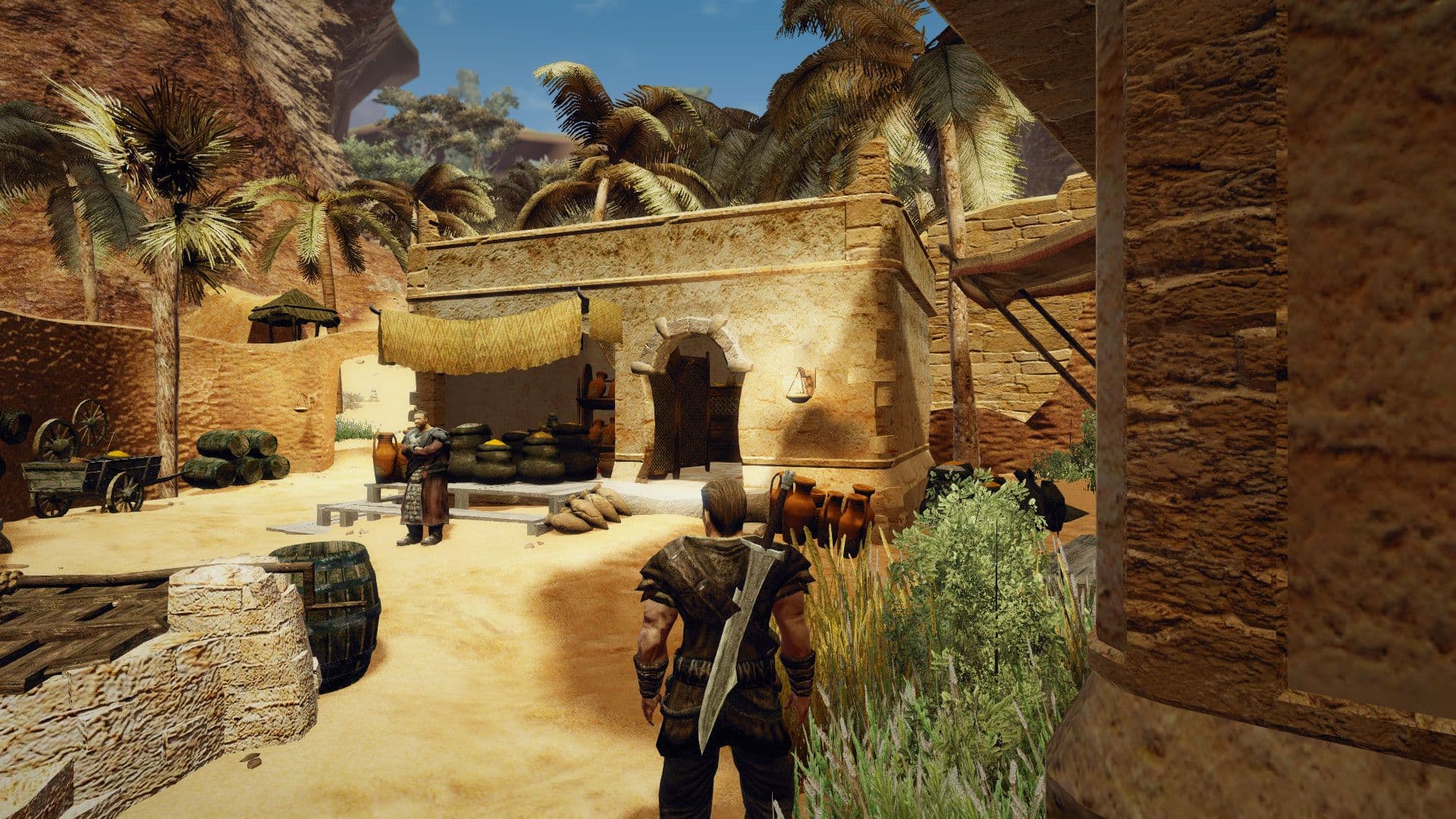
Gothic 3: Forsaken Gods came out in November 2008, and in Germany it carried a heavier name: Götterdämmerung, Twilight of the Gods. With Gothic 3 Classic reaching consoles on 24 November 2026, a new wave of players will finish the main game, go looking for what came after it, and look again for the runes the series was built on.
No. The runes in Gothic 3: Forsaken Gods are not real, because the add-on has none. Rune magic died in Gothic 3, and it stays dead here.
The Gothic 3 guide on this site already asks where the runes went. This one asks a different question, the one the German title asks: what survives when the gods are gone? The Norse myth that gave the add-on its name has a clear answer. After the real twilight of the gods, the runes are what the survivors remember. After Gothic's, nothing comes back.
What a rune is in Gothic 3: Forsaken Gods
Nothing you can find, craft or cast. Forsaken Gods is a standalone add-on built on Gothic 3's world and rules, and Gothic 3's manual opens its magic chapter with the line: "Rune magic has been mysteriously extinguished."
So magic works exactly as it did in 2006:
- Learned spells. You learn a spell once and cast it from your spellbook for mana. The Ancient Knowledge attribute decides how strong your spells can get.
- Spell scrolls. Single-use, readable by anyone with the mana.
- Teleporter stones. The heirs of the old teleport runes: one destination each, no mana.
There is no Circle of Magic, no rune table and no blank rune plate. The add-on changed the story and the map, and its 2011 Enhanced Edition reworked the combat, but nobody touched the magic.
The word survives in one place: the scroll. Gothic 3's manual calls scrolls "the rune magic stored in spell scrolls", which can be released "but not more than once". In Forsaken Gods, as in the main game, the last rune magic in Myrtana is a sheet of parchment that is used up the moment you read it.
What does Götterdämmerung mean?
Götterdämmerung is German for Twilight of the Gods. It translates the Old Norse ragnarøkkr, a variant of ragnarök, "the fate of the gods": the end of the world in Norse myth, when Odin, Thor and most of the gods fall in a last battle and the earth sinks into the sea.
The German word became famous through Richard Wagner, who gave it to the last opera of his Ring cycle, first staged at Bayreuth in 1876. Since then it has meant any grand collapse of an old order.
The add-on's story borrows that sense, not the myth. At the end of Gothic 3 the nameless hero and Xardas end the influence of the gods in Myrtana and leave the world. In Forsaken Gods they watch from exile "somewhere between space and time", quarrel, and the hero returns to unite orcs and humans. The gods are forsaken, as the English title says. But there is no Odin here, no wolf and no serpent.
What survives the real twilight of the gods
This is where the title becomes interesting. Ragnarök is not the last page of the Völuspá, the poem that tells it. After the fire, the earth rises again, green, from the sea. A few gods survive, and the poem shows what they do first.
In Henry Adams Bellows' 1936 translation, stanza 60 reads:
The gods in Ithavoll meet together, / Of the terrible girdler of earth they talk, / And the mighty past they call to mind, / And the ancient runes of the Ruler of Gods.
Bellows' note names the Ruler of Gods: Odin. In stanza 61 the survivors find the gods' golden tables, their game pieces, lying in the grass where they were left in the days of old.
Read that order again. The world has burned, the old gods are dead, and the first things the new world keeps are memory and runes. The Norse twilight of the gods is a story about what outlasts the end, and the answer it gives is writing.
What survives Forsaken Gods
Gothic's twilight runs the other way. Here is what each one keeps:
| After the end | Völuspá (Ragnarök) | Gothic 3: Forsaken Gods (2008) |
|---|---|---|
| The world | Rises again from the sea | Shrinks to Myrtana; Varant and Nordmar are cut |
| The gods | A few survive and return | Their influence ended, they stay away |
| Who rules | Surviving gods meet at Idavoll | The hero crowns himself king |
| The runes | Remembered: Odin's ancient runes | Still extinguished |
| What lies in the grass | The gods' golden game pieces | 11 teleporter stones |
The world of Forsaken Gods is smaller than Gothic 3's. It reuses the map but keeps only Myrtana, so a location guide for the Enhanced Edition lists 11 teleporter stones, from Silden and Geldern to Vengard, Ardea and Okara, where Gothic 3 had 29. You choose between Thorus and the orcs in Trelis and Gorn and the rebels in Gotha, and the story ends with the hero taking the crown himself.
That is a human ending to a story named after the gods' end. Nobody gathers to remember the old magic, and the runes that made the hero a mage in Gothic 1 and Gothic 2 are never found again. The Völuspá's survivors pick up what the old world left them. Myrtana's king starts without it.
Gothic 3: Forsaken Gods runes vs. the Elder Futhark
| Feature | Gothic 3: Forsaken Gods (2008) | Elder Futhark |
|---|---|---|
| What one sign is | No spell runes; a teleporter stone marks one destination | A letter with a sound, a name and a meaning |
| How many | 0 spell runes, 11 teleporter stones | 24 |
| Where the power sits | In learned spells and the Ancient Knowledge stat | In being read and written correctly |
| What survives the end of the gods | Nothing runic | The runes, in the Völuspá |
| Can it be read? | No, there is nothing encoded | Yes, once you learn the letters |
| In use | Since November 2008 | Roughly 150 to 800 CE |
The real runes, briefly
A real rune is a letter. The Elder Futhark is the oldest runic alphabet: 24 characters used by Germanic peoples from roughly 150 to 800 CE, carved into wood, bone, metal and stone. Each rune has a sound, a name and a meaning: Fehu is cattle and wealth, Ansuz a god, Tiwaz the god Týr.
The name of the series hides a real case. The Goths were an East Germanic people who carved genuine futhark. The Ring of Pietroassa, dated to about AD 400, reads gutani wi hailag, "sacred to the Goths", and the Spearhead of Kovel reads tilarids. The full story is in Are the runes in Gothic 1 real?.
In myth, the runes come from Odin, who hangs nine nights on Yggdrasil, pierced by his own spear, until they reveal themselves to him. Egil's Saga warns that no one should carve runes unless they can read them well. The Völuspá closes the circle: the god who won the runes falls at Ragnarök, and his runes outlive him.
Why Myrtana has no room for real runes
Myrtana was never a Norse world. Its gods are the series' own, Innos, Adanos and Beliar, and none of them has a counterpart in the Eddas. Nordmar, the closest thing to a Viking north in Gothic 3, is not even on the add-on's map.
Forsaken Gods also came from a different studio. Piranha Bytes and publisher JoWooD had parted ways, and the add-on was made by Trine Games in India, with extra content from Mad Vulture Games. It holds 44 out of 100 on Metacritic from 10 reviews, and the German magazine PC Games called it closer to a mod than an add-on. A new team on a reused world kept the old rules, and the runes stayed out.
What the game leaves out is what the Völuspá keeps: the runes as a shared memory of the Norse tradition, charms and protections, bindrunes and sigils joined to hold one intent, and reading for guidance, a practice that continues today.
Want runes you can actually read?
In Forsaken Gods the gods leave and the runes never return. In the Völuspá the gods fall and the runes are the first thing remembered. The Elder Futhark is that memory: 24 signs that still carry a sound, a name and a meaning.
The easiest way in is to draw one. You can cast a free rune reading in your browser right now, using the genuine Elder Futhark and their traditional meanings. Pull a rune of the day each morning to learn the futhark one sign at a time, or read how online rune readings work first. The rest of the series lives on the runes in games hub, including God of War, where Ragnarök itself is the story, and Ragnarok Online, which shares the name.
Gothic's twilight of the gods ends with a king and no runes. The Norse one ends with the runes still in hand. , free on iOS, Android, and the web, in English and Russian.
Frequently asked questions
Are the runes in Gothic 3: Forsaken Gods real runes?
No, because there are none to judge. Forsaken Gods runs on Gothic 3's rules, and Gothic 3's manual declares rune magic extinguished. The add-on brings no rune back: magic comes from learned spells and single-use scrolls, and travel from teleporter stones. The runes of Gothic 1 and 2 were invented spell-signs anyway, never letters of any alphabet.
Are there runes in Gothic 3: Forsaken Gods?
Not as items, spells or writing. The add-on reuses Gothic 3's world and systems, and Gothic 3 removed rune magic from the series. What survives is the teleporter stone, which does the job the old teleport runes did. A location guide for the 2011 Enhanced Edition lists 11 of them, from Silden and Geldern to Vengard, Ardea and Okara.
What does Götterdämmerung mean?
Twilight of the Gods. It is the German title of Gothic 3: Forsaken Gods, and the German rendering of the Old Norse ragnarøkkr, a variant of ragnarök, the fate of the gods. Richard Wagner made the word famous as the title of the last opera in his Ring cycle, first staged in 1876. JoWooD gave the add-on a loaded name.
Is Forsaken Gods based on Ragnarök?
Only in its German title. Götterdämmerung names the Norse end of the gods, but the story stays in Myrtana with Innos, Adanos and Beliar. The hero and Xardas have ended the gods' influence, quarrel in exile, and the hero returns to unite orcs and humans. There is no Odin, no Fenrir, no final battle and no new world rising from the sea.
What happens to the runes after Ragnarök in Norse myth?
They survive. In the Völuspá, the surviving gods meet on the field of Idavoll and call to mind the ancient runes of the Ruler of Gods, whom Henry Adams Bellows' 1936 translation identifies as Odin. In the next stanza they find the gods' golden game pieces in the grass. The old world burns, but its writing is remembered.
When did Gothic 3: Forsaken Gods come out?
In November 2008. Wikipedia lists 18 November for North America and 5 December for Europe; the German edition, Götterdämmerung, came out on 21 November. The Enhanced Edition, a reworked version with a revised combat system and fixes, followed on 22 March 2011 and is the version sold on Steam today, now under the THQ Nordic label.
Who made Gothic 3: Forsaken Gods?
Not Piranha Bytes. After the studio and JoWooD parted ways, JoWooD gave the add-on to Trine Games, a studio in India, with extra content from Mad Vulture Games. The Enhanced Edition credits Trine, the G3 Community Patch Team and Mad Vulture Games. Piranha Bytes went on to make Risen, which has its own rune magic.
How does magic work in Gothic 3: Forsaken Gods?
As in Gothic 3. You cast learned spells from your spellbook for mana, read single-use scrolls, and raise the Ancient Knowledge attribute to learn stronger spells. The add-on changed the story, the map and later the combat, not the magic. There is no Circle of Magic, no rune table and no blank rune plate anywhere in the game.
How many teleporter stones are in Forsaken Gods?
A location guide for the Enhanced Edition lists 11: Silden, Geldern, Trelis, Montera, Gotha, Cape Dun, Faring, Vengard, Ardea, Reddock and Okara. Gothic 3 had 29, but the add-on drops the desert of Varant and the snows of Nordmar, and their stones go with them. Each one carries you to a single place and costs no mana.
Is Forsaken Gods smaller than Gothic 3?
Yes. It reuses Gothic 3's map but keeps only the middle region, Myrtana, and cuts Varant in the south and Nordmar in the north. It adds no new areas. The story asks you to settle the war inside that smaller land, choosing between Thorus with the orcs in Trelis and Gorn with the rebels in Gotha.
How does Gothic 3: Forsaken Gods end?
With the hero crowning himself king of Myrtana. Having picked a side between Thorus and Gorn, he unites orcs and humans in a new kingdom under his own rule. It is a human ending to a story named after the end of the gods: the gods are gone and a mortal takes the throne, with no runes recovered.
Was Forsaken Gods well received?
No. It holds 44 out of 100 on Metacritic from 10 critic reviews, against 63 for Gothic 3, and the German magazine PC Games judged it closer to a mod than a full add-on, citing its graphics, controls and bugs. The 2011 Enhanced Edition fixed much of that, and the game stays in print as part of the Gothic series.
Did the real Goths use runes?
Yes. The Goths were an East Germanic people who carved genuine Elder Futhark before their conversion to Christianity. The Ring of Pietroassa, dated to about AD 400, reads gutani wi hailag, and the Spearhead of Kovel reads tilarids. The game series shares their name and nothing else: Forsaken Gods' magic has no link to their script.
Where can I try a real rune reading online?
You can cast a free rune reading in your browser with the Way of the Runes rune-reading tool. It uses the genuine 24 Elder Futhark runes and their traditional meanings, with quick single draws for a fast question and fuller spreads for something weightier, and a full description for every rune. It works on any device, in English and Russian.
Which rune are you?
Seven questions, about a minute, and you get one of the 24 Elder Futhark runes. The scoring is shown as you answer. Free, no signup.