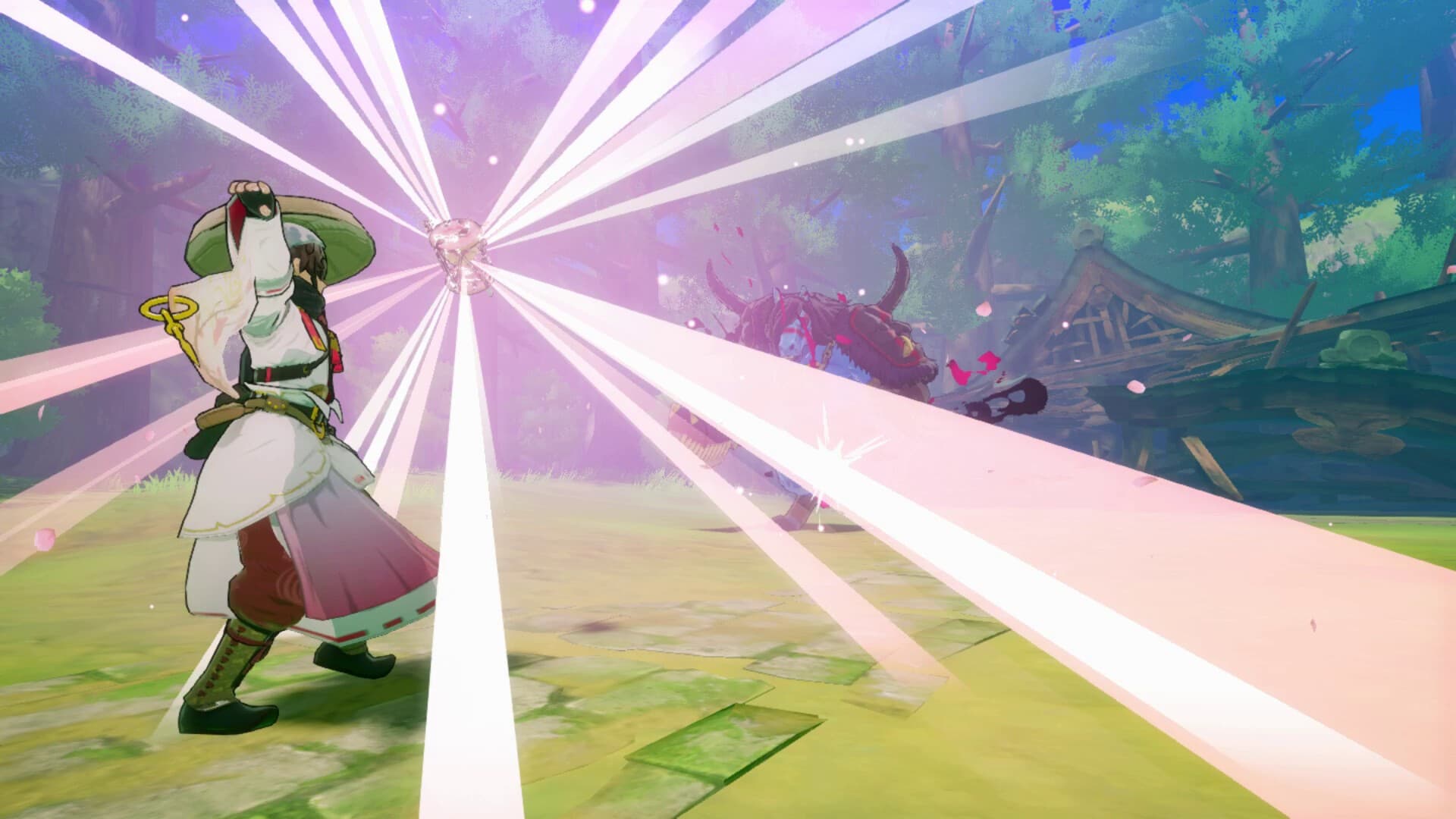
Rune Factory: Guardians of Azuma reached PlayStation 5 and Xbox on 13 February 2026, eight months after it launched on Switch and PC, and a new set of players has met the series' oldest sight: a ripe field with a ball of light hovering over it. Walk into it and your stamina bar fills. The game calls it a rune, and the series is named after it. So: are these real runes?
No. The runes in Rune Factory are life force that crops give off, not letters. You walk into them, you spend them on tools and spells, and none of them spells anything.
Most games on this site turn runes into spells, stones or money. Rune Factory does something no other one does: it grows them. And that puts it next to one of the real runes in an unexpected way, because the Elder Futhark already has a letter for the harvest. Its name is Jera. The real futhark wrote the word harvest with a rune. Rune Factory harvests the rune.
What is a rune in Rune Factory?
A rune in Rune Factory is an orb of life force that rises from ripe crops and refills your Rune Points, the stamina that every tool swing, weapon attack and spell costs. It has no shape to read. In the first game one ripe 3x3 square of crops gives one rune a day, worth 25 RP.
The meter matters because it runs everything. In Rune Factory: A Fantasy Harvest Moon (Nintendo DS, Japan 24 August 2006) you wake with 100 RP. A weapon costs about 2 RP a swing, the watering can less than 1, and the Earthquake spell 16 RP in one cast. When RP runs out, the game takes HP instead.
So the fields are your battery. A 3x3 square planted in a cave, watered until it ripens, puts up a rune every morning for as long as you leave it standing. Harvest one plant and the rune stops; ripen only half the square and you get nothing. That is the whole trade of the series in one rule: eat the crop, or keep it for its runes.
Why does a ripe crop make a rune?
Because in Rune Factory the land is alive, and runes are what that life looks like when you can see it. The hero of every game is an Earthmate, someone who enriches the land through farm work and can hear it. Good farming makes the land give off runes; a broken land stops giving them.
The title says the same thing. The farm is the factory: soil, seeds and water go in, runes come out, and the runes power your sword and your spells. Neverland built the first game in 2006 as a fantasy spin-off of Harvest Moon (now Story of Seasons), and its Japanese subtitle translates as A New Farm Story. By May 2022 the series had shipped more than 1.5 million copies.
Guardians of Azuma turns the idea into a plot. Its official Steam page opens with the Celestial Collapse, a colossal object crashing into Azuma, after which "the power provided by the runes ceased to flow. The gods of nature vanished soon after." You play an Earth Dancer, the game's new name for an Earthmate, and you use dance, sacred treasures and new weapons such as the Bow and the Talisman to purify the land and bring its gods back.
Do Runeys eat each other?
Yes, in Rune Factory Frontier (Wii, Japan 27 November 2008). Its runes became Runeys, small living lights of four kinds: Water, Stone, Tree and Grass. They form a food chain in which Water eats Stone, Stone eats Tree and Tree eats Grass, and their balance sets how fast an area's crops grow.
| Game | What a rune is | What it gives you |
|---|---|---|
| A Fantasy Harvest Moon (2006) | An orb over a ripe 3x3 square in a cave | 25 RP, once a day |
| Frontier (2008) | A Runey, one of four kinds in a food chain | Faster crops when every kind is in balance |
| Rune Factory 4 (2012) | An orb from crops or rune flowers; a runey has a face | RP, a skill level, or a permanent stat |
| Guardians of Azuma (2025) | The power that ran Azuma until the Celestial Collapse | A land and its gods to restore |
In Frontier an area with 35 or more of each kind reaches Prosperity and its crops grow faster. Let a kind die out and the area tips toward extinction, where crops grow much more slowly. Every nine ripe crops in front of your house add one Runey a day, and a tool called the Harvester moves them from one area to another. You are not farming plants any more. You are farming an ecosystem.
Rune Factory 4 kept the orbs and made them pay out in more ways. A rune from a rune flower always restores 25 percent of your maximum RP and vanishes after about a minute; a rune from a crop restores RP and levels up a random skill; and a runey, a rune with a face, permanently raises one of your base stats.
Is there a real harvest rune?
Yes. Jera, the twelfth letter of the Elder Futhark, is named after the year and its harvest. All three rune poems tie it to good crops, and in readings today it stands for harvest, cycles and reaping what you have sown.
The poems put it plainly. The Old Icelandic poem calls it "a good summer and a thriving cornfield". The Old Norwegian rhyme says "good harvest is the profit of men". The Anglo-Saxon poem, where the rune is called Ger, describes the earth bringing forth "shining fruits for rich and poor alike". Read Rune Factory's opening scene with those lines in your head and it looks almost like a joke made on purpose: a thriving field, and a bright thing rising out of it.
But the direction is reversed. Jera is a sign for the harvest. A farmer who knew the futhark could cut it into wood and mean the year's crop, and then cut Fehu, cattle, beside it and mean his herd. In Rune Factory the rune is made by the harvest. It points to nothing and names nothing. It is the crop's energy, ready to be spent on a sword swing, and it is gone the moment you use it.
Rune Factory runes vs. the Elder Futhark
A Rune Factory rune and an Elder Futhark rune share a word and, through Jera, a harvest. Everything else is different. One is energy a field gives off for the hero to spend; the other is a letter a person cuts so that someone else can read it. The table sets the two side by side.
| Feature | Rune Factory (2006) | Elder Futhark |
|---|---|---|
| What one sign is | An orb of life force that refills Rune Points | A letter with a sound, a name and a meaning |
| How many | No fixed set; four kinds of Runey in Frontier | 24 |
| Where it comes from | Ripe crops and rune flowers | A carver's knife on wood, bone, metal or stone |
| What it does | Pays for tool swings, attacks and spells | Writes any word in the language |
| Does it last? | No, it is used up and grows back tomorrow | Yes, as long as the wood or stone lasts |
| Can it be read? | No, nothing is encoded | Yes, once you learn the letters |
| In use | Since 24 August 2006 | Roughly 150 to 800 CE |
The real runes, briefly
The Elder Futhark is the oldest runic alphabet: 24 letters in three rows of eight, cut by Germanic peoples from roughly 150 to 800 CE on wood, bone, metal and stone. Each letter is a sound with a name, and the name is a word: Fehu is cattle and wealth, Uruz the wild ox, Jera the year and its harvest.
In the Viking Age the set shrank to the 16 letters of the Younger Futhark. The magic came on top of the writing. In Norse tradition Odin wins the runes by hanging nine nights on Yggdrasil, and from there they served as charms and protections, were combined into bindrunes and sigils, and were read for guidance in a practice that continues today.
Why Azuma has no room for real runes
Rune Factory has never been set in the North. The early games take place in invented towns, Kardia, Trampoli and Sharance, with dragons, summoned monsters and an empire called Sechs. Guardians of Azuma moves east to a land modelled on traditional Japanese seasons, festivals and design, ruled by its own gods, such as Ulalaka of spring and the wolf-like Fubuki of winter.
In those worlds a Germanic alphabet would have had no one to write it and nothing to say. The series kept the one part of the word that suits a farming game, a hidden power in the land, and left the letters behind. With Rune Factory 6 announced and no date yet, there is no sign that will change. Compare Enshrouded, where a rune is also stored magic you gather, and Valheim, the one game in this series that puts the real futhark on its stones.
Want runes you can actually read?
Rune Factory gives you runes that grow back every morning and are gone the moment you spend them. The Elder Futhark gives you 24 that stay put, and one of them, Jera, has been the sign for a good harvest for nearly two thousand years.
The easiest way in is to draw one. You can cast a free rune reading in your browser right now, using the genuine Elder Futhark and their traditional meanings, with a quick single draw for a fast question or a fuller spread for something weightier. If you would rather build the habit slowly, pull a rune of the day each morning and learn the futhark one sign at a time, or read how online rune readings work first. The rest of the series is on the runes in games hub, including Suikoden, another Japanese series where a rune is power rather than a letter, and Elden Ring, where runes are money.
No field to water and no RP to spend. , free on iOS, Android, and the web, in English and Russian.
Frequently asked questions
Are the runes in Rune Factory real runes?
No. A rune in Rune Factory is a glowing orb of life force that ripe crops give off, and walking over one refills your Rune Points. It carries no letter, no sound and no name from any runic alphabet. The series never writes a word in runes. The real Elder Futhark is a 24-letter alphabet; Rune Factory's runes are closer to energy you harvest.
What are Rune Points in Rune Factory?
Rune Points, or RP, are the series' stamina meter. Every swing of a weapon, every use of a farm tool and every spell costs RP, and when the meter runs dry the game takes HP instead. In the first game you start with 100 RP, a weapon costs about 2 RP a swing and the Earthquake spell burns 16 RP in a single cast.
How do you get runes from crops in Rune Factory?
Grow a full 3x3 square of crops and let it ripen without harvesting it. In the first game a ripe square in a cave produces one rune a day that restores 25 RP. Harvest even one plant from the square and the rune stops appearing, and half a square that ripens gives nothing. Once ripe, the crops no longer need watering to keep producing.
What are Runeys in Rune Factory?
Runeys are small living runes that keep an area's crops healthy. In Rune Factory Frontier (2008) there are four kinds, Water, Stone, Tree and Grass, and they live in a food chain: Water eats Stone, Stone eats Tree and Tree eats Grass. Keep every kind in balance and the area reaches Prosperity, where crops grow faster. Lose them all and crops slow down.
What do Runeys do in Rune Factory 4?
In Rune Factory 4 a runey is a rune with a face. Harvested crops can drop one, and picking it up restores RP and permanently raises one of your base stats. Ordinary crop runes restore RP and level up a random skill, while runes from rune flowers always restore 25 percent of your maximum RP and vanish after about a minute if you leave them.
Why is the series called Rune Factory?
Because the farm is the factory. In every game your fields turn soil, seeds and water into runes, and runes power everything else you do: tools, weapons and magic. The name describes that loop. The series began in 2006 as a fantasy spin-off of Harvest Moon, now called Story of Seasons, and its Japanese subtitle meant A New Farm Story.
What is the Celestial Collapse in Guardians of Azuma?
It is the disaster that opens Rune Factory: Guardians of Azuma. A colossal object crashes into the eastern land of Azuma, throws pieces of terrain into the sky and the sea, and in the words of the official Steam page, the power provided by the runes ceased to flow. The gods of nature vanish soon after, and your Earth Dancer has to bring them back.
What is an Earth Dancer in Rune Factory?
Earth Dancer is the name Guardians of Azuma gives to the hero, an alternative name for the Earthmate of earlier games: a person who enriches the land and can talk with it through farm work. The Earth Dancer uses dance, sacred treasures and new weapons such as the Bow and the Talisman to purify Blighted land and revive Azuma's gods.
When did Rune Factory: Guardians of Azuma come out?
It launched on Nintendo Switch, Nintendo Switch 2 and Windows in June 2025, then reached PlayStation 5 and Xbox Series X and S on 13 February 2026. Marvelous developed it and published it worldwide, with XSEED Games and Marvelous USA handling North America. It is set in Azuma, a mountainous land drawn from traditional Japanese seasons, festivals and design.
Can you read the runes in Rune Factory?
No, because there is nothing written on them. A rune in Rune Factory is a ball of light that bobs above a field until you walk into it. It has no shape that stands for a sound, and the games never combine runes into words or ask you to decode anything. Of the games on this site, only Valheim puts the real futhark on its stones.
Is Rune Factory based on Norse mythology?
No. The early games are set in invented towns such as Kardia, Trampoli and Sharance, with dragons, monsters and an empire called Sechs, and Guardians of Azuma moves to a Japanese-inspired land of seasonal gods. There is no Odin, no Yggdrasil and no Eddas. The word rune is the only Norse thing in the series, and it arrives with no alphabet attached.
Is there a real rune for harvest?
Yes. Jera, the twelfth letter of the Elder Futhark, takes its name from the word for year and its harvest. The Old Icelandic rune poem describes it as a good summer and a thriving cornfield, and the Old Norwegian poem says a good harvest is the profit of men. The Anglo-Saxon poem calls it Ger. In readings today Jera stands for harvest, cycles and reaping what you have sown.
What is the difference between Rune Factory runes and real runes?
A Rune Factory rune is something a field gives off: energy you walk into, spend on a swing of your sword and collect again tomorrow. A real rune is something a person cuts: a letter with a sound and a name, such as Jera for the year's harvest, that combines with others into words. One is fuel for a farmer. The other can write the word harvest.
Where can I try a real rune reading online?
You can cast a free rune reading in your browser with the Way of the Runes rune-reading tool. It uses the genuine 24 Elder Futhark runes and their traditional meanings, with quick single draws for a fast question and fuller spreads for something weightier, and a full description for every rune. It works on any device, in English and Russian.
Which rune are you?
Seven questions, about a minute, and you get one of the 24 Elder Futhark runes. The scoring is shown as you answer. Free, no signup.