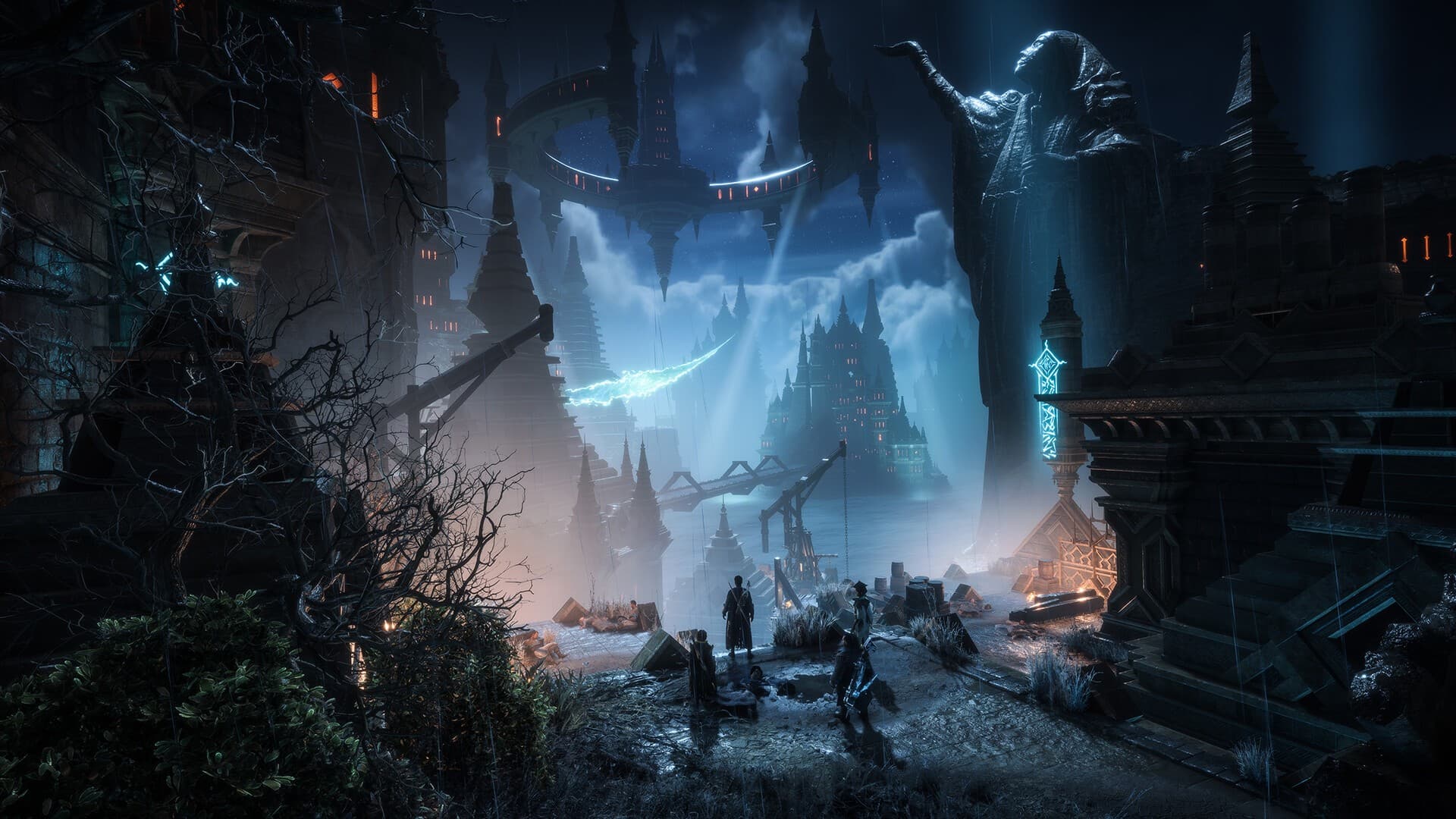
Dragon Age: The Veilguard turns two on 31 October 2026. It is the fourth game in BioWare's series, and like the three before it, it asks you to slot runes into a weapon: this time into the blade of Solas' lyrium dagger. Players who started with Rook and then went back to Inquisition or Origins keep meeting the same word, and keep asking the same question.
No. The runes in Dragon Age are lyrium enchantments, not letters. Not one of them carries a sound, and no game in the series uses the Elder Futhark.
What makes Dragon Age worth its own answer is who does the carving. Thedas is full of mages, yet its runes come from a dwarf who can never cast a spell and a savant who barely speaks. The lore is precise about why. In Thedas you qualify to carve runes by being cut off from magic. In the real North you qualified by being able to read.
What is a rune in Dragon Age?
A rune in Dragon Age is an enchanted piece of lyrium fixed to a weapon or armour to add an effect: fire damage, frost, lightning, resistance or a combat power. It has a tier and a stat line. It never has a sound, and it cannot combine with other runes into a word.
The details change from game to game, and the direction of travel is clear: each game made runes harder to take back out.
- Dragon Age: Origins (2009). Sandal adds runes at the party camp, and taking them out is free, so you can reuse them. There are five tiers, Novice to Grandmaster. The Awakening expansion adds Masterpiece and Paragon, armour runes and a Runecrafting skill. A weapon's material decides its slots: iron has none, most dragonbone has three.
- Dragon Age II (2011). Sandal again, now in Kirkwall. Runes cannot be removed; a new rune destroys the old one.
- Dragon Age: Inquisition (2014). The arcanist Dagna crafts runes from schematics: eight types, each in Basic, Master and Superb grades. They go on weapons only, and they can only be replaced, never removed.
- Dragon Age: The Veilguard (2024). Runes slot into Solas' lyrium dagger, which has three slots and one active rune at a time. Each rune has an active ability and a passive bonus.
Why does a dwarf carve the runes in Dragon Age?
Because a Dragon Age rune is made of lyrium, and lyrium hurts anyone with magic in them. Raw lyrium can cause deafness, memory loss, nausea, internal bleeding and madness, and the more magically sensitive the person, the worse the damage. Dwarves cannot dream or cast spells, so they can work it. That is the whole qualification.
The series' lore on enchantment names exactly two groups who can do the work: dwarves, through their natural resistance to magic, and the Tranquil, mages whose connection to the Fade has been cut with a lyrium brand. A full mage, the lore adds, is usually unable to work enchantments at all. Without lyrium, an enchantment is only temporary.
So the people of Thedas who make magic objects are the ones who cannot do magic. Dagna understands this better than anyone. In Origins she is a 19-year-old from a smith caste her father traces back a hundred generations, and she wants to study at the Circle of Magi even though, as a dwarf, she will never cast a spell. By Inquisition she has her answer. The Inquisition recruits her through a war table operation called Acquire the Arcanist, whose briefing says she has humbled first enchanters in the Circles of two churches.
Even the danger is written into the world. Garin, a merchant in Orzammar in Origins, suffers a kind of dementia from raw lyrium. Dwarves are resistant, not immune, and a codex entry calls lyrium "the king of metals" that sings beneath their feet.
Sandal, the savant who barely speaks
The series' most famous runecrafter is Sandal Feddic, the adopted son of the merchant Bodahn. He enchants your gear through Origins and Dragon Age II, answers most questions in a single word, and is found more than once standing in a ring of dead enemies with one line to explain it: "Enchantment?"
Bodahn says the Circle of Magi declared Sandal a savant, because his gift for enchanting is innate and unprecedented. Ordinary dwarven smiths, Bodahn adds, must work for years to learn it.
This is the clearest sign of what a Dragon Age rune is. The best rune-maker in Thedas does not need words. His skill is in the hands and the lyrium, not in language. A real runecarver was the opposite case: the whole job was language.
The game's own wording agrees. In Awakening, the four Runecrafting skills are described as learning "lyrium inscription", "tracing ancient symbols", the "histories of early Tevinter images" and finally "iconography". Images and icons. Never letters.
The one Dragon Age rune you can read
There is one place where Thedas does treat runes as writing, and it says a lot that the dwarves have nothing to do with it.
In Inquisition, elven tombs hide glyphs that appear only in the light of a veilfire torch, and they hand you rune schematics for fire, frost, lightning and spirit. The codex entry The Lost Art of Veilfire calls veilfire "a medium for writing" and says its runes "convey more than the literal meaning of their text", passing on sights, sounds and even emotions. Any mage, the author claims, can learn the technique.
So Thedas splits the idea of a rune in two. The rune that writes belongs to elven magic. The rune that enchants belongs to dwarves who have none. Real runes never split that way. A Germanic carver wrote the name, the charm and the message in the same 24 letters.
Dragon Age runes vs. the Elder Futhark
| Feature | Dragon Age (2009) | Elder Futhark |
|---|---|---|
| What one sign is | A lyrium enchantment on a weapon or armour | A letter with a sound, a name and a meaning |
| How many | 24 standard runes in Inquisition, plus one lesser rune | 24 |
| Who carves it | Dwarves and the Tranquil, because they resist magic | Anyone who learned to read and spell |
| What the carver needs | Immunity to lyrium | Literacy |
| Made from | Lyrium, blank runestones, essences, dragon blood | Wood, bone, antler, iron, gold, stone |
| Can it be read? | No, nothing is encoded | Yes, once you learn the letters |
| In use | Since 3 November 2009 | Roughly 150 to 800 CE |
One coincidence is worth noting. Inquisition has exactly 24 standard runes: eight types times three grades. The Elder Futhark also has 24. The difference is what happens when you put them together. Three Fire Runes on a sword make a hotter sword. Three futhark letters can make a word.
The real runes, briefly
The Elder Futhark is a real alphabet of 24 letters, used by Germanic peoples from roughly 150 to 800 CE and cut in straight strokes so it could be scratched into wood, bone and stone. Each letter is a sound, a name and a word: Fehu is cattle and wealth, Uruz the wild ox, Ansuz a god. Around 800 CE Scandinavian carvers cut the row down to the 16-letter Younger Futhark that fills Viking runestones.
Magic came with the writing, not instead of it. In Norse tradition, Odin wins the runes by hanging nine nights on Yggdrasil, and people later bound runes into sigils and bindrunes for protection and luck. But the old sources set a carver's standard in reading. In Egil's Saga, Egil finds a woman made ill by a badly carved cure, scrapes the runes away, cuts the correct ones, and warns that no man should carve runes unless he can read them well.
That is the line Thedas reverses. Sandal could not have met Egil's standard, and in Thedas he did not need to.
Why Thedas has no room for real runes
Thedas is BioWare's own world. Its religion is the Chantry of the Maker and his prophet Andraste; the Tevinter Imperium once worshipped the Old Gods, dragons sleeping under the earth; and The Veilguard turns on the ancient elven gods. There is no Odin, no Yggdrasil and no futhark anywhere in it.
The most Norse-flavoured corner is the Avvar, the mountain clans of Inquisition and its Jaws of Hakkon add-on. They have patronymic names like Fullna Hethsdotten, a "battle with verse" much like Norse flyting, and three great gods: Korth the Mountain-Father, Hakkon Wintersbreath and the Lady of the Skies. Even the Avvar carve no futhark.
Given a world like that, lyrium runes were the right design. They tie the rune system to the economy (the Chantry controls the lyrium trade), to class (the Tranquil are mages the Chantry has silenced), and to race (the dwarves are the only people who can mine it). A borrowed alphabet could not carry any of that. It is the same choice The Witcher 3 made with its god-named runestones, and the reason so many games call their gear runes.
Want runes you can actually read?
Dragon Age gives you runes you can only feel in combat, made by people who never had to read them. The Elder Futhark gives you 24 that say something, and anyone can learn them.
The easiest way in is to draw one. You can cast a free rune reading in your browser right now, using the genuine Elder Futhark and their traditional meanings, with a quick single draw for a fast question or a fuller spread for something weightier. If you would rather build the habit slowly, pull a rune of the day each morning and learn the futhark one sign at a time, or read how online rune readings work first. The rest of the series is on the runes in games hub, including Tolkien's dwarf-runes in the Middle-earth games, the socketed runewords of Diablo II, and Valheim, the one game that uses the real futhark.
Thedas hands its runes to the people furthest from magic, and that makes for a good story. The real runes were handed to anyone willing to learn 24 letters, and they still are. , free on iOS, Android, and the web, in English and Russian.
Frequently asked questions
Are the runes in Dragon Age real runes?
No. A rune in Dragon Age is a piece of enchanted lyrium that adds fire, frost, lightning or another effect to a weapon or armour. It carries no sound and spells no word, and nothing in the series uses the Elder Futhark. BioWare's own skill text describes the craft as tracing images and studying iconography, not learning letters.
Why do dwarves make the runes in Dragon Age?
Because a rune is made of lyrium, and raw lyrium harms anyone connected to the Fade. Dwarves cannot dream or cast spells, so they can handle it safely. The lore names only two groups who can enchant reliably: dwarves and the Tranquil, mages whose link to the Fade has been cut. Mages themselves are usually kept away from the work.
Who is the arcanist in Dragon Age: Inquisition?
Dagna, a dwarf from Orzammar. You recruit her at Skyhold through the war table operation Acquire the Arcanist, and she sets up in the Undercroft beside the blacksmith Harritt. Her arrival starts the Rune Crafting quest and unlocks rune crafting. In Dragon Age: Origins she was a 19-year-old from the smith caste who asked to study at the Circle of Magi.
How do you craft runes in Dragon Age: Inquisition?
You need a rune schematic, then the materials it lists, and you craft at the weapons station in Skyhold's Undercroft. There are eight rune types, each in Basic, Master and Superb grades. The elemental schematics for fire, frost, lightning and spirit are found by lighting hidden glyphs with veilfire, always in order from Basic to Superb.
Can you remove runes in Dragon Age: Inquisition?
No. Once a rune is applied to a weapon it cannot be taken out, only replaced by another rune, which destroys the first. Inquisition runes also go on weapons only, never on armour. Dragon Age II used the same rule. Dragon Age: Origins was the generous one: Sandal added and removed runes for free, and you could reuse them.
What are the runes in Dragon Age: The Veilguard?
They are combat powers slotted into Solas' lyrium dagger, a ritual blade made of pure lyrium. The dagger has three rune slots, and one rune at a time is active. Each rune has an active ability, such as freezing nearby enemies, and a passive bonus. You can switch the active rune, but not during combat or while it is cooling down.
Who is Sandal in Dragon Age?
Sandal Feddic is the dwarven enchanter who travels with his adoptive father, the merchant Bodahn, through Dragon Age: Origins and Dragon Age II. He enchants your weapons with runes, mostly answers in single words, and is best known for the line Enchantment. Bodahn says the Circle of Magi declared him a savant because his gift for enchanting is innate.
What is lyrium in Dragon Age?
Lyrium is a magical ore mined by dwarves, described in the codex as the king of metals that sings beneath the earth. Refined, it becomes a silvery liquid that is safe to handle. Raw, it can cause deafness, memory loss, madness and death. Mages drink it to boost their power, templars depend on it, and every enchantment needs it.
What are the rune tiers in Dragon Age: Origins?
Five in the base game: Novice, Journeyman, Expert, Master and Grandmaster. The Awakening expansion adds Masterpiece and Paragon, for seven in total, plus armour runes and the Runecrafting skill. Building one Paragon rune from scratch takes 32 Novice runes, 63 blank runestones and 56 etching agents, because each tier is made by combining runes from the tier below.
Are there any readable runes in Dragon Age?
The closest thing is veilfire. In Dragon Age: Inquisition, elven tombs hide glyphs that appear only under a veilfire torch, and the codex calls veilfire a medium for writing whose runes pass on sights, sounds and emotions to the reader. They are still invented glyphs, not a real alphabet, and in Thedas this writing belongs to mages, not to dwarves.
Is Dragon Age based on Norse mythology?
No. Thedas has its own religion, the Chantry of the Maker and Andraste, plus the elven gods and the Old Gods of the Tevinter Imperium. The most Norse-flavoured people are the Avvar, mountain clans with names like Fullna Hethsdotten and gods such as Korth the Mountain-Father. Even they carve no futhark, and no Norse god appears in any game.
Are Dragon Age runes like the Elder Futhark?
Only in the name. The Elder Futhark is 24 letters, each with a sound, a name and a meaning, cut in straight strokes so it could be scratched on wood or stone. A Dragon Age rune is a lump of enchanted lyrium with a stat on it. Inquisition happens to have 24 standard runes, eight types in three grades, but none of them stands for a sound.
What did real rune carvers need to know?
How to read and spell. Real runes were an alphabet, so a carver's skill was writing correctly. Egil's Saga makes the point: Egil finds a sick woman whose cure was carved badly, scrapes the runes away, cuts the right ones and warns that no man should carve runes unless he can read them well. No magical gift was required.
Where can I try a real rune reading online?
You can cast a free rune reading in your browser with the Way of the Runes rune-reading tool. It uses the genuine 24 Elder Futhark runes and their traditional meanings, with quick single draws for a fast question and fuller spreads for something weightier, and a full description for every rune. It works on any device, in English and Russian.
Which rune are you?
Seven questions, about a minute, and you get one of the 24 Elder Futhark runes. The scoring is shown as you answer. Free, no signup.