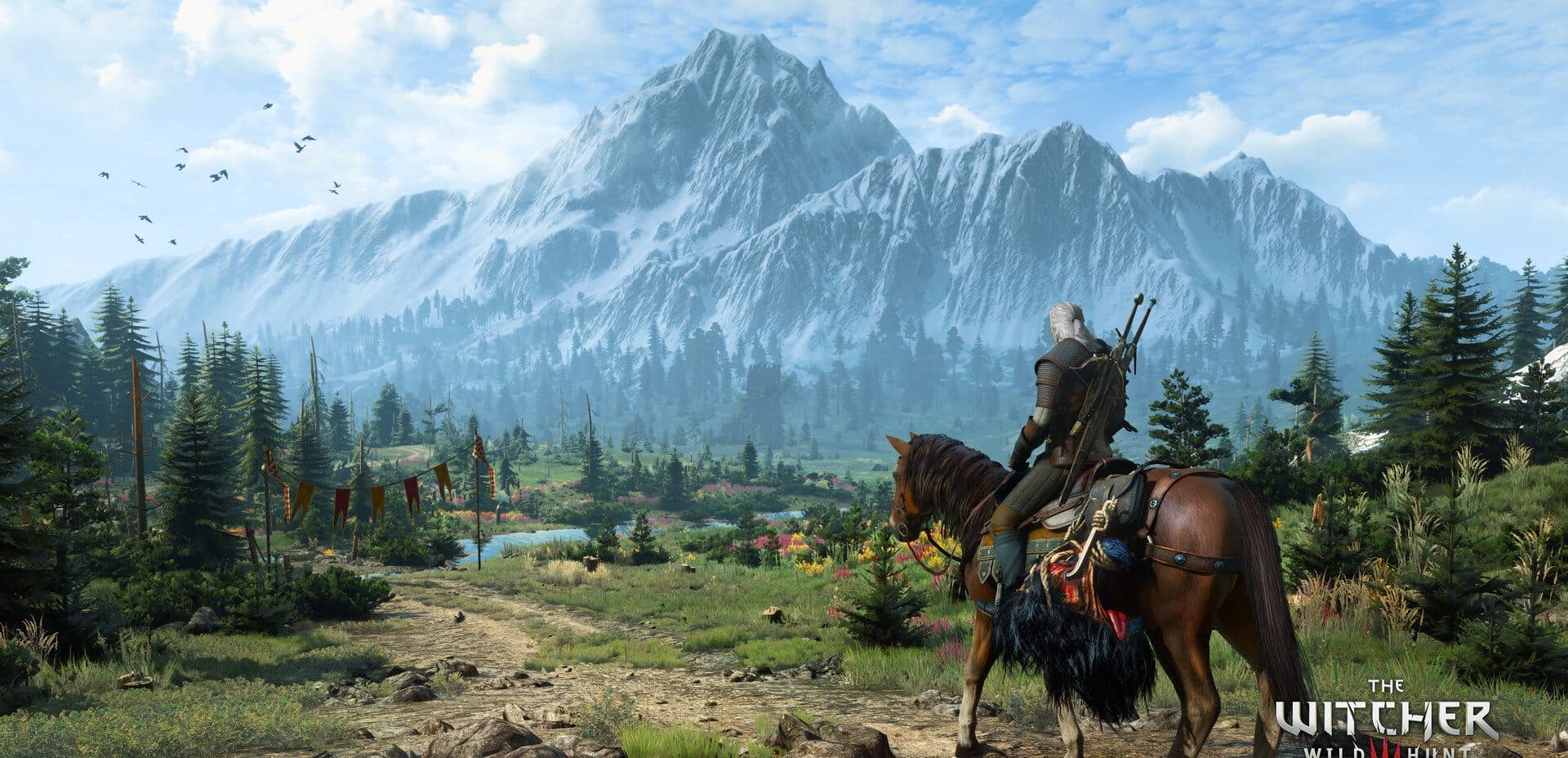
If you have spent time in The Witcher 3: Wild Hunt, you have slotted runestones into Geralt's swords and glyphs into his armour, and you may have seen the strange, angular Elder Runes carved on ancient walls. The game leans on runes at every turn. It raises an honest question for anyone drawn to the real thing: are these actual runes, and do they mean anything?
The short answer: the runes in The Witcher 3 are invented, not the real Norse Elder Futhark. The runestones are magical upgrades named after genuine Slavic gods, and the written Elder Runes are a constructed elven alphabet. Both borrow the look and the mystique of runic power, but they are original designs for a Slavic-rooted fantasy world. That does not make them meaningless. The game draws on a deep well of real folklore, and knowing where fiction ends and history begins makes both more interesting.
This guide breaks down what The Witcher 3's runes actually are, what real runes were, and exactly where the two meet and part ways.
What the runes in The Witcher 3 actually are
In the game, runes are gear. Released in 2015, The Witcher 3 gives you two basic upgrade systems: runestones, which slot into your swords, and glyphs, which slot into your armour. A runestone adds a combat effect: a chance to set an enemy burning, bleeding, or poisoned, or a flat buff like armour piercing, faster adrenaline gain, or stronger Signs. A glyph usually boosts the intensity of one of Geralt's five Signs (Igni, Aard, Quen, Yrden, and Axii). Each comes in lesser, standard, and greater tiers.
The system goes deeper in the Hearts of Stone expansion, which adds the Runewright, an enchanter from distant Ofier. He creates runewords, filling every slot on a piece of gear with a single powerful effect. It is a rich upgrade tree, and it is entirely about combat power. A rune in The Witcher 3 is a stone that changes a number, closer to a gem in another RPG than to a letter you could read.
The runestones are named after real Slavic gods
Here is the detail that rewards a closer look. The runestones carry the names of genuine Slavic deities. Perun is the thunder god, chief of the Slavic pantheon. Svarog is the divine smith. Dazhbog is the sun-giver, Svarog's son. Veles rules the underworld, cattle, and magic. Morana is the goddess of winter and death, Devana the huntress, Stribog the wind, alongside Triglav and Zoria. This is a real mythological family, and it reflects the Polish roots of Andrzej Sapkowski's novels.
That makes the Witcher's runes more grounded in real belief than most fantasy runes. But note what they are: stones named after gods, used to power a sword. They are not an alphabet those gods wrote, and they are not letters. The name is folklore; the function is a game mechanic.
What real runes actually are
A real rune is first and foremost a letter. The Elder Futhark is the oldest runic alphabet, 24 characters used by Germanic and Norse peoples from roughly 150 to 800 CE, carved into wood, bone, stone, and metal long before anyone read them as an oracle. Each rune is a sound, a name, and a word bundled together: Fehu means cattle and wealth, Ansuz a god or divine breath, Uruz the wild ox and raw strength.
The magic came layered on top of the writing. In Norse tradition, Odin wins the runes through sacrifice, hanging nine nights on the world-tree Yggdrasil, pierced by his own spear, until the runes reveal themselves. From there the runes served as charms, protections, and messages. People combined them into bindrunes and sigils to carry a focused intent, and read them for guidance in a form of divination that continues today.
Crucially, the direction is the opposite of the game's runestones. Real runes start as language and become magical. The Witcher's runestones start as magic and never carry the language layer at all.
Game fiction vs. real history, side by side
| Feature | The Witcher 3 | Real runes |
|---|---|---|
| What a rune is | A stone that adds a combat effect | A letter with a sound, name, and word |
| Where it appears | Socketed into swords and armour | Carved into wood, bone, stone, and metal |
| Cultural roots | Slavic gods and folklore, with Norse-flavoured Skellige | Germanic and Norse, Viking-Age Scandinavia |
| Typical use | Burning, bleeding, poison, stronger Signs | Writing, protection, blessing, divination |
| Named after | Perun, Svarog, Veles, Morana, and other Slavic gods | Sounds and words, in myth won by Odin |
| Can you read it? | No, a runestone encodes no language | Yes, each sign is a sound you can pronounce |
The table makes the pattern clear. The game keeps the idea of runes, marks and stones of hidden power, and drops the writing. That is a legitimate creative choice, and a common one in fantasy. It just means the runestone on Geralt's sword is not a code you can look up in a runic dictionary.
Slavic gods, an elven alphabet, and the Norse corner
The Witcher does have a written runic script, but it is invented. In the lore, the Elder Runes are the ancient alphabet of the Aen Seidhe, the elves. They belong to Hen Llinge, the Elder Speech, and the setting claims the First Runes and even the human alphabet grew from them. Sapkowski built the Elder Speech mainly from Celtic languages, Welsh, Irish, and Scottish, with touches of German, English, and Latin. So the Witcher's readable runes are an elven, Celtic-flavoured conlang, not the Germanic futhark.
The one place the game brushes against real runic culture is Skellige, its chain of northern isles. With clans, jarls, longships, and a warrior code, Skellige is modelled on Norse and Viking-Age Scandinavia, and its speech even borrows from Norwegian and Danish. Yet even there the lore routes the language back through the elven Elder Speech rather than anything Germanic.
There is a quiet historical irony in all this. Runes are a Germanic and Norse invention. The Slavic peoples whose gods name the runestones had no proven native runic alphabet of their own. So the game honours real Slavic gods with stones it calls runes, in a world whose runic imagery its real-world roots never actually used. Great fantasy, but not something a historical Slav or Norse carver would recognise as one tradition.
Can you actually read the runes?
Mostly no. The runestones encode no language at all, so there is nothing on them to translate. The Elder Runes are readable in the sense that fans have mapped the elven font, but they were built as set dressing for a fictional language, not as a message you can meaningfully decode into history.
The closest the Witcher gets to the real thing is the standing stone and the carved mark as symbols of old power. Norse sources treated their runes as genuinely powerful and precise, able to harm as well as heal. A famous passage in Egil's Saga warns that "no man should carve runes unless he can read them well," after the hero finds botched runes making a woman ill and cuts the correct ones to cure her. That attitude, runes as language first and power second, is exactly what the game's combat stones leave out.
Want to know what the runes really say?
The Witcher's runestones will not decode, but the real runes will. The 24 Elder Futhark runes each carry a clear, learnable meaning, and reading them is far more approachable than the game's socket-and-forge version suggests. No runestones, no glyphs, no Runewright: just a question and the runes.
The most enjoyable way in is simply to draw. You can cast a free rune reading in your browser right now, using the genuine Elder Futhark and their traditional meanings, with a quick single draw for a fast question or a fuller spread for something weightier. If you would rather build a habit, pull a rune of the day each morning and learn the futhark one sign at a time, or explore how online rune readings work before you start.
If you came here from Fable, its augmentations are the same object under a plainer name: stones that bind to a blade and change a number. Fable keeps the word rune for its glyphs and map script, and those turn out to be English. See Are the runes in Fable real?.
Geralt has one more trip ahead. The third expansion, Songs of the Past, takes him to Dandelion's home region of Letten in 2027, and we have written a clearly labelled prediction of what its runes will be. The short version: the same runestones and runewords, and still no futhark.
If you came here from Diablo II, its runewords are the older idea: since 2001 you have put runes into a socketed item in a set order to unlock a named power. Order makes them look like spelling, but the runes carry no sounds. See Are the runes in Diablo II real?.
If you came here from Diablo IV, its runewords also turn stones into one named effect, but they work as a sentence: a "when" rune and a "then" rune in one item, joined by a counter called Offering. See Are the runes in Diablo IV real?.
If you came here from Divinity: Original Sin 2 or Guild Wars 2, their runes are Geralt's runestones without the gods: socketed stones that add fire damage or a set bonus. We compared six such games with the runes real warriors cut on their spears. See Why do so many games call their gear runes?.
If you came here from Dragon Age, its runes are Geralt's runestones made by a different hand: pieces of lyrium that only dwarves and the Tranquil can enchant, because the metal harms anyone with magic. See Are the runes in Dragon Age real?.
If The Witcher 3 sent you looking for the real thing, that instinct is a good one. The runes have been a tool for insight for nearly two thousand years, and unlike the stones in Geralt's swords, they are ready to answer the moment you ask. , free on iOS, Android, and the web, in English and Russian.
Frequently asked questions
Are the runes in The Witcher 3 real runes?
No. The Witcher 3 has two invented rune systems: runestones socketed into weapons and glyphs socketed into armour, plus the in-world Elder Runes, an ancient elven alphabet. The runestones are named after real Slavic gods, and the setting draws on genuine Slavic folklore, but none of it is the Norse Elder Futhark or any real historical writing system. It is fantasy grounded in real belief, then reshaped for the game.
What are runestones and glyphs in The Witcher 3?
They are the game's basic gear upgrades. Runestones slot into sword sockets and add effects such as burning, bleeding, poison, armour piercing, adrenaline gain, or increased Sign intensity. Glyphs slot into armour and usually boost one of Geralt's five Signs. Neither is a letter or a written character; each is a magical stone or enchanted cloth that changes a stat, closer to a gem in other RPGs than to a real rune.
Are The Witcher 3 runestones named after real gods?
Yes. The runestones carry the names of genuine Slavic deities: Perun the thunder god, Svarog the smith, Dazhbog the sun-giver, Veles of the underworld and cattle, Morana of winter and death, Devana of the hunt, Stribog of the wind, plus Triglav and Zoria. That Slavic pantheon reflects the Polish roots of Andrzej Sapkowski's books, but the stones are power sources named for gods, not an alphabet the gods used.
Are the runes in The Witcher 3 the Norse Elder Futhark?
No. The Elder Futhark is a real 24-character Germanic alphabet used from roughly 150 to 800 CE. The Witcher's runestones are Slavic-themed magical socketables, and its written Elder Runes are a constructed elven script. Neither maps to the futhark. The world leans Slavic, with a Norse-flavoured corner in Skellige, rather than being a Viking setting.
What are the Elder Runes in The Witcher?
In the lore, the Elder Runes are the ancient runic alphabet of the Aen Seidhe, the elves. They belong to Hen Llinge, the Elder Speech, and the setting says the First Runes and the human alphabet were based on them. So the Witcher does have a written runic script, but it is an invented elven alphabet rooted in Celtic-flavoured language, not the Germanic Elder Futhark.
What do the runestones do in The Witcher 3?
Each runestone adds a specific combat effect when socketed into a sword. Dazhbog gives a chance to burn, Devana a chance to cause bleeding, Morana a chance to poison, Svarog adds armour piercing, Perun boosts adrenaline gain, and Veles raises Sign intensity. They come in lesser, standard, and greater tiers, each stronger than the last. The effect is mechanical, not linguistic: a rune here is a stat, not a sound or a word.
What are runewords and the Runewright in The Witcher 3?
Runewords are powerful full-gear enchantments introduced in the Hearts of Stone expansion. You unlock them through the Runewright, an enchanter from distant Ofier who fills every slot on a weapon or armour with a single named effect, such as Severance or Preservation. It deepens the rune system, but it is still about combat power rather than reading or writing anything.
Is The Witcher based on Slavic or Norse mythology?
Mainly Slavic. Andrzej Sapkowski built the world on Polish and wider Slavic folklore, and the games are full of it: the leshen, the striga, the noonwraith, and gods like Perun and Veles. Norse influence appears chiefly in Skellige, the Viking-flavoured isles. So the Witcher borrows runic imagery for a Slavic world, layering a Germanic idea onto a setting whose real-world roots did not use a runic alphabet.
Is Skellige based on the Vikings?
Yes, loosely. Skellige is a chain of northern isles with clans, jarls, longships, and a warrior culture modelled on Norse and Viking-Age Scandinavia. Its speech even draws on Norwegian and Danish. It is the closest the Witcher gets to the culture that actually used runes, yet in the lore its language still descends from the elven Elder Speech rather than from anything Germanic.
What is the Elder Speech in The Witcher?
The Elder Speech, or Hen Llinge, is the language of the elves and one of the oldest tongues in the setting. Sapkowski built its vocabulary mainly from Celtic languages, Welsh, Irish, and Scottish, with touches of German, English, Italian, and Latin. The Nilfgaardian and Skellige dialects derive from it. Its written form is the Elder Runes, an invented alphabet rather than the real futhark.
What is the difference between Witcher runes and real runes?
Real runes are a documented alphabet: each Elder Futhark sign is a sound, a name, and a word, later used for charms and divination. The Witcher's runestones are magical stones named after Slavic gods that change combat stats, and its Elder Runes are a constructed elven script. Real runes start as language and become magical. The Witcher's runestones start as magic and carry no language, while its Elder Runes are language invented for the fiction.
Did the Slavs have runes like the Norse?
No proven ones. Runes are a Germanic and Norse invention. The Slavic peoples had no confirmed native runic alphabet, and the so-called Slavic runes circulated online today are largely a modern fabrication. Historical Slavic magic worked through spoken charms, herbs, and ritual. So the Witcher naming its runestones after Slavic gods is a clever blend, but real Slavs did not carve a runic script of their own.
Can I learn to read real runes like the ones in the game?
Yes, and the real system is more approachable than the game suggests. The 24 Elder Futhark runes each carry a clear meaning you can learn one at a time, then combine into a reading for a real question. You can start with a free online rune reading, draw a single rune of the day, or study each sign in turn. No runestones, glyphs, or Runewright required.
Where can I try a real rune reading online?
You can cast a free rune reading in your browser with the Way of the Runes rune-reading tool, which uses the genuine 24 Elder Futhark runes and their traditional meanings. It offers quick single draws for a fast question and fuller spreads for something weightier, with a full description for every rune. It works on any device, in English and Russian.
Which rune are you?
Seven questions, about a minute, and you get one of the 24 Elder Futhark runes. The scoring is shown as you answer. Free, no signup.