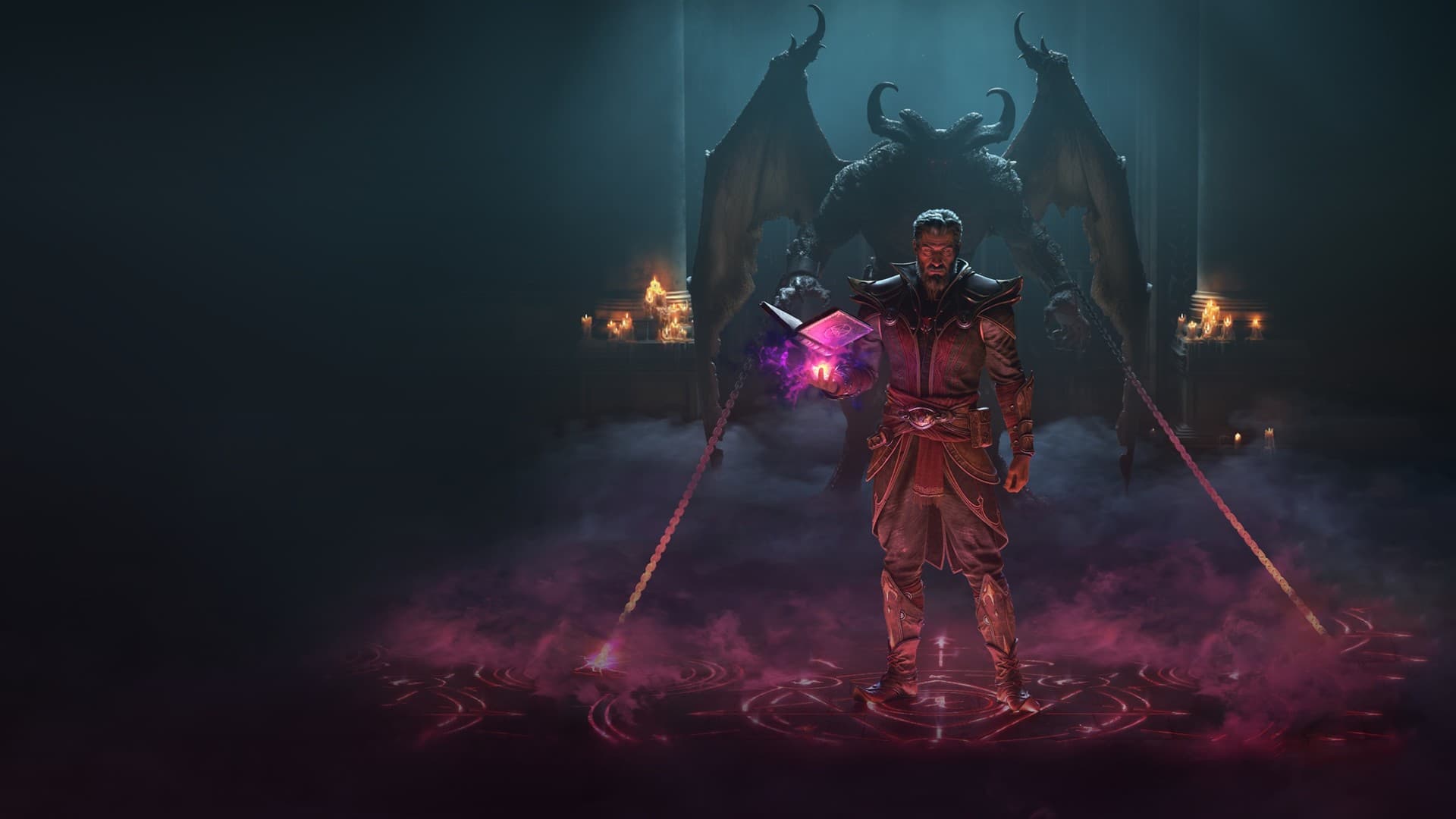
Diablo II: Resurrected turned five on 23 September 2026, seven months after the Reign of the Warlock DLC gave it an eighth class and five new runewords. A new wave of players is opening the Horadric Cube for the first time, dropping in three small stones called El, and getting back one called Eld. Then they spot a rune called Tir, and ask whether any of this is real.
No. The runes in Diablo II are a 33-rung rarity ladder, not an alphabet. Two of them borrow real rune names, and none of them carries a sound.
Every other game on this site gives each rune its own job. Diablo II is the only one where you put runes in order to make a named thing, which looks like spelling. It is not. A Diablo II runeword is a password: the order matters, the letters mean nothing.
What is a rune in Diablo II?
A rune in Diablo II is a small socketable stone that adds a fixed bonus to the item it sits in. There are 33, ranked from El (rune 1, level 11) to Zod (rune 33, level 69). They came with the Lord of Destruction expansion on 29 June 2001, and no later release has added another.
Blizzard's own item guide describes them as "small stones inscribed with magical glyphs that can be inserted into Socketed Items". Each rune gives one bonus in a weapon and another in armour, a helm or a shield:
- El adds 50 to attack rating and 1 to light radius.
- Tir gives 2 mana after each kill.
- Ral adds 5 to 30 fire damage to a weapon, or 30% fire resistance to armour.
- Ist gives 30% better chance of getting magic items.
- Zod makes the item indestructible.
That list already says what the stones are. They are stats, not signs. Tir is not the letter T, and it is not justice or Tyr. It is 2 mana.
Are the 33 Diablo II runes an alphabet?
No. An alphabet orders its letters by habit, and every letter is worth the same. Diablo II orders its runes by rarity, and each step up the ladder is worth two or three of the step below. The number next to a rune is its price, not its place in a word. A real alphabet has no cheap letters.
The Horadric Cube makes the ladder literal. Three El make an Eld, three Eld make a Tir, and so on up to Thul with nothing else needed. From Thul to Pul each step takes three runes and a gem. From Pul upward it takes two runes and a gem.
Work that through and one Zod costs 3 to the power of 20, times 2 to the power of 12, El runes: about 14.3 trillion El, before you count a single gem. Nobody climbs that ladder from the bottom. On the original game's Realms, Blizzard limited the upper recipes to single-player, open and ladder characters, so for many players high runes could only be found.
That is how coins work, not letters. A price ladder can make a small stone precious. You cannot spend a letter.
Is a runeword a real word?
A runeword is a recipe, not a word. You put specific runes, in a set order, into a plain item with exactly the right number of sockets. Blizzard's guide is blunt: in the wrong order you "receive the bonuses of the Runes inserted but it does not become a Rune Word". Get it right and the item takes a gold name.
Here is the part that looks like writing. Put Tal then Eth into 2-socket body armour and you get Stealth. Swap them and you get nothing. Order carries meaning, which is exactly how letters work in a word.
But read the table and the resemblance breaks.
| Runeword | Runes, in order | Item (sockets) |
|---|---|---|
| Steel | Tir El | Sword, axe or mace (2) |
| Stealth | Tal Eth | Body armour (2) |
| Lore | Ort Sol | Helm (2) |
| Ancient's Pledge | Ral Ort Tal | Shield (3) |
| Insight | Ral Tir Tal Sol | Polearm, staff or missile weapon (4) |
| Spirit | Tal Thul Ort Amn | Sword or shield (4) |
| Heart of the Oak | Ko Vex Pul Thul | Mace or staff (4) |
| Call to Arms | Amn Ral Mal Ist Ohm | Any weapon (5) |
| Grief | Eth Tir Lo Mal Ral | Sword or axe (5) |
| Enigma | Jah Ith Ber | Body armour (3) |
| Infinity | Ber Mal Ber Ist | Polearm or spear (4) |
| Breath of the Dying | Vex Hel El Eld Zod Eth | Any weapon (6) |
| Authority (2026) | Hel Shael Ral | Body armour (3) |
| Vigilance (2026) | Dol Gul | Grimoire or shield (2) |
Steel is Tir plus El. Lore is Ort plus Sol. Enigma has six letters and three runes, Jah, Ith and Ber, and none of them gives it an E, an N or a G. In a real word, the letters are the word. In a runeword, the runes are the key and the name is what the lock opens. You could rename Enigma to anything and the recipe would still work.
That is a password: an ordered string whose parts mean nothing on their own. Diablo II came closer to runic spelling than any game on this site, and then it stopped one step short.
Is Tir a real rune?
Yes, the name is real. Tir is an Old English name for the Elder Futhark's Tiwaz, the T rune named after the god Tyr. Sol is real too: Sól is the Old Norse name of Sowilo, the sun rune. A few more come close. None of them keeps its sound, its place or its meaning.
| Diablo II rune | Place (of 33) | What it does | Real rune it echoes | Real place (of 24) |
|---|---|---|---|---|
| Tir | 3 | +2 mana after each kill | Tiwaz, also called Tir | 17 |
| Sol | 12 | +9 minimum damage | Sowilo, also called Sól | 16 |
| Ist | 24 | Better chance of magic items | Isa, also called Is | 11 |
| Ber | 30 | 20% crushing blow | Berkano, also called Beorc | 18 |
| Ral | 8 | Fire damage | Raido, also called Rad | 5 |
| Thul | 10 | Cold damage | Thurisaz, also called Þurs | 3 |
The first two match exactly. The rest are near misses a player might hear, not borrowings anyone can prove, and we could find no statement from Blizzard on where the names came from. Most of the 33, like El, Nef, Ohm, Lo, Cham and Zod, echo nothing in the futhark at all.
The sun rune adds 9 minimum damage. The rune of Tyr, the one-handed god of war and justice, refills your mana when you kill something. Diablo II took the sound of real rune names and left the rest behind.
Diablo II runes vs. the Elder Futhark
| Feature | Diablo II (2001) | Elder Futhark |
|---|---|---|
| What one sign is | A socketable stone with a stat | A letter with a sound, a name and a meaning |
| How many | 33 | 24 |
| What the order means | Rarity and price | A fixed traditional sequence, not value |
| Is every sign worth the same? | No; 2 or 3 of one make the next | Yes |
| Does order in a word matter? | Yes, in a runeword | Yes, in every word |
| Can it be read? | No, nothing is encoded | Yes, once you learn the letters |
| Told apart by | Name, glyph and tooltip | Shape alone |
| In use | Since 29 June 2001 | Roughly 150 to 800 CE |
The real runes, briefly
The real runes are an alphabet. The Elder Futhark has 24 letters, used from roughly 150 to 800 CE, carved into wood, bone, metal and stone. Each letter has a sound, a name and a meaning: Tiwaz is T and the god Tyr, Sowilo is S and the sun. The order is fixed, and every letter counts the same.
Around the 9th century the Viking Age cut the set down to the 16 letters of the Younger Futhark, and that is where the Old Norse name sól comes from. In England the set grew into the Anglo-Saxon futhorc, and that is where tir comes from. So Diablo II's two exact matches come from two different branches of the family, neither of them the Elder Futhark itself.
In Norse tradition Odin wins the runes by hanging nine nights on Yggdrasil. From there they served as writing, charms and protections, combined into bindrunes and sigils, and read for guidance in a practice that continues today.
Why Sanctuary has no room for real runes
Diablo II is set in Sanctuary, a world made by rebel angels and demons and caught in the war between the High Heavens and the Burning Hells. Its powers are archangels and Prime Evils such as Baal, Mephisto and Diablo. There is no Odin, no Yggdrasil and no Germanic people to carve a futhark.
The closest the game comes is Lord of Destruction's fifth act, set around Mount Arreat in the northern Barbarian Highlands, where the Barbarians hold out against Baal. It looks Nordic, with snow, fur and a northern warrior people. It is still Blizzard's own mythology, and it would have been odd to hand its runes a real alphabet.
What Blizzard built instead was a better game system than an alphabet would have been. A ladder of 33 prices and a set of ordered passwords has kept players hunting for 25 years. It just is not writing.
Want runes you can actually read?
Diablo II gives you 33 runes that you rank and spend. The real futhark gives you 24 that you read, and each one keeps the same sound and the same meaning every time you draw it, whatever question you bring.
The easiest way in is to draw one. You can cast a free rune reading in your browser right now, using the genuine Elder Futhark and their traditional meanings. Start with the real Tiwaz, the rune behind Tir, pull a rune of the day each morning, or read how online rune readings work first. The rest of the series is on the runes in games hub. The Witcher 3 sells its own runewords, Gothic 2 makes you craft each rune from a recipe, and Valheim is the one game that uses the real futhark.
Your Stash may hold a Ber rune worth more than everything else in it. The real Berkano costs nothing, and it has meant birch and new growth for about 1,800 years. , free on iOS, Android, and the web, in English and Russian.
Frequently asked questions
Are the runes in Diablo II real runes?
No. The 33 runes in Diablo II are socketable stones, ranked from El, the most common, to Zod, the rarest. Each one adds a stat to the item it sits in. They carry no sound values and spell nothing in any language. Two of the names, Tir and Sol, are borrowed from real rune names, but the stones do not work as letters.
How many runes are in Diablo II?
Thirty-three. They arrived with the Lord of Destruction expansion on 29 June 2001 and run in a fixed order from El, rune 1, to Zod, rune 33. The set has never grown since. Diablo II: Resurrected in 2021 and the Reign of the Warlock DLC in 2026 added new runewords, but both kept the same 33 runes.
What is a runeword in Diablo II?
A runeword is a set recipe of runes socketed in a fixed order into a plain, non-magical item with exactly the right number of sockets. Stealth is Tal then Eth in 2-socket body armour. When the recipe matches, the item takes a gold name and gains bonuses far above the runes' own. Wrong order gives only the separate rune bonuses.
Does rune order matter in Diablo II runewords?
Yes. Blizzard's own item guide says a runeword will not form if the runes go in the wrong order, even in the right item with the right runes. You keep each rune's separate bonus but lose the runeword. Order is the only thing in Diablo II that makes runes behave like letters, and it is why a runeword looks like spelling.
How do you upgrade runes in Diablo II?
In the Horadric Cube. Three of the same rune make the next one up for El to Ort with no extra cost. From Thul upward each step also needs a gem, and from Pul upward only two runes are needed. On the original game's Realms, Blizzard limited the higher recipes to single-player, open and ladder characters, not normal realm characters.
What is the rarest rune in Diablo II?
Zod, rune 33, which needs character level 69 to use. Cham, Jah and Ber sit just below it. Zod's single property is that it makes an item indestructible. By the Horadric Cube recipes, one Zod equals about 14.3 trillion El runes, leaving the gems out, which is why nobody makes high runes from the bottom of the ladder.
What is the Tir rune in Diablo II?
Tir is rune 3 of 33, level 13, and it gives +2 mana after each kill in a weapon, armour, helm or shield. The name is real: Tir is an Old English name for the Elder Futhark's Tiwaz, the T rune of the god Tyr. In Diablo II it keeps the name and drops the sound, the god and the meaning.
Is the Sol rune in Diablo II the same as Sowilo?
Only by name. Sól is the Old Norse name of the S rune, the sun rune the Elder Futhark calls Sowilo, sixteenth of its 24 letters. Diablo II's Sol is rune 12 of 33 and adds 9 to minimum damage in a weapon or reduces damage taken by 7 in armour. Nothing about it is a sound, a letter or the sun.
Are Diablo II runes based on the Elder Futhark?
No. The Elder Futhark has 24 letters in a fixed order, each with a sound. Diablo II has 33 stones ordered by rarity, with no sounds. A handful of names sound like real rune names, Tir, Sol, Ist beside Is, Ber beside Beorc, but most, like El, Nef, Ohm and Zod, match nothing in the futhark, and none carries its letter's value.
What are the new runewords in Reign of the Warlock?
Maxroll lists five for the DLC released on 11 February 2026: Authority (Hel Shael Ral) in body armour, Coven (Ist Ral Io) in helms, Vigilance (Dol Gul) in grimoires and shields, and two dagger runewords, Ritual (Amn Shael Ohm) and Void (Thul Zod Ist). They use the same 33 runes. The DLC added recipes, not letters.
What are the best runewords in Diablo II?
The most famous include Enigma (Jah Ith Ber) in body armour, Infinity (Ber Mal Ber Ist) in polearms, Call to Arms (Amn Ral Mal Ist Ohm), Grief (Eth Tir Lo Mal Ral), Spirit (Tal Thul Ort Amn) and Insight (Ral Tir Tal Sol). Spirit and Insight are cheap enough for early play. Enigma and Infinity need high runes that few players ever find.
Can you read the symbols on Diablo II runes?
No. Each rune shows a glyph that identifies the stone, the way an icon identifies an app. The glyphs do not stand for sounds, so no sequence of them spells a word, and a runeword's name has no link to its runes. Enigma is Jah, Ith and Ber. Nothing in those three stones spells the word Enigma.
Is Diablo II based on Norse mythology?
No. Diablo II is set in Sanctuary, a world made by rebel angels and demons and caught in the war between the High Heavens and the Burning Hells. Its gods are archangels and Prime Evils, not Odin or Thor. The Lord of Destruction act in the northern Barbarian Highlands looks Nordic, but the mythology is Blizzard's own.
Where can I try a real rune reading online?
You can cast a free rune reading in your browser with the Way of the Runes rune-reading tool. It uses the genuine 24 Elder Futhark runes and their traditional meanings, with quick single draws for a fast question and fuller spreads for something weightier, and a full description for every rune. It works on any device, in English and Russian.
Which rune are you?
Seven questions, about a minute, and you get one of the 24 Elder Futhark runes. The scoring is shown as you answer. Free, no signup.