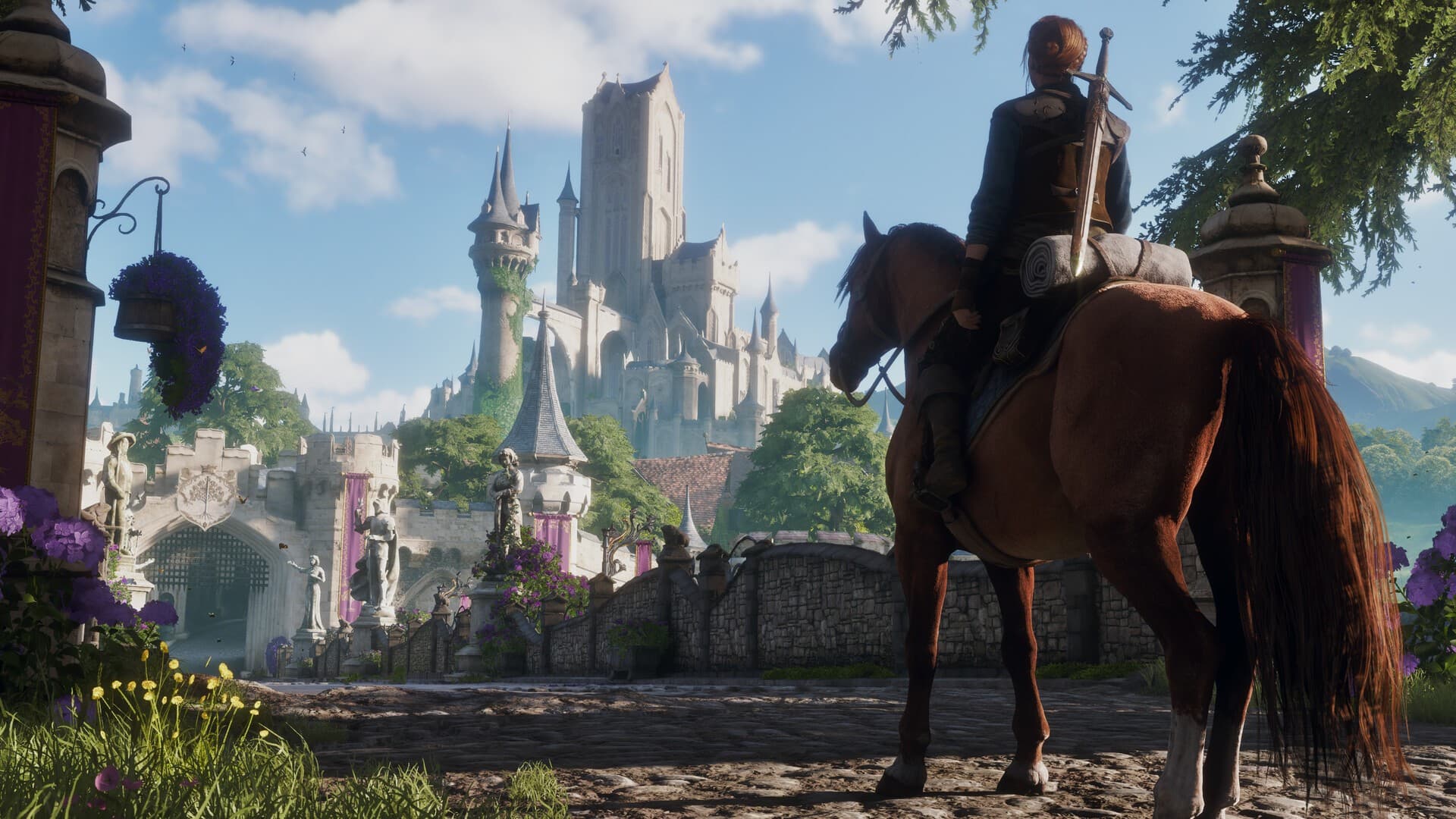
Fable is coming back. Playground Games' reboot launches on 23 February 2027, and a new generation is about to hear about Albion from players who spent 2005 in the snow outside Snowspire, digging up graves in the Necropolis for four carved tablets that would wake the Oracle. Those tablets are covered in symbols. So are the maps, the gravestones and the Hero's skin. Are any of them real runes?
No. The runes in Fable are English letters in costume. The Oracle's four sacred glyphs stand for Y, M, C and A, and the runes on the Fable Anniversary map are a cipher for plain English.
Most games on this site either invent signs that mean nothing or borrow the real futhark. Fable does a third thing, and it is the funniest answer in the series: it builds a mystical script and then uses it to spell a disco song. Fable's runes can be read. They just say nothing old.
What a rune is in Fable
A rune in Fable is not one thing. The series has five kinds of carved or glowing sign, and none of them is the Elder Futhark. Only two of them carry any text at all, and both of those turn out to be English:
- Glyphs: four stone tablets that operate the Snowspire Oracle in Fable: The Lost Chapters (2005) and Fable Anniversary (2014).
- Albion Runes: a script on the Anniversary loading-screen map, and a Futhark-looking script on old gravestones in Fable II (2008).
- Focus Site runes: marks on the ancient Focus Sites, repeated on Jack of Blades' armour.
- Will lines: glowing blue lines that spread over the Hero's body as his magic grows.
- Weapon runes: markings on Fable III (2010) Hero weapons that change colour with your morality.
The glyphs and the Albion Runes are where the answer lives.
Why do the Oracle's glyphs spell YMCA?
Because the four sacred glyphs are the letters Y, M, C and A, and Lionhead put them there as a joke. When the quest is done, the Hero learns four expressions to operate the Oracle, and each one shapes a letter with his arms: the dance from the Village People song.
The setup around the joke is played completely straight. In the lore, four Will users of the Third Archon's kingdom carved one enormous slab of rock into the Snowspire Oracle, a monument meant to record Albion's past and prepare it for the future. They cut four glyphs holding the knowledge to use it. When raiders swept the Northern Wastes, the glyphs were buried in the Necropolis, a city wiped out when one citizen made a deal with powers from beyond the world.
The gold quest Oracle of Snowspire sends you to dig them out. About ten marked graves line the path. True glyphs carry yellow symbols; cursed ones carry red symbols and summon minions and summoners when you uncover them. The graves with kind epitaphs hide the right ones, which rewards reading the gravestones before you dig. The last glyph waits behind a snow troll.
| Glyph | Named after | Letter it shows | What the Oracle tells you |
|---|---|---|---|
| Yeron | Yeron, Will user | Y | The people of Albion |
| Moryk | Moryk, Will user | M | The lore of Albion |
| Calran | Calran, Will user | C | The creatures of Albion |
| Avisto | Avisto, Will user | A | The history of Albion |
Look at the names down the left. The first letter of each one is the letter on its tablet. That is not how an ancient script works. It is how an acronym works, and acronyms need an alphabet that already exists, in this case the one you are reading now. The glyphs are Latin capitals dressed up as relics, and the quest reward is 4,000 renown and a Summoner's Gauntlet.
Can you read the Albion runes?
Yes, if you can read English. The Fable Anniversary loading-screen map has a block of carved-looking text down its left side that fans call Albion Runes. Each sign replaces one English letter, so once you match signs to letters, the whole thing reads off like a newspaper.
Fans did exactly that. The decoded text is a comic history of John Speed, the mapmaker who trekked through hobbe-infested forest to draw Ye Picture Map of Mighty Albion and was killed in a duel before it was published. It closes with a disclaimer: the map is not to scale, and "the river at the bottom is probably a beer stain."
That is a substitution cipher, and it is worth being exact about what that means. A cipher keeps the language and swaps the shapes. The words underneath are still modern English, spelled the modern English way. Nothing in the Albion Runes records a sound English does not have, and nothing in them could be read as Old Norse.
Valheim does the same trick with one difference: its shapes are the genuine Elder Futhark. Fable invented its own shapes. The fan write-ups on Albion's scripts note that the gravestone version "resembles old Futhark runes", and it does, in the way a font can resemble handwriting. The resemblance is the costume. The English is the person wearing it.
Are Fable's augmentations runestones?
In function, yes; in name, no. Augmentations are mystical stones that bind permanently to a weapon and add an effect. Every other series on this site would call them runes. Lionhead called them augments and kept the word "rune" for decoration.
The original game and The Lost Chapters have eight: Flame, Lightning, Silver, Piercing, Sharpening, Mana, Health and Experience. A master weapon has three slots, and the Frying Pan, the joke weapon, has four. Duplicates stack in the first game, and once a stone is bound it cannot come out. Fable II cut the maximum to two slots, and its Knothole Island add-on brought an Augment Remover. Fable III dropped socketing entirely: its Legendary weapons carry three built-in augments that switch on when you meet a condition, such as a kill count.
Put that next to the runestones in The Witcher 3 and they are the same object: a stone that changes a number. The difference is the label. Where Fable does use the word, on Fable III Hero weapons, the runes are pure colour: pale blue for good, grey for neutral, red for evil. They report your morality and spell nothing.
Fable runes vs. the Elder Futhark
Fable's signs and the Elder Futhark differ in the one way that matters: what sits underneath. Fable's glyphs and map runes stand for letters of modern English. The futhark's 24 letters stand for sounds of early Germanic languages, and each has its own name and meaning.
| Feature | Fable (2004) | Elder Futhark |
|---|---|---|
| What one sign is | A stand-in for an English letter | A letter with a sound, a name and a meaning |
| How many | Four Oracle glyphs; one map rune per English letter | 24 |
| Language underneath | Modern English | Early Germanic languages |
| Can it be read? | Yes, as English, once you match the signs | Yes, once you learn the letters |
| Named after | Four Will users, first letter first | Words such as cattle, ox and god |
| In use | Since September 2004 | Roughly 150 to 800 CE |
The real runes, briefly
A real rune is first a letter. The Elder Futhark has 24 of them, used by Germanic peoples from roughly 150 to 800 CE and carved into wood, bone, stone and metal. Each carries a sound, a name and a meaning together: Fehu is cattle and wealth, Uruz the wild ox, Ansuz a god.
Around the end of that period the set shrank into the sixteen-character Younger Futhark, and the older letters stopped being read.
That is the opposite of Fable's system. In the futhark the name comes from a word and the letter comes from its sound. In the Oracle glyphs the name comes from a person and the letter comes from the English alphabet. One is a writing system. The other is a monogram.
The magic arrived on top of the writing. In Norse tradition Odin wins the runes by hanging nine nights on Yggdrasil, pierced by his own spear. From there they served as charms and protections, were combined into bindrunes and sigils, and were read for guidance in a practice that continues today.
Why Albion has no room for real runes
Albion is an old name for Great Britain, and Fable is a satirical fairy tale about it: the Heroes' Guild, pub games, balverines, and boasts that bet your reward on finishing a quest naked. Its deep past belongs to the Old Kingdom and its Archons, and its magic is the Will. There is no Odin and no Yggdrasil in it.
Given that, an English cipher was the honest choice. Fable's whole voice is British humour, so a mystical script that turns out to spell a pop song, and a sacred map inscription that turns out to be a joke about a beer stain, fit the world better than borrowed Norse letters would have. The runes are a costume, and the costume is part of the joke.
What the game leaves out is everything the real runes carry. Egil's Saga warns that "no man should carve runes unless he can read them well." In Albion anyone can read every rune in the game, because everyone already knows the alphabet.
Want runes you can actually read?
Fable gives you signs that decode into English, and once you have decoded them they have nothing more to say. The Elder Futhark gives you 24 letters that decode into their own sounds, names and meanings, and people still draw and read them for guidance today, on paper, on stone and on a screen.
The easiest way in is to draw one. You can cast a free rune reading in your browser right now, using the genuine Elder Futhark and their traditional meanings, with a quick single draw for a fast question or a fuller spread for something weightier. If you would rather build the habit slowly, pull a rune of the day each morning, or read how online rune readings work first. The rest of the series is on the runes in games hub, including Valheim, The Witcher 3 and Gothic 2.
The Oracle of Snowspire answers four questions and then goes quiet. The real runes have been answering for nearly two thousand years. , free on iOS, Android, and the web, in English and Russian.
Frequently asked questions
Are the runes in Fable real runes?
No. The runes and glyphs in Fable are invented signs, not the Elder Futhark. The four sacred glyphs of the Snowspire Oracle stand for the English letters Y, M, C and A, and the runes on the Fable Anniversary map are a letter-for-letter cipher for English. Both look old and carved, but underneath they are the modern English alphabet.
What are the glyphs in Fable: The Lost Chapters?
They are four carved stone tablets that wake the Snowspire Oracle, named after the four Will users who built it: Avisto, Calran, Moryk and Yeron. The Oracle of Snowspire quest sends you to dig them out of the Necropolis. True glyphs carry yellow symbols; red ones are cursed and summon creatures when you dig them up.
Why do the Fable glyphs spell YMCA?
Because Lionhead made a joke. The symbols on the four Oracle glyphs represent the letters Y, M, C and A, and once the quest is done the Hero learns four expressions that shape those letters with his arms, the dance from the Village People song. Each expression asks the Oracle about one subject: people, lore, creatures or history.
How do you find the glyphs in the Necropolis?
Dig up the graves with a spade. There are about ten marked graves and the glyphs are placed among them, so digging all of them works. Graves with kind inscriptions tend to hold true glyphs, such as T. Fung, Master Spellweaver. The last glyph sits behind a snow troll, and a final group of summoners guards the end.
What does the Snowspire Oracle tell you in Fable?
Four sets of answers, one per glyph. Yeron covers the people of Albion, Moryk its lore, Calran its creatures and Avisto its history. If you spared them earlier, it can also tell you what became of Thunder, Whisper and Theresa. The quest that unlocks it, Oracle of Snowspire, pays 4,000 renown and a Summoner's Gauntlet trophy.
Can you read the runes on the Fable Anniversary map?
Yes, if you know English. The loading-screen map in Fable Anniversary carries a block of text in what fans call Albion Runes, and each sign stands for one English letter. Decoded, it is a comic history of John Speed, the mapmaker who drew Ye Picture Map of Mighty Albion and was killed in a duel before it was published.
Are Fable's Albion runes based on the Elder Futhark?
Only in look. Fan documentation notes that the script on old gravestones resembles the Futhark, but it is not a runic alphabet with its own sounds. Each sign replaces an English letter, so it spells modern English words. The Elder Futhark is a separate 24-letter alphabet that wrote early Germanic languages from roughly 150 to 800 CE.
What are augmentations in Fable?
Mystical stones that bind permanently to a weapon. The original Fable and The Lost Chapters have eight: Flame, Lightning, Silver, Piercing, Sharpening, Mana, Health and Experience. A master weapon has three slots and the Frying Pan has four. They are Fable's version of the socketed runestone found in games like The Witcher 3, although Fable never calls them runes.
Do the runes on Fable III weapons mean anything?
They show your morality, not a message. In Fable III the first Road to Rule chest adds rune markings to your Hero weapons. They glow pale blue if you are good, grey if you are neutral and red if you are evil, and they keep changing colour as your alignment shifts. Nothing written on them spells a word.
What are the runes on the Hero's body in Fable?
Will lines. As the Hero of Oakvale puts more experience into Will, glowing blue lines spread across his body, around his eyes and over his arms, and they grow brighter with every Will point. They are a visual level meter for magic. They are not letters and there is no text to read in them.
Are there runes in the new Fable game?
Nothing confirmed yet. Playground Games' reboot launches on 23 February 2027 for Xbox Series X and S, Windows and PlayStation 5, set in a reimagined Albion that does not continue the original trilogy. Its announced systems are style-weaving combat, morality and a living population of over 1,000 characters. We will check its runes after launch.
Is Fable based on Norse mythology?
No. Fable is set in Albion, an ancient name for Great Britain, and plays as a satirical fairy-tale version of British folklore. Its gods and powers are its own: the Archons of the Old Kingdom, the Will that fuels magic, and the Heroes' Guild. There is no Odin, no Yggdrasil and no Viking material anywhere in the series.
Which Fable games have runes or glyphs?
The Lost Chapters and Fable Anniversary have the Oracle glyphs and the Necropolis. Anniversary adds the rune cipher on the map. Fable II puts a Futhark-like script on old gravestones and a Bowerstone signpost, and Fable III puts morality-coloured runes on Hero weapons. The Focus Site runes on Jack of Blades' armour return on Cullis Gates in Fable: The Journey.
Where can I try a real rune reading online?
You can cast a free rune reading in your browser with the Way of the Runes rune-reading tool. It uses the genuine 24 Elder Futhark runes and their traditional meanings, with quick single draws for a fast question and fuller spreads for something weightier, and a full description for every rune. It works on any device, in English and Russian.
Which rune are you?
Seven questions, about a minute, and you get one of the 24 Elder Futhark runes. The scoring is shown as you answer. Free, no signup.