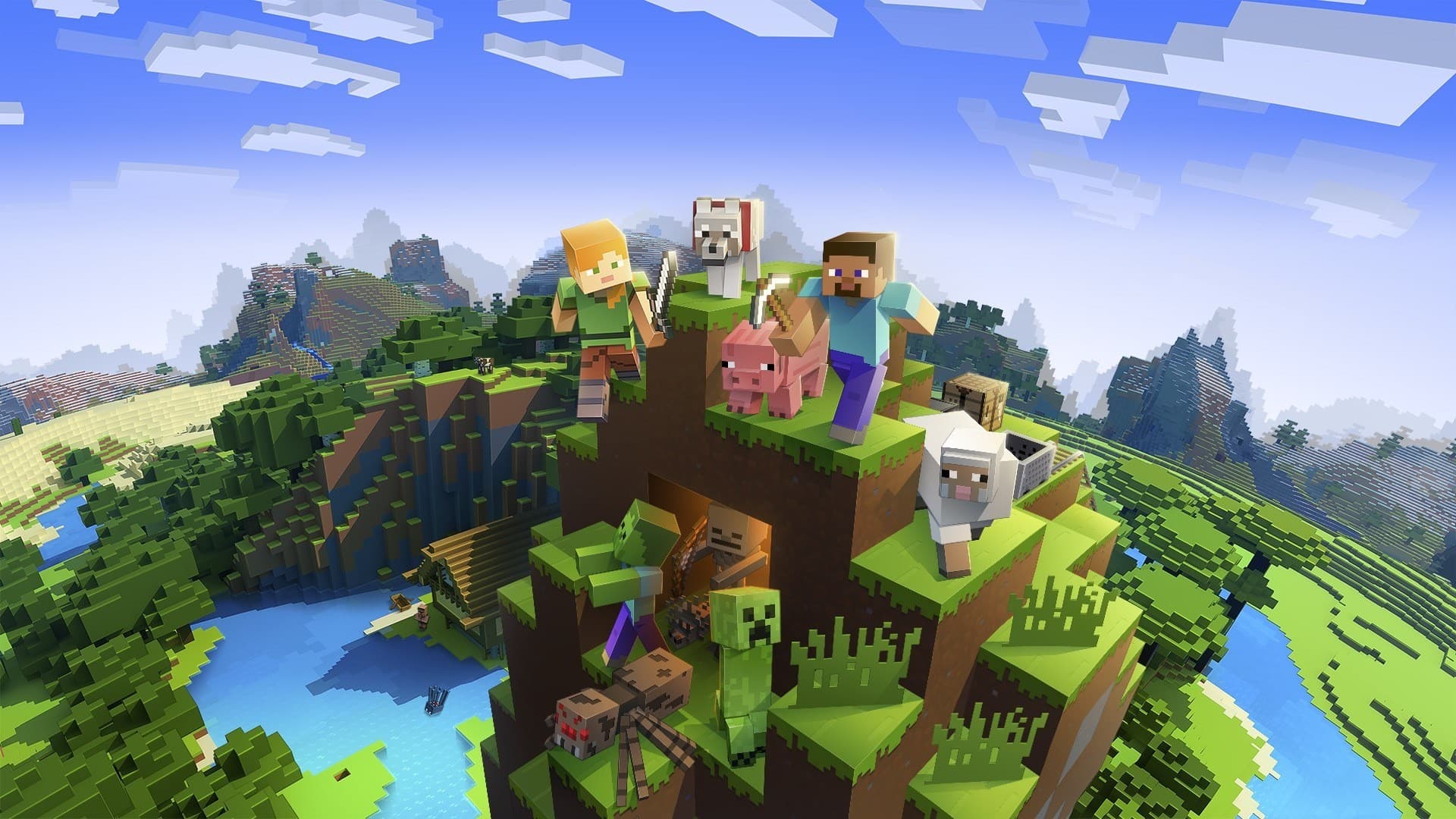
Minecraft has sold more than 350 million copies, and almost every one of those players has built the same block: obsidian, two diamonds and a book. Open the enchanting table and three lines of angular, carved-looking symbols appear beside the offers, while glyphs drift in from the bookshelves around it. So the question comes up in every playground and forum: are these runes, and what do they say?
No. The runes in Minecraft are the Standard Galactic Alphabet, a 1990 video game cipher for English, and the enchanting table uses it to spell random words. They are not Elder Futhark, not Norse, and not a message.
Fable hid a joke in its runes and Valheim hid the real futhark in its runestones. Minecraft does something odder: it hands you a working alphabet and then feeds it nonsense on purpose. You can decode every line on the enchanting table. None of them means anything.
To check that yourself, paste any line into our free enchanting table translator. It reads the Standard Galactic Alphabet as English, and it writes your own text in Galactic letters to copy into chat or a sign.
What are the runes in Minecraft?
The "runes" are the Standard Galactic Alphabet (SGA): 26 symbols, one for each English letter from A to Z. Minecraft never calls them runes. The official wiki calls them glyphs, and the font file that draws them is named alt. Players call them runes because they look carved and old.
They arrived in Java Edition Beta 1.9 Prerelease 3 in 2011, together with the enchanting table, and shipped in version 1.0 on 18 November 2011. You meet them in two places:
- The enchanting screen. Each of the three offers sits beside a line of SGA text.
- The floating glyphs. With bookshelves around the table, single SGA letters drift from the shelves into the book. Up to 15 shelves count, each with a one-block gap.
The table costs a book, 2 diamonds and 4 obsidian. Each offer shows a required level up to 30, but you pay only 1, 2 or 3 levels and the same number of lapis lazuli. Since version 1.8 in 2014, hovering over an offer names one of its enchantments. That hint is the only honest text on the screen, and it is written in plain English.
What does the enchanting table say?
It says three to five words picked at random from a fixed list, and they have nothing to do with the enchantment. Java Edition draws from 62 words; Bedrock uses the 55 that both editions share. Nothing is stored on the item. Decode "fire curse sphere" and you may still walk away with Unbreaking.
Most of the list is spell-book filler: fire, air, earth, water, ignite, snuff, grow, shrink, demon, undead, beast. Strung together they read like a wizard's shopping list, which is the effect. The rest is a small museum of old jokes:
| Words on the list | Where they come from |
|---|---|
| the elder scrolls | Bethesda's series; its parent company ZeniMax took Mojang to court over the name of Mojang's game Scrolls |
| klaatu berata niktu | "Klaatu barada nikto" from The Day the Earth Stood Still (1951), misspelt |
| xyzzy | The magic word from Colossal Cave Adventure |
| embiggen | The Simpsons: "A noble spirit embiggens the smallest man" |
| phnglui mglwnafh cthulhu rlyeh wgahnagl fhtagn | H. P. Lovecraft's chant from The Call of Cthulhu (Java only) |
| baguette | Never explained (Java only) |
Notch told players this before the feature shipped. On 30 September 2011 he tweeted that enchanting "costs experience points. It's totally random." The next day he posted the first screenshot of the enchanting screen, and its three lines decode as "Well Played Internets You Are Good", "These Names Will Be Random And Confusing" and "Each Spell Costs Experience Levels". The warning was hidden in the alphabet it described. The table promises magic, and the text is part of the costume.
Where does the enchanting table alphabet come from?
From Commander Keen, a shareware game about a boy marooned on Mars. Tom Hall designed the Standard Galactic Alphabet for Commander Keen in Invasion of the Vorticons, released on 14 December 1990 by Ideas from the Deep, later id Software, and published by Apogee. It hid messages, jokes and instructions on the game's alien signs.
So the runes of one of the best-selling games ever made are a Martian code from a 1990 floppy disk. Some translator sites date the alphabet to 1993, but no Keen game came out that year. The SGA ran through the Keen series, which lasted until 2001, and in 2019 it was added to the Under-ConScript Unicode Registry, a list of invented scripts kept outside official Unicode.
Minecraft has reused it ever since. A limited-edition Minecraft Xbox One S from 2017 hides "never dig straight down" in SGA, and the Earth Crystal in A Minecraft Movie (4 April 2025) carries it too. Since Java 1.16 in 2020, command text can use the minecraft:alt font, so map makers can write whole signs in it.
Is the Standard Galactic Alphabet a real alphabet?
Only as a code. The Standard Galactic Alphabet has no sounds of its own, no letter names and no language behind it. Each glyph swaps for one English letter, so "fire" in SGA is still the English word fire in other shapes. That makes it a substitution cipher, the same kind children use for secret notes.
The Elder Futhark works the other way round. Its 24 letters were made to write the sounds of early Germanic languages, not to disguise English. The first letter, ᚠ fehu, is an f sound and also the word for cattle and wealth. A futhark inscription has to be read in the language it was carved in; an SGA line needs only a key.
That is why an enchanting table line gives up so fast. Map 26 shapes onto 26 letters and you are done, with nothing left to learn. If you want to write a word in real runes rather than a Keen cipher, the rune converter turns any name into six historical runic alphabets at once, and the letters it uses were carved by real people.
Does Minecraft have anything officially called runes?
Yes, in the spin-off Minecraft Dungeons, released on 26 May 2020. After you beat the Arch-Illager, a button in the Great Hall at camp gives you a rune marked B. Nine hidden rooms across the main missions hold nine more: O, V, I, N, E, P, A, T and H. Collect them all and the Moo Room opens the way to a secret mission.
These runes are letters too, and English ones. Put the B first and the other nine can be arranged into BOVINE PATH, a fair description of a road that ends on a mushroom island with a boss called the Mooshroom Monstrosity.
Dungeons also has a rune-like script of its own, Illageralt, found on weapons, artefacts and walls across its missions. It has 26 letters, 10 numerals and 4 punctuation marks, one symbol for each character in English, and many of its letters look like the SGA. Java Edition copied it in 1.18 in 2021 as a font nobody in the base game uses. Two scripts, two ciphers for English, and not a single futhark letter between them.
Minecraft runes vs. the Elder Futhark
| Feature | Minecraft (2011) | Elder Futhark |
|---|---|---|
| What one sign is | A disguised English letter | A letter with a sound, a name and a meaning |
| How many | 26 | 24 |
| Where it comes from | Commander Keen, 1990 | Germanic peoples, 2nd century CE |
| What it writes | Random words from a 62-word list | Names, memorials, charms |
| Can it be read? | Yes, but the words mean nothing | Yes, once you learn the letters |
| In use | Since 18 November 2011 (the alphabet since 1990) | Roughly 150 to 800 CE |
The real runes, briefly
The real runes are the Elder Futhark, 24 letters used by Germanic peoples from roughly 150 to 800 CE and named after their first six sounds: f, u, th, a, r, k. People carved them into wood, bone, metal and stone to write names, memorials and charms in the language they spoke.
Each rune also has a name that is a word: fehu is cattle and wealth, uruz the wild ox, ansuz a god. In Norse tradition, Odin wins the runes by hanging nine nights on Yggdrasil, pierced by his own spear. From there the runes served as charms and protections, were joined into bindrunes and sigils to hold a focused intent, and were drawn for guidance, a practice that continues today. The SGA has none of those layers. It has a key.
Why the Overworld has no room for real runes
Minecraft has no mythology to hang them on. Its world of blocks, creepers, villagers and the Ender Dragon was invented by Markus "Notch" Persson, first released to the public on 17 May 2009 and built by Mojang Studios, which Microsoft agreed to buy for $2.5 billion in 2014. There are no Norse gods, no Eddas and no Yggdrasil in it.
An alien alphabet suits that world better than the futhark would. Minecraft's enchanting is a slot machine: experience in, random enchantment out. Real runes would have implied a culture, a language and a history the game never builds. A shareware cipher implies only "this is magic, do not read too closely", and that is all the enchanting table needs.
Want runes you can actually read?
Minecraft gives you 26 signs that decode into English and then say nothing. The Elder Futhark gives you 24 that decode into sounds, names and meanings that people still read today.
If you came here to decode the table, the enchanting table translator reads any Galactic line as English. For real runes, start with the rune converter: type your name, or your world's name, and see it in six historical runic alphabets at once. To go the other way, the rune translator turns runes back into English. To go further than letters, cast a free rune reading, pull a rune of the day each morning, or read how online rune readings work first. The rest of the series is on the runes in games hub, including Valheim, which spells English in the real futhark, and Fable, whose glyphs spell YMCA.
The enchanting table has been printing "klaatu berata niktu" at players since 2011. The runes that meant something are about eighteen centuries older. , free on iOS, Android, and the web, in English and Russian.
Frequently asked questions
Are the runes in Minecraft real runes?
No. The symbols on the Minecraft enchanting table are the Standard Galactic Alphabet, a cipher for the 26 English letters that Tom Hall designed for Commander Keen in 1990. They are not Elder Futhark or any historical runic script. The game uses them to spell three to five random words from a fixed list, so decoding them tells you nothing.
What language is the Minecraft enchanting table?
English, written in disguise. The enchanting table uses the Standard Galactic Alphabet, where each symbol replaces one letter from A to Z. There is no separate language behind it, no grammar and no vocabulary of its own. Swap each glyph for its letter and you get plain English words such as fire, curse, sphere or embiggen, strung together at random.
How do you translate the Minecraft enchanting table text?
Match each symbol to its English letter using a Standard Galactic Alphabet key, one glyph at a time. The alphabet has 26 symbols and no rules beyond the swap, so a line decodes in a minute, or in seconds with the free enchanting table translator on this site. Expect a jumble such as 'fire curse sphere' rather than a sentence, because the game picks the words at random and they never describe the enchantment.
Do the enchanting table words tell you the enchantment?
No. The words are picked at random and have no link to the enchantment on offer, and nothing about them is saved on the item. The only real clue on the screen is the hover hint added in version 1.8 in 2014: point at an option and it names one enchantment it will give, in plain English, followed by a question mark.
What words can appear on the Minecraft enchanting table?
Java Edition picks from 62 words and Bedrock from the 55 both editions share. Most are spell-book filler: fire, air, earth, water, ignite, snuff, grow, shrink, demon, undead, beast. Some are jokes: 'the elder scrolls', 'klaatu berata niktu', 'xyzzy', 'embiggen', a Lovecraft chant ending in 'cthulhu rlyeh wgahnagl fhtagn', and, for no stated reason, 'baguette'.
What is the Standard Galactic Alphabet?
A made-up alphabet of 26 symbols, one for each English letter, plus marks for quotation and a full stop. Tom Hall created it for Commander Keen in Invasion of the Vorticons, released on 14 December 1990, to hide jokes and instructions on the game's alien signs. Minecraft adopted it in 2011 for the enchanting table, where players started calling it runes.
Is the Standard Galactic Alphabet the same as the Elder Futhark?
No. The Elder Futhark is a real 24-letter alphabet used by Germanic peoples from roughly 150 to 800 CE, with each letter standing for a sound and carrying a name such as fehu, cattle. The Standard Galactic Alphabet is a 1990 video game cipher with 26 letters that only disguises English. Their shapes do not match and they cannot be swapped.
What are the floating letters around the enchanting table?
They are single Standard Galactic Alphabet glyphs that drift from nearby bookshelves into the book on the table. They appear only when bookshelves stand around the table with a one-block gap, and up to 15 shelves count towards the maximum level of 30. They are decoration: the letters are random, and the minimal particle setting hides them.
How do you make an enchanting table in Minecraft?
Craft it from one book, two diamonds and four obsidian. Each of its three offers shows a required level up to 30, but you pay only 1, 2 or 3 levels plus the same number of lapis lazuli. Surround it with up to 15 bookshelves, leaving a one-block gap, to reach the level 30 offers.
What are the runes in Minecraft Dungeons?
Ten collectible letters in the 2020 spin-off. After beating the Arch-Illager, a button in the Great Hall at camp gives the rune B, and nine hidden rooms in the main missions hold O, V, I, N, E, P, A, T and H. With all of them the Moo Room opens, leading to a secret mushroom-island mission and the Mooshroom Monstrosity.
Can you write in the enchanting table alphabet in Minecraft?
Yes, in Java Edition with commands. Since version 1.16 in 2020, raw JSON text in commands accepts a font key, and the font 'minecraft:alt' draws text in the Standard Galactic Alphabet. Map makers use it for signs and titles that look magical. It still spells English, so any player with a key can read your secret message.
Where does the Minecraft enchanting table alphabet come from?
From Commander Keen, a shareware game series by Ideas from the Deep, later id Software, published by Apogee. Tom Hall designed the Standard Galactic Alphabet for the first Keen trilogy, released on 14 December 1990, and it ran through the series. Some sources date it to 1993, but no Keen game came out that year.
Is Minecraft based on Norse mythology?
No. Minecraft's world of blocks, creepers, villagers, the Nether, the End and the Ender Dragon was invented by Markus 'Notch' Persson and Mojang Studios. It has no Norse gods, no Eddas and no Yggdrasil. Its one runic-looking script is a 1990 cipher for English borrowed from Commander Keen, not anything carved in Viking-age Scandinavia.
Where can I try a real rune reading online?
You can cast a free rune reading in your browser with the Way of the Runes rune-reading tool. It uses the genuine 24 Elder Futhark runes and their traditional meanings, with quick single draws for a fast question and fuller spreads for something weightier, and a full description for every rune. It works on any device, in English and Russian.
Which rune are you?
Seven questions, about a minute, and you get one of the 24 Elder Futhark runes. The scoring is shown as you answer. Free, no signup.