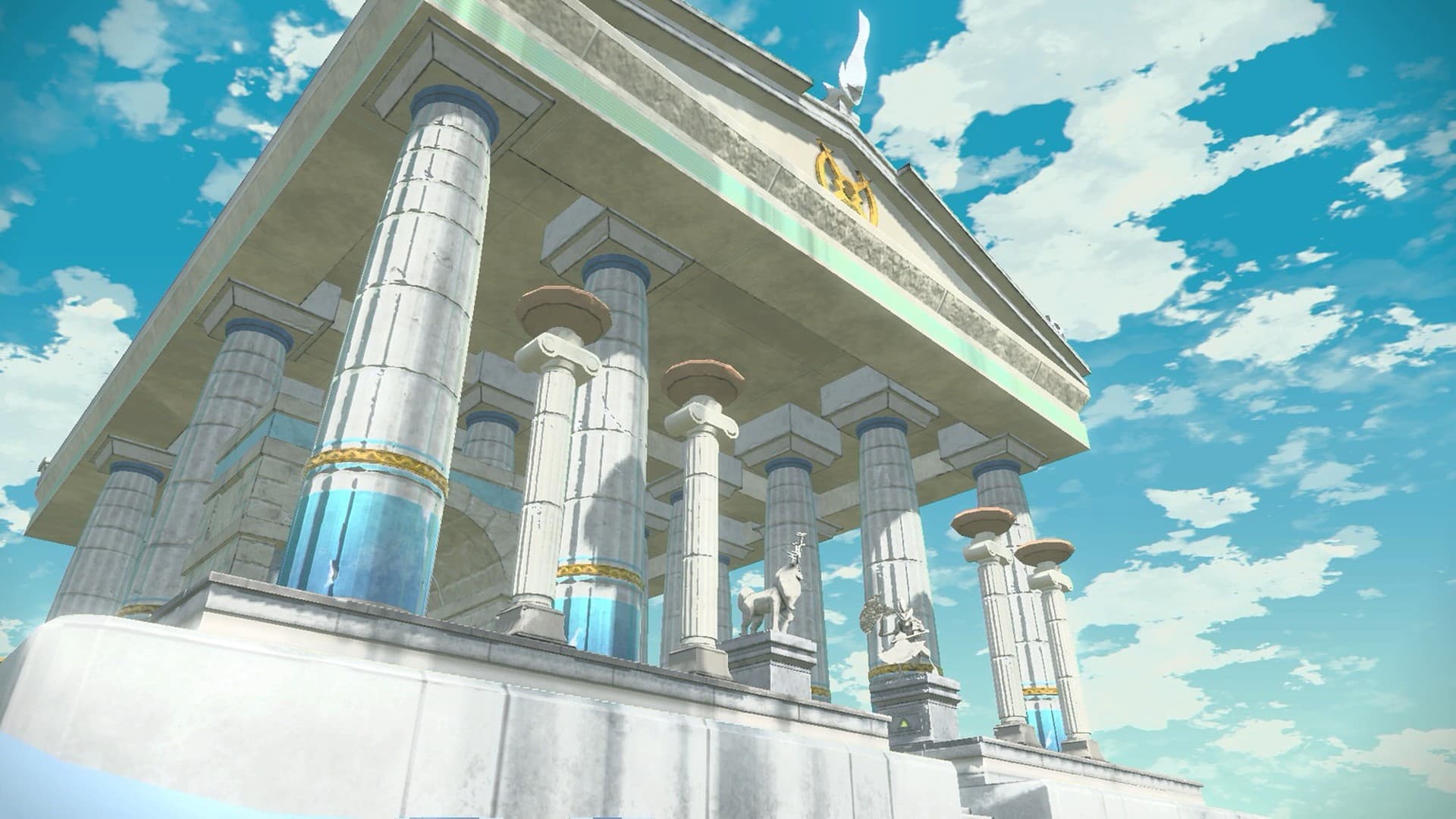
Pokémon Winds and Waves was announced on 27 February 2026 for Nintendo Switch 2 in 2027, and every new generation sends players back to the old ones. Sooner or later someone walks into the Ruins of Alph, sees a wall of black glyphs with a single eye in each, and asks whether the "Unown runes" are real.
No. The Unown are the Latin alphabet, the 26 letters you are reading now plus ! and ?, drawn as Pokémon. Any line of Unown text is English in disguise.
The games never call them runes. The Pokédex calls them ancient writing and hieroglyphs, and the word rune comes from fans. What makes Unown worth a separate answer is that this is the only "rune" set in games where every letter is a living creature, and the only one where decoding the wall is how you open the door. The Pokédex asks which came first, the letters or the Unown, and the letters win by two thousand years.
What are the Unown runes in Pokémon?
Unown is Pokémon number 201, a Psychic type with the species name Symbol Pokémon, the ability Levitate and exactly one move, Hidden Power. Ken Sugimori drew it for Pokémon Gold and Silver, released in Japan on 21 November 1999 and in North America on 15 October 2000. Each form is a flat, black body in the shape of a letter, with one eye.
The count grew in two steps:
| Game | Year | Unown forms | Where |
|---|---|---|---|
| Gold and Silver | 1999 | 26 (A to Z) | Ruins of Alph, Johto |
| FireRed and LeafGreen | 2004 | 28 (adds ! and ?) | Tanoby Chambers, Seven Island |
| Diamond and Pearl | 2006 | 28 | Solaceon Ruins, Sinnoh |
| Legends: Arceus | 2022 | 28 | Hidden across Hisui |
Twenty-six letters and two punctuation marks. That is a typewriter keyboard, not a runic row, and it is why "Unown alphabet" and "Unown translator" are such common searches: there really is an alphabet, and it is ours.
What do the Ruins of Alph walls say?
In Gold and Silver, the Ruins of Alph hold four chambers, each with a sliding tile puzzle of an ancient Pokémon. Complete the picture and a new group of letters starts to appear in the ruins: Kabuto unlocks A to J, Omanyte K to Q, Aerodactyl R to V and Ho-Oh W to Z. Before you solve any of them, there are no Unown at all.
Pokémon Crystal added something better. The back wall of each chamber carries a single word in Unown letters, and every word is an order:
| Wall reads | What you do | Result |
|---|---|---|
| ESCAPE | Use an Escape Rope in front of it | A hidden room opens |
| LIGHT | Use Flash | A hidden room opens |
| WATER | Carry a Water Stone | A hidden room opens |
| HO-OH | Lead your party with Ho-Oh | A hidden room opens |
The HeartGold and SoulSilver remakes kept the same four words. This is the hook that sets Unown apart from Minecraft, whose enchanting table also uses a cipher for English but feeds it random words on purpose. In the Ruins of Alph the cipher means exactly what it says, and reading it is the gameplay. A player who decodes ESCAPE and acts on it has done what anyone does with a real inscription: read it in the language it was written in, and believed it.
The same idea returns in Legends: Arceus (2022). Professor Laventon at the Mirelands Camp gives you the Unown Research Notes, whose hints to all 28 hiding places are written in Unown letters. Catch them all and Unown start appearing in the Solaceon Ruins.
Which came first, Unown or writing?
The Pokédex keeps asking, and never answers.
- Gold: "Their shapes look like hieroglyphs on ancient tablets. It is said that the two are somehow related."
- Ruby and Sapphire: "It is a mystery as to which came first, the ancient writings or the various UNOWN."
- Diamond: "Shaped like ancient writing, it is a huge mystery whether language or UNOWN came first."
- Legends: Arceus: "I've pointed out that the species' many forms resemble writing from other lands; no one will take me seriously."
Inside the fiction, it is a lovely idea: an alphabet that was alive before anyone wrote it down. Outside the fiction, the order is not in doubt. The letter A was old long before 1999, and Unown A is shaped like it because the artists drew the letter they already had. According to the account of its creation on Wikipedia, Unown began as something alien, and only after the team noticed the shapes looked like letters did they lean into it.
Real runes have an origin story too, and it runs the other way round. In Norse tradition, Odin does not find the runes living on a cave wall. He wins them by hanging nine nights on Yggdrasil, pierced by his own spear, until they reveal themselves. The letters come first, and the power comes from learning them.
Can you read Unown text?
Yes, faster than almost anything else on this site. Match each form to its letter and you have English. There is no grammar to learn and no sound system to work out, because the sounds are the ones you already use for A to Z.
That makes Unown a substitution cipher, the same family as Minecraft's Standard Galactic Alphabet and the Daedric alphabet of The Elder Scrolls. What it is not is a script like Tunic's, which writes the sounds of spoken English, or the real futhark, which wrote the sounds of early Germanic languages.
There is also something Unown cannot do that runes did. A futhark letter has a name that is a word: ᚠ is fehu, cattle and wealth; ᚢ is uruz, the wild ox. Unown B has no name beyond "B". The creature replaced the meaning.
If you want to see your own name in letters people actually carved, the rune converter spells any word in six historical runic alphabets at once, and the rune translator turns runes back into English.
Pokémon Unown vs. the Elder Futhark
| Feature | Pokémon Unown (1999) | Elder Futhark |
|---|---|---|
| What one sign is | A Latin letter shaped as a Pokémon | A letter with a sound, a name and a meaning |
| How many | 28 (26 letters, ! and ?) | 24 |
| Language it writes | English | Early Germanic languages |
| Letter names | None beyond the letter | Words such as fehu, uruz, ansuz |
| Can it be read? | Yes, with any A to Z key | Yes, once you learn the letters |
| In use | Since 21 November 1999 | Roughly 150 to 800 CE |
The real runes, briefly
The real runes are the Elder Futhark, 24 letters used by Germanic peoples from roughly 150 to 800 CE and named after their first six sounds: f, u, th, a, r, k. People carved them into wood, bone, metal and stone to write names, memorials and charms in the language they spoke.
Each rune was a sound and a word at once, and that double life is why runes became more than letters. They served as charms and protections, were joined into bindrunes and sigils to hold a focused intent, and were drawn for guidance, a practice that continues today. Unown carry one layer of that, the shape, and replace the rest with a creature.
Why the Pokémon world has no room for real runes
The Pokémon world has its own myths: Arceus shaping the universe, Dialga and Palkia ruling time and space, Ho-Oh and Lugia over Johto. Its regions are modelled on parts of Japan and later on real places such as Britain and France, but it borrows no Norse gods, no Eddas and no Yggdrasil.
A Latin-letter cipher suits that world. Many Pokémon players are children still learning to read, and an alphabet they already know turns a ruin into a puzzle they can solve. Real futhark would have needed a lesson first, and the Ruins of Alph wanted you to read ESCAPE on the wall and reach for the rope.
Want runes you can actually read?
Unown give you 28 signs that decode into English and then stop. The Elder Futhark gives you 24 that decode into sounds, names and meanings people still read today.
To start, cast a free rune reading in your browser, using the genuine Elder Futhark and their traditional meanings. Pull a rune of the day each morning to learn the futhark one sign at a time, or read how online rune readings work first. The rest of the series is on the runes in games hub, including Valheim, which spells English in the real futhark, and Skyrim, whose Dragon Alphabet writes a language of its own.
Unown have been watching players from the walls of Alph since 1999, one eye per letter. The runes that carried real meaning are about eighteen centuries older. , free on iOS, Android, and the web, in English and Russian.
Frequently asked questions
Are the Unown runes in Pokémon real runes?
No. Unown are shaped like the 26 letters of the Latin alphabet, plus an exclamation mark and a question mark, so any Unown text is English in disguise. They are not Elder Futhark or any historical runic script. The games never call them runes either: the Pokédex says they look like ancient writing and hieroglyphs. The word rune comes from fans.
How many Unown forms are there?
Twenty-eight. Pokémon Gold and Silver introduced 26 forms, one for each letter from A to Z, in 1999. FireRed and LeafGreen added two more, the exclamation mark and the question mark, in 2004, in the Tanoby Chambers on Seven Island. Pokémon Legends: Arceus in 2022 hides all 28 across the Hisui region as a collecting quest.
What language are the Unown letters?
English, written with the Latin alphabet. Each Unown form matches one letter from A to Z, so a line of Unown swaps letter for letter into plain English words such as ESCAPE, LIGHT or WATER. There is no separate Unown language, no grammar and no sounds of their own. It is a substitution cipher, the same kind as Minecraft's enchanting table glyphs.
What do the walls in the Ruins of Alph say?
In Pokémon Crystal and the HeartGold and SoulSilver remakes, the back walls of the four chambers spell ESCAPE, LIGHT, WATER and HO-OH in Unown letters. Each word is an instruction. Use an Escape Rope, use Flash, carry a Water Stone or lead with Ho-Oh in front of the right wall and a hidden room opens. Reading the cipher is the puzzle.
How do you catch all the Unown in Gold and Silver?
Solve the four sliding tile puzzles in the Ruins of Alph. Each picture you complete releases a new group: the Kabuto puzzle unlocks A to J, Omanyte K to Q, Aerodactyl R to V and Ho-Oh W to Z. Before that, no Unown appear at all. Twenty-six forms in total, and every one knows only a single move, Hidden Power.
Where are the Unown in Pokémon Legends: Arceus?
All 28 are hidden across Hisui, from Jubilife Village to the Alabaster Icelands. Professor Laventon starts the quest at the Mirelands Camp, and the hints sit in the Unown Research Notes, written in Unown letters you must decode yourself. After you catch all 28, Unown start appearing inside the Solaceon Ruins, including alpha and shiny ones.
Who designed Unown?
Ken Sugimori, the lead artist of the Pokémon series, drew the species for Gold and Silver. According to the Wikipedia account of its creation, Unown was first imagined as something alien, and the designers then noticed the shapes looked like letters and built on that. The result is a Psychic type, number 201 in the National Pokédex, with the species name Symbol Pokémon.
Which came first, Unown or writing?
The games never decide. The Ruby and Sapphire Pokédex says it is a mystery which came first, the ancient writings or the various Unown, and Diamond asks whether language or Unown came first. Outside the fiction the answer is simple: the Latin letters Unown copy are older than Pokémon by more than two thousand years. The shapes followed the alphabet.
Are Unown based on Egyptian hieroglyphs?
Only in the flavour text. The Gold Pokédex says their shapes look like hieroglyphs on ancient tablets, and the Ruins of Alph have the feel of an archaeological dig. But Egyptian hieroglyphs are pictures of birds, eyes, reeds and people, hundreds of them. Unown are 26 Latin letters and two punctuation marks with one eye each, nothing more.
Can you translate Unown text?
Yes, in a minute, with any Unown key. Match each form to its letter and you get English. The wall words in Crystal decode to instructions, and the Legends: Arceus notes decode to location hints. To write a word in real runes instead, use a rune converter, which spells it in historical runic alphabets that people actually carved.
What is Spell of the Unown?
The third Pokémon film, released in Japan on 8 July 2000 and in the United States on 6 April 2001. A girl named Molly arranges tablets carved with Unown letters, the Unown appear, and they grant her wishes, turning her house into a crystal palace that spreads across the town. In the film the letters are a summoning power, not a script.
Will Unown be in Pokémon Winds and Waves?
Nothing is confirmed yet. Pokémon Winds and Waves, the tenth generation, was announced at the Pokémon Presents on 27 February 2026 for Nintendo Switch 2 in 2027, with no release date. The reveal showed a tropical region of islands and open sea. Unown have appeared in ruins in most generations, but no official material for the new games has named them so far.
Is Pokémon based on Norse mythology?
No. The Pokémon world is an original creation by Game Freak, with regions modelled mostly on parts of Japan and later on Britain, France and other real places. Its myths are its own: Arceus shaping the universe, Dialga and Palkia ruling time and space. There are no Norse gods, no Eddas and no Yggdrasil, and its one runic-looking script spells English.
Where can I try a real rune reading online?
You can cast a free rune reading in your browser with the Way of the Runes rune-reading tool. It uses the genuine 24 Elder Futhark runes and their traditional meanings, with quick single draws for a fast question and fuller spreads for something weightier, and a full description for every rune. It works on any device, in English and Russian.
Which rune are you?
Seven questions, about a minute, and you get one of the 24 Elder Futhark runes. The scoring is shown as you answer. Free, no signup.